


Birding With Nate — February Bird of the Month: Anna's Hummingbird
Birding with Nate
February Bird of the Month: Anna's Hummingbird
Hello ScienceWorks friends!
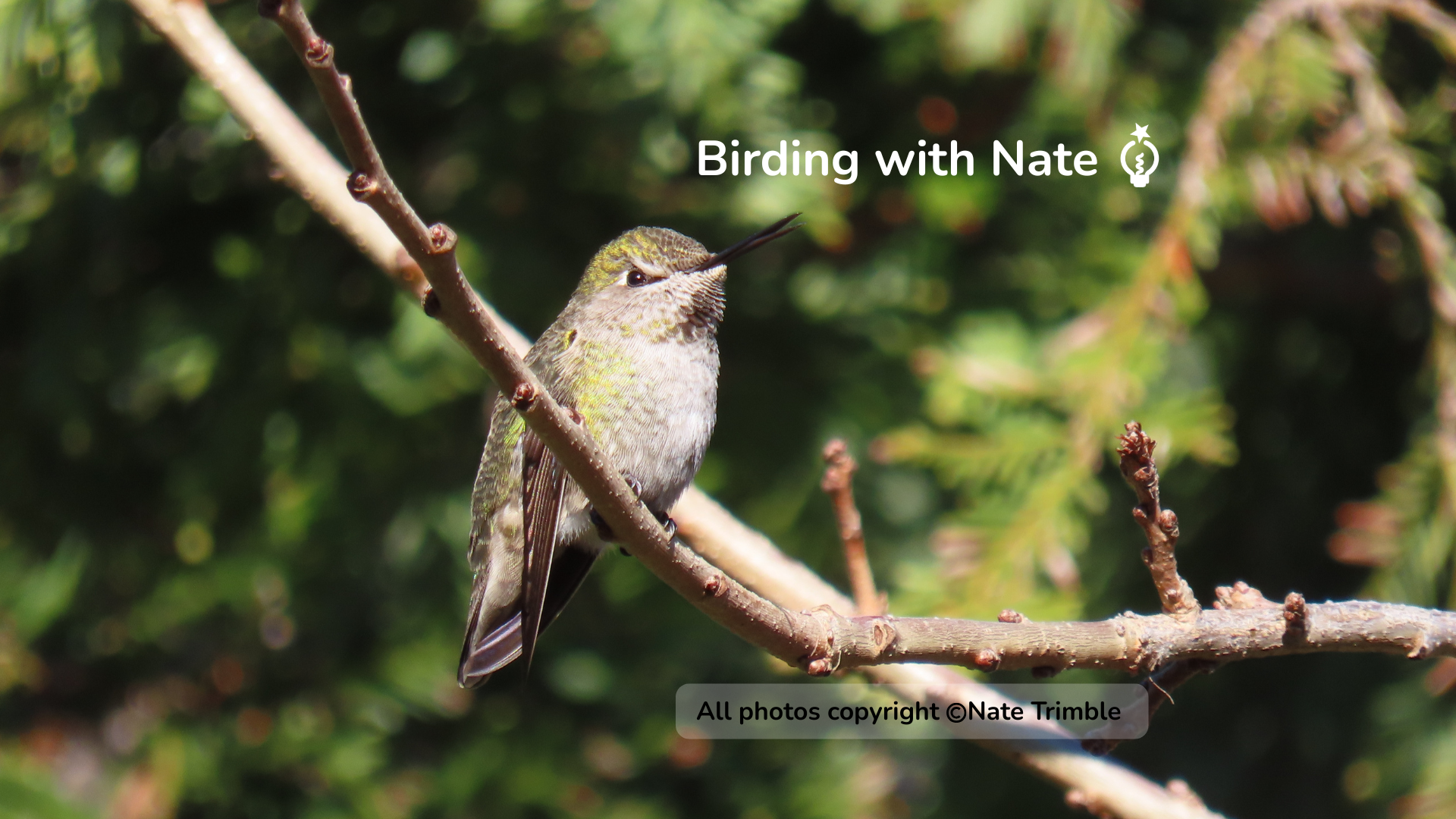
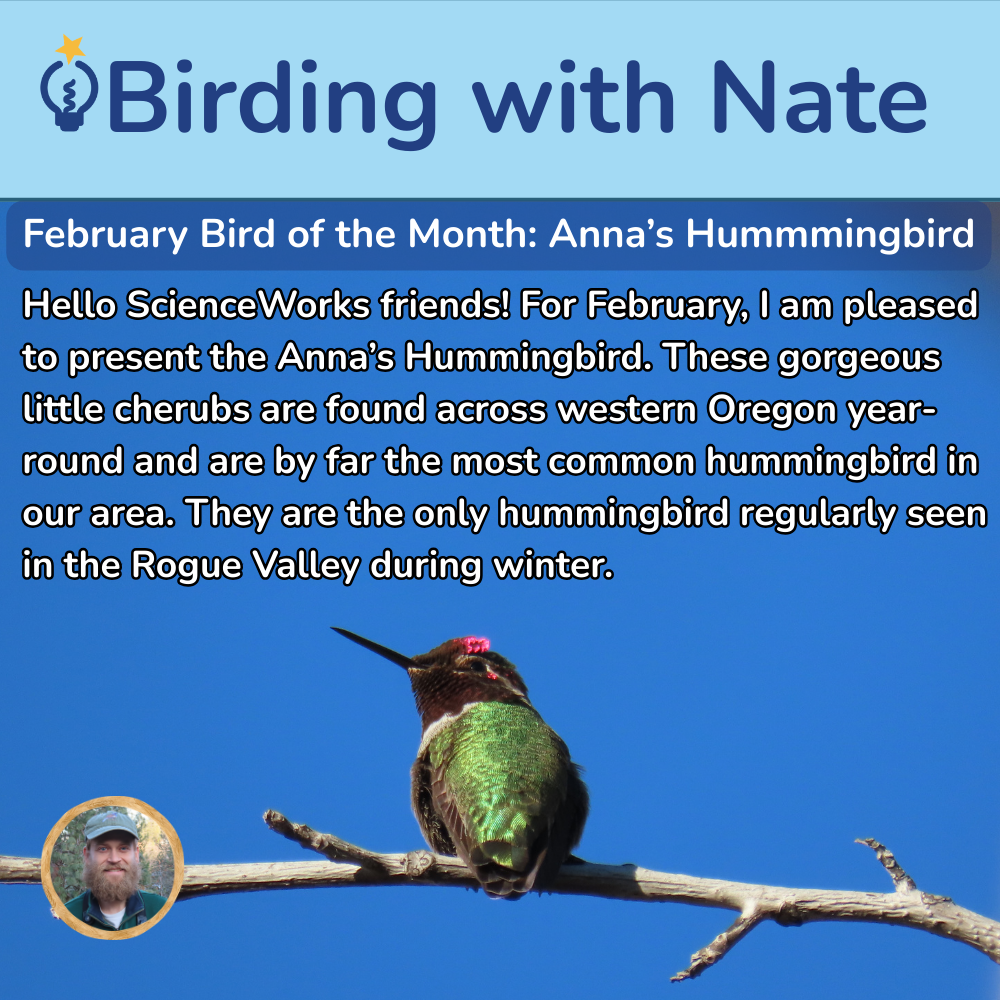
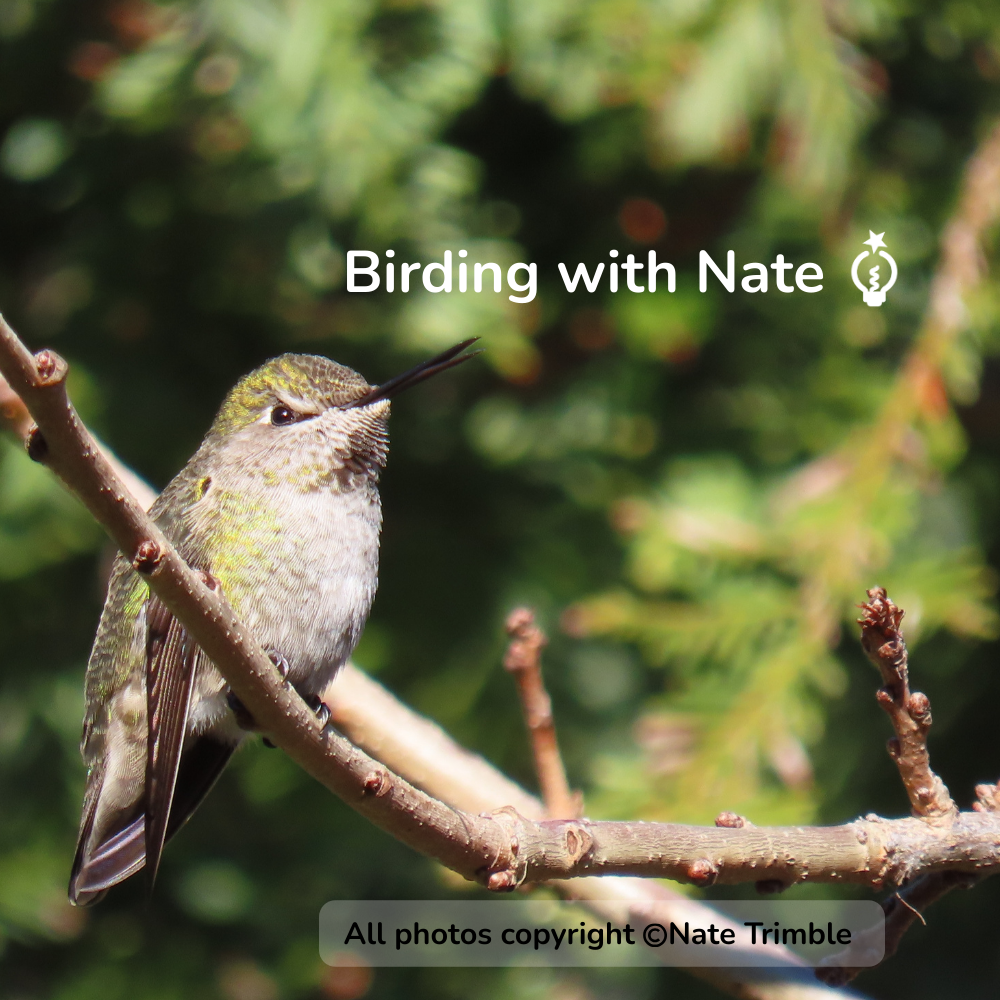
For February, I am pleased to present the Anna’s hummingbird. These gorgeous little cherubs are found across western Oregon year-round and are by far the most common hummingbird in our area. They are the only hummingbird regularly seen in the Rogue Valley during winter.
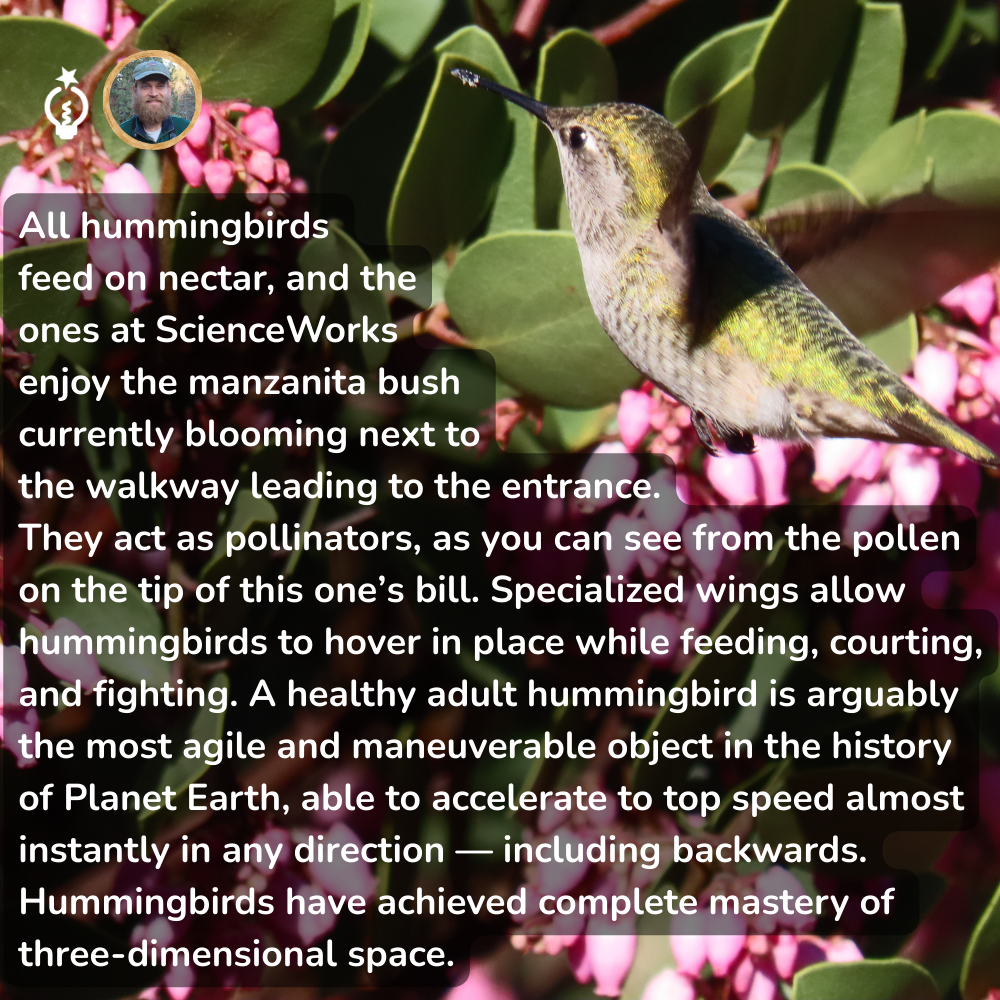
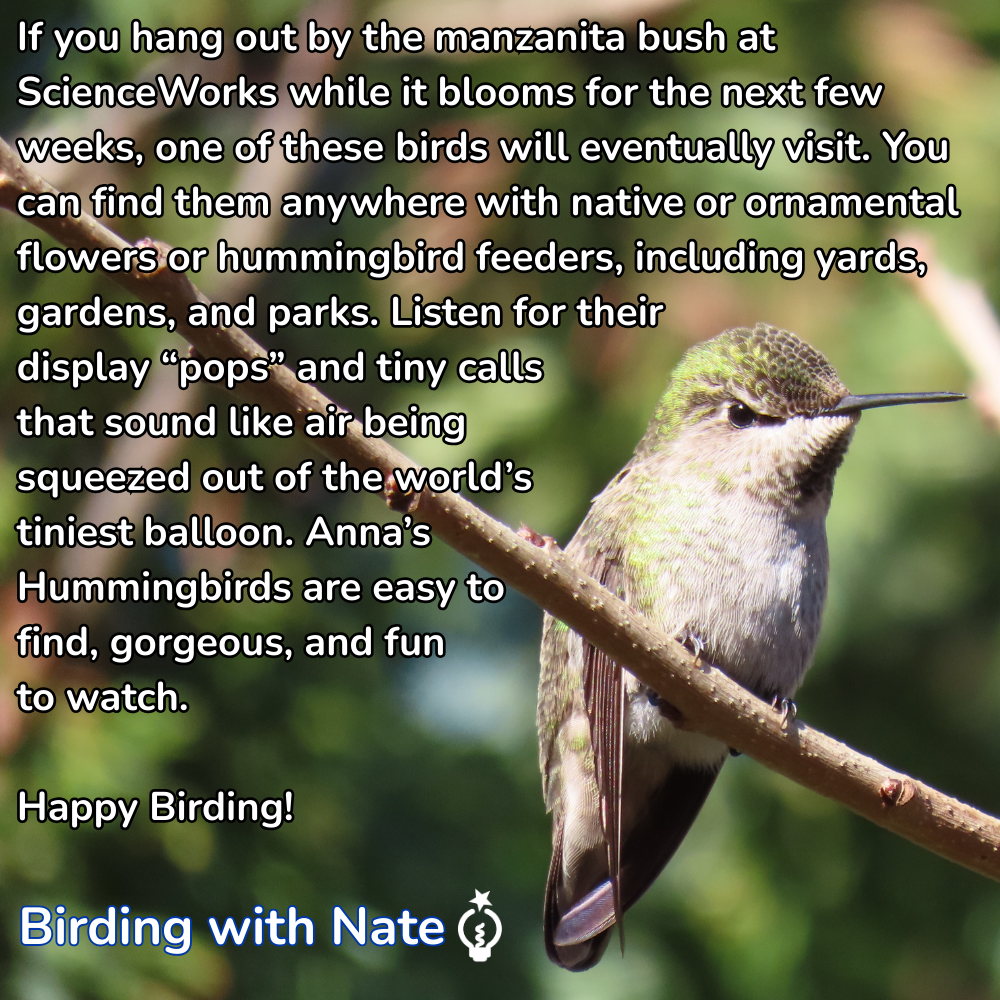
All hummingbirds feed on nectar, and the ones at ScienceWorks enjoy the manzanita bush currently blooming next to the walkway leading to the entrance. They act as pollinators, as you can see from the pollen on the tip of this one’s bill. Specialized wings allow hummingbirds to hover in place while feeding, courting, and fighting. A healthy adult hummingbird is arguably the most agile and maneuverable object in the history of Planet Earth, able to accelerate to top speed almost instantly in any direction — including backwards. Hummingbirds have achieved complete mastery of three-dimensional space.
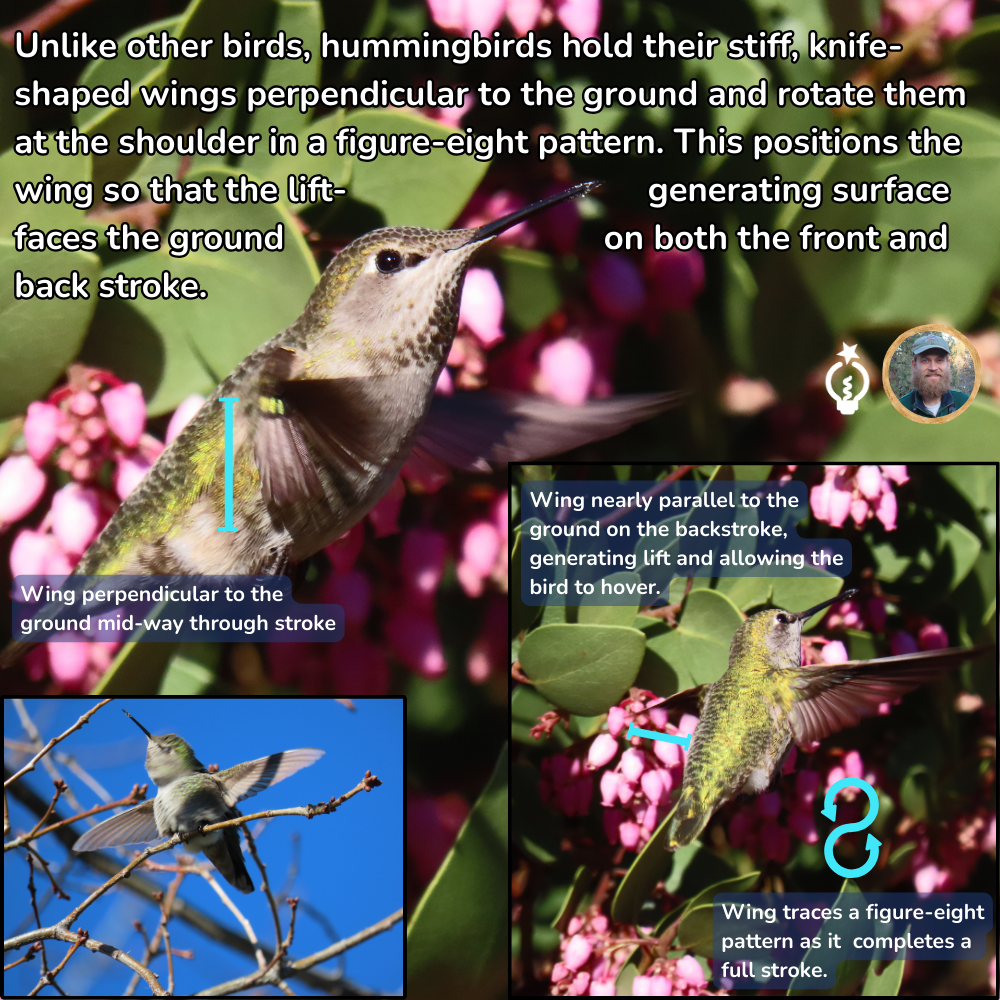
Unlike other birds, hummingbirds hold their stiff, knife-shaped wings perpendicular to the ground and rotate them at the shoulder in a figure-eight pattern. This positions the wing so that the lift-generating surface faces the ground on both the front and back stroke.
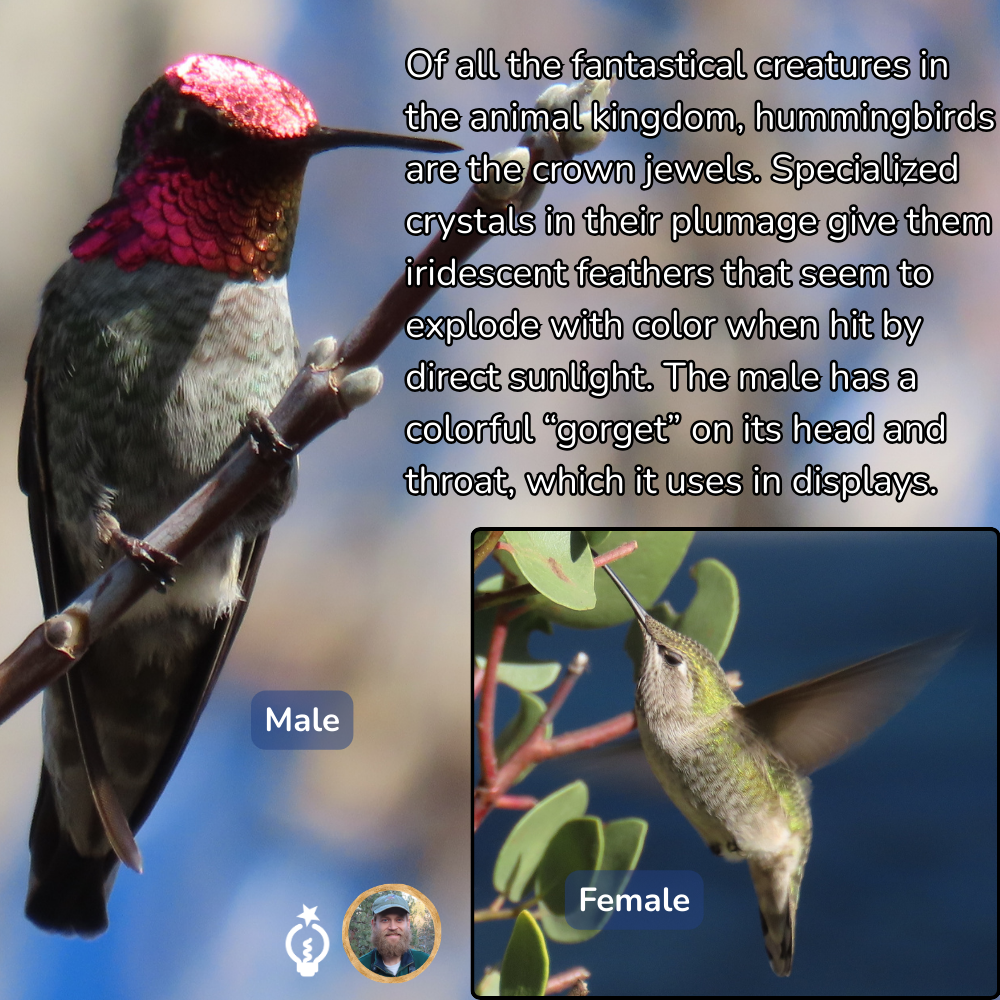
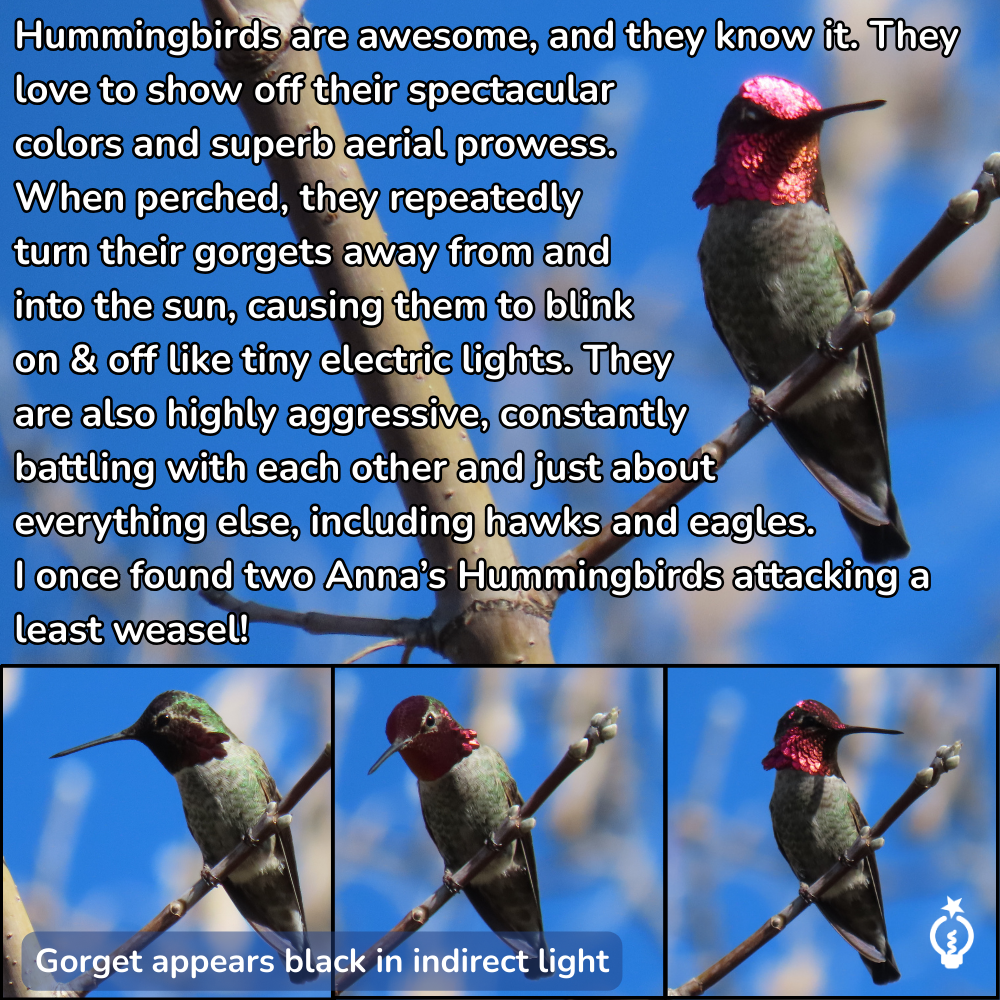
Of all the fantastical creatures in the animal kingdom, hummingbirds are the crown jewels. Specialized crystals in their plumage give them iridescent feathers that seem to explode with color when hit by direct sunlight. The male has a colorful “gorget” on its head and throat, which it uses in displays.
Hummingbirds are awesome, and they know it. They love to show off their spectacular colors and superb aerial prowess. When perched, they repeatedly turn their gorgets away from and into the sun, causing them to blink on and off like tiny electric lights. They are also highly aggressive, constantly battling with each other and just about everything else, including hawks and eagles. I once found two Anna’s Hummingbirds attacking a least weasel!
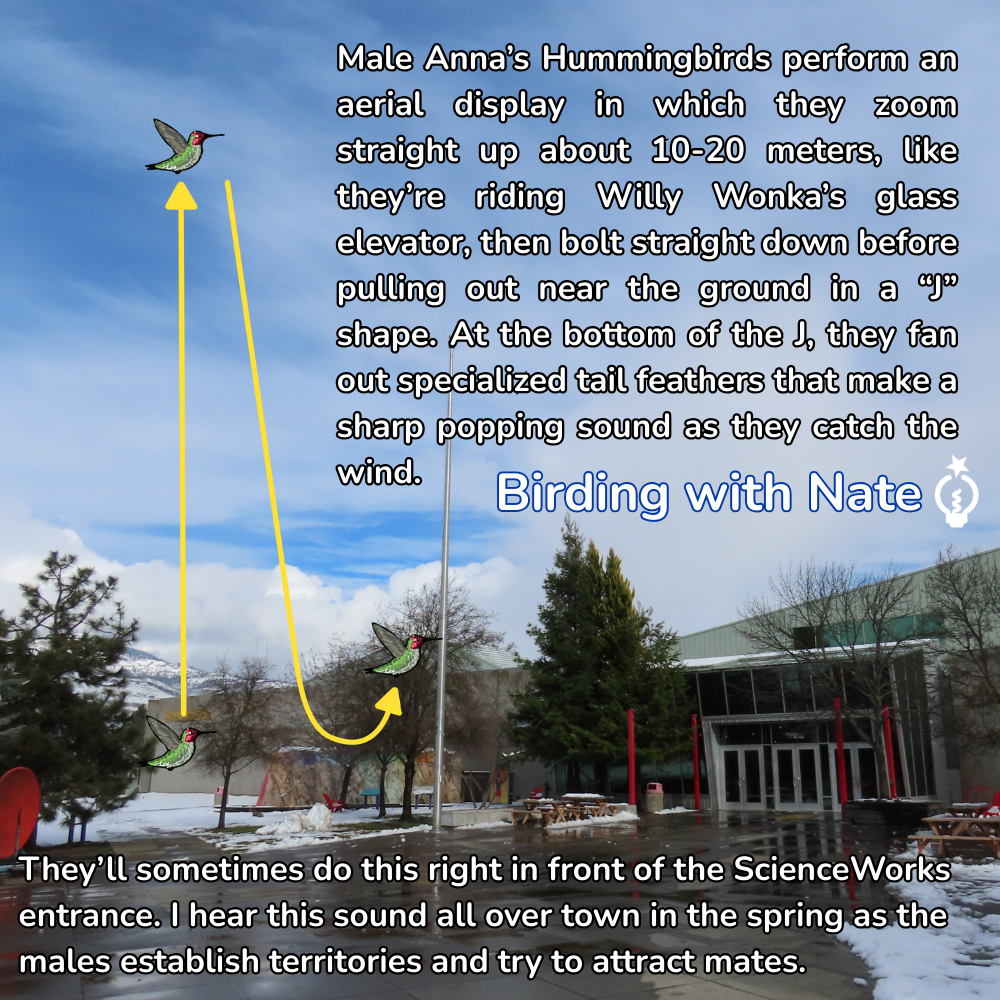
Male Anna’s Hummingbirds perform an aerial display in which they zoom straight up about 10-20 meters, like they’re riding Willy Wonka’s glass elevator, then bolt straight down before pulling out near the ground in a “J” shape. At the bottom of the J, they fan out specialized tail feathers that make a sharp popping sound as they catch the wind.
They’ll sometimes do this right in front of the ScienceWorks entrance. I hear this sound all over town in the spring as the males establish territories and try to attract mates.
If you hang out by the manzanita bush at ScienceWorks while it blooms for the next few weeks, one of these birds will eventually visit. You can find them anywhere with native or ornamental flowers or hummingbird feeders, including yards, gardens, and parks. Listen for their display “pops” and tiny calls that sound like air being squeezed out of the world’s tiniest balloon. Anna’s Hummingbirds are easy to find, gorgeous, and fun to watch.
Happy Birding!
And don't forget to add your own bird sightings to the ScienceWorks eBird Hotspot!
Related Articles