


Birding With Nate — Lesser Goldfinch
Birding with Nate
Lesser Goldfinch
Hello ScienceWorks friends!
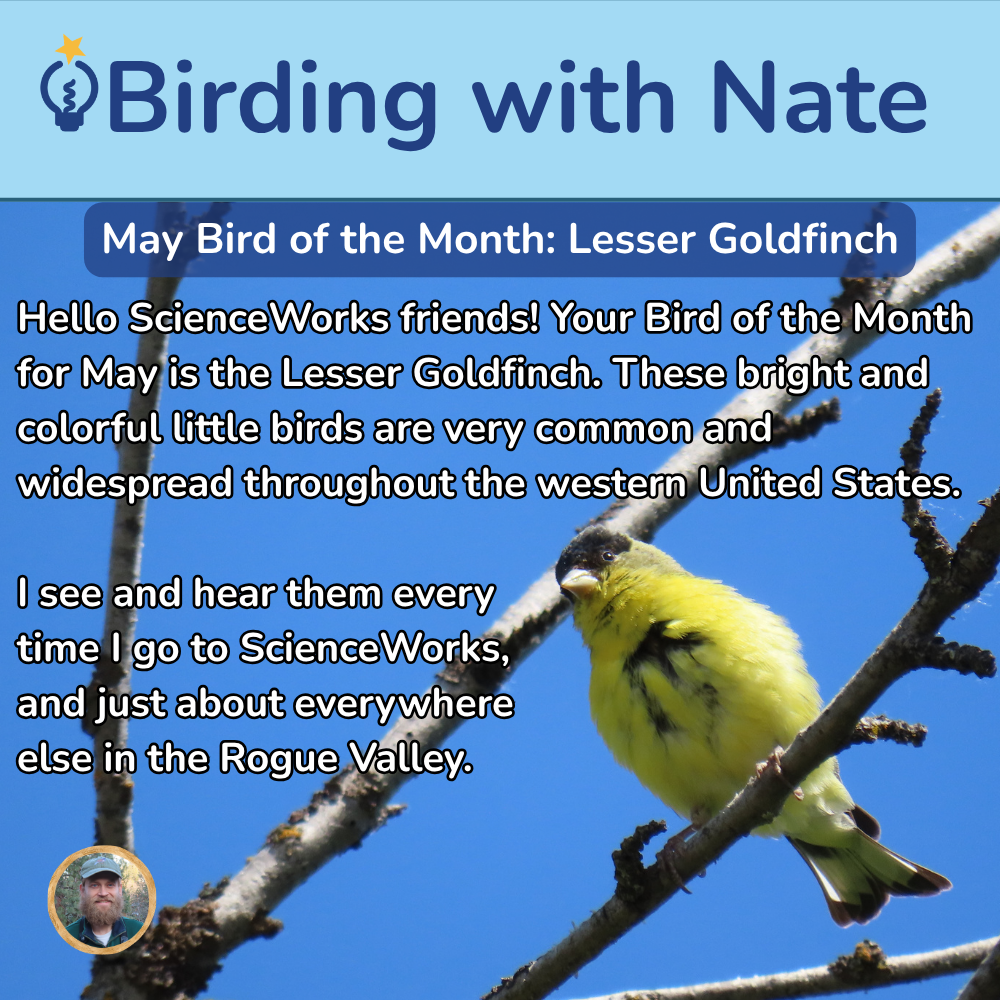
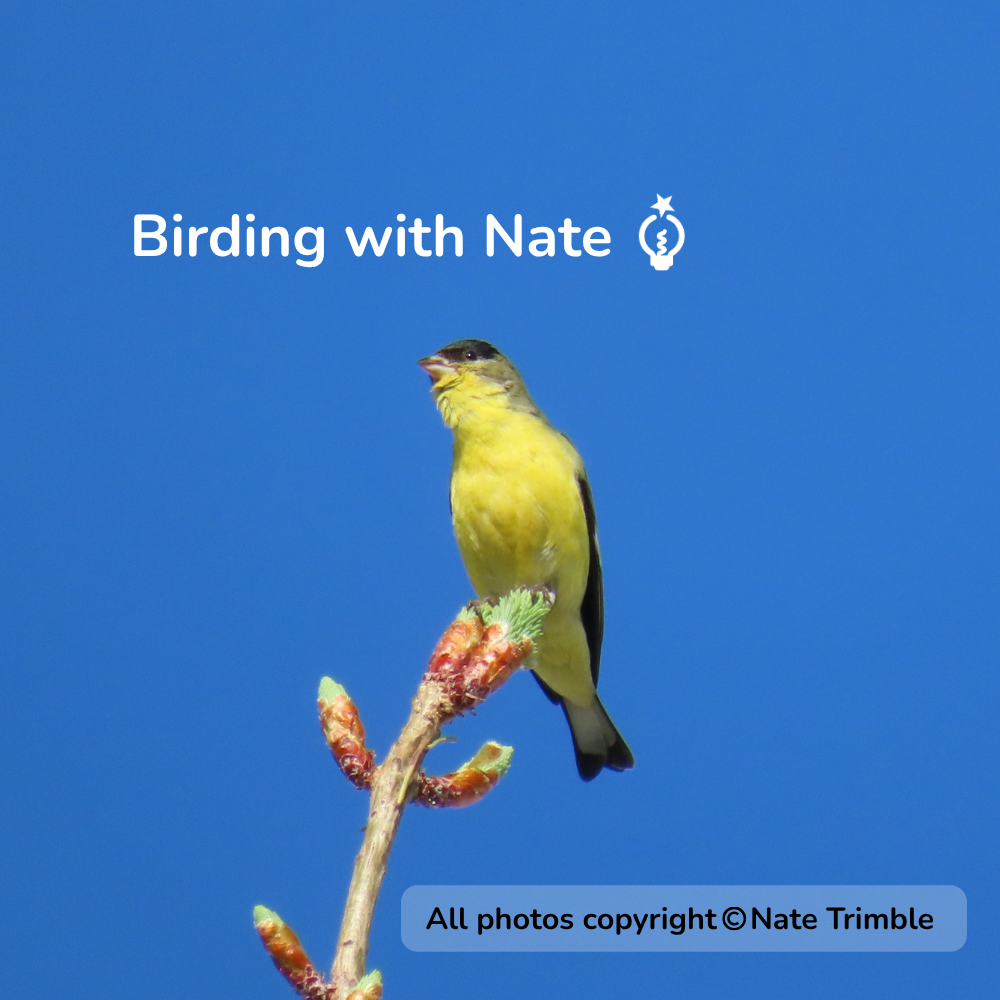
Your Bird of the Month for May is the Lesser Goldfinch. These bright and colorful little birds are very common and widespread throughout the western United States. I see and hear them every time I go to ScienceWorks, and just about everywhere else in the Rogue Valley.
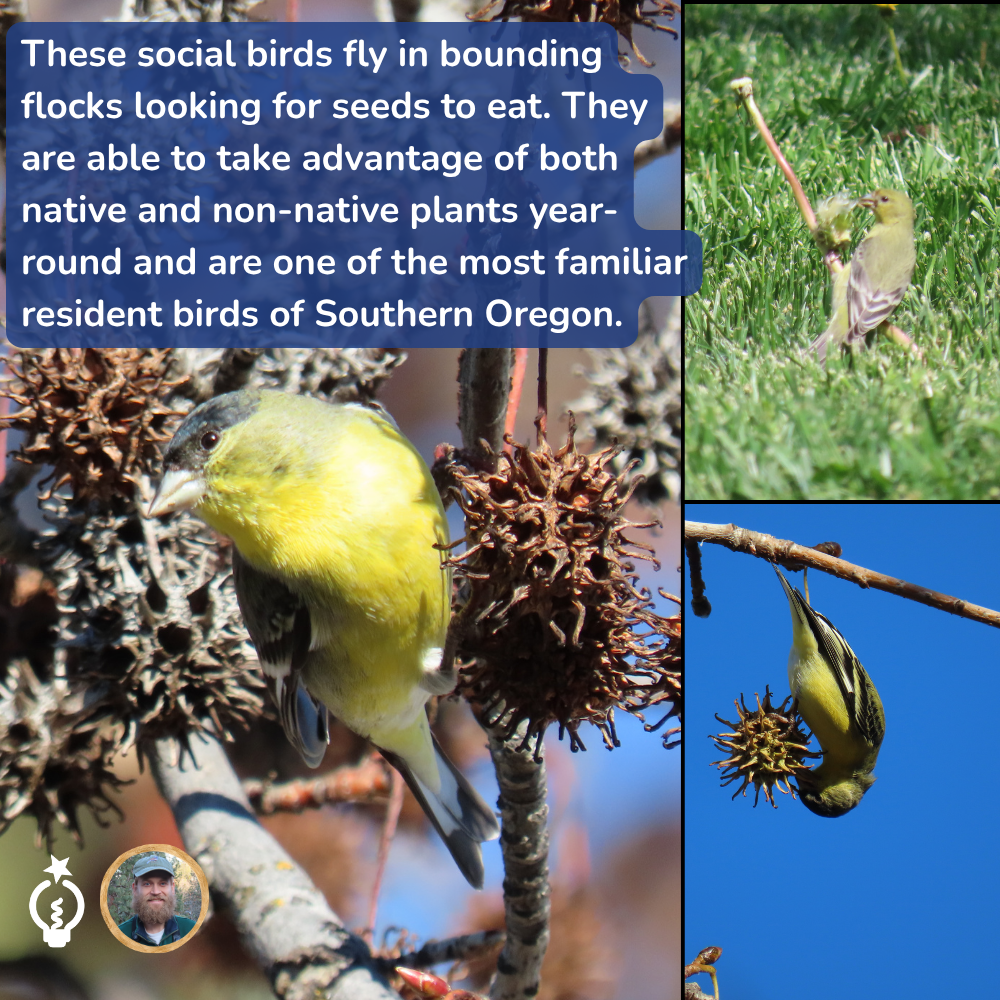
These social birds fly in bounding flocks looking for seeds to eat. They are able to take advantage of both native and non-native plants year-round and are one of the most familiar resident birds of Southern Oregon.
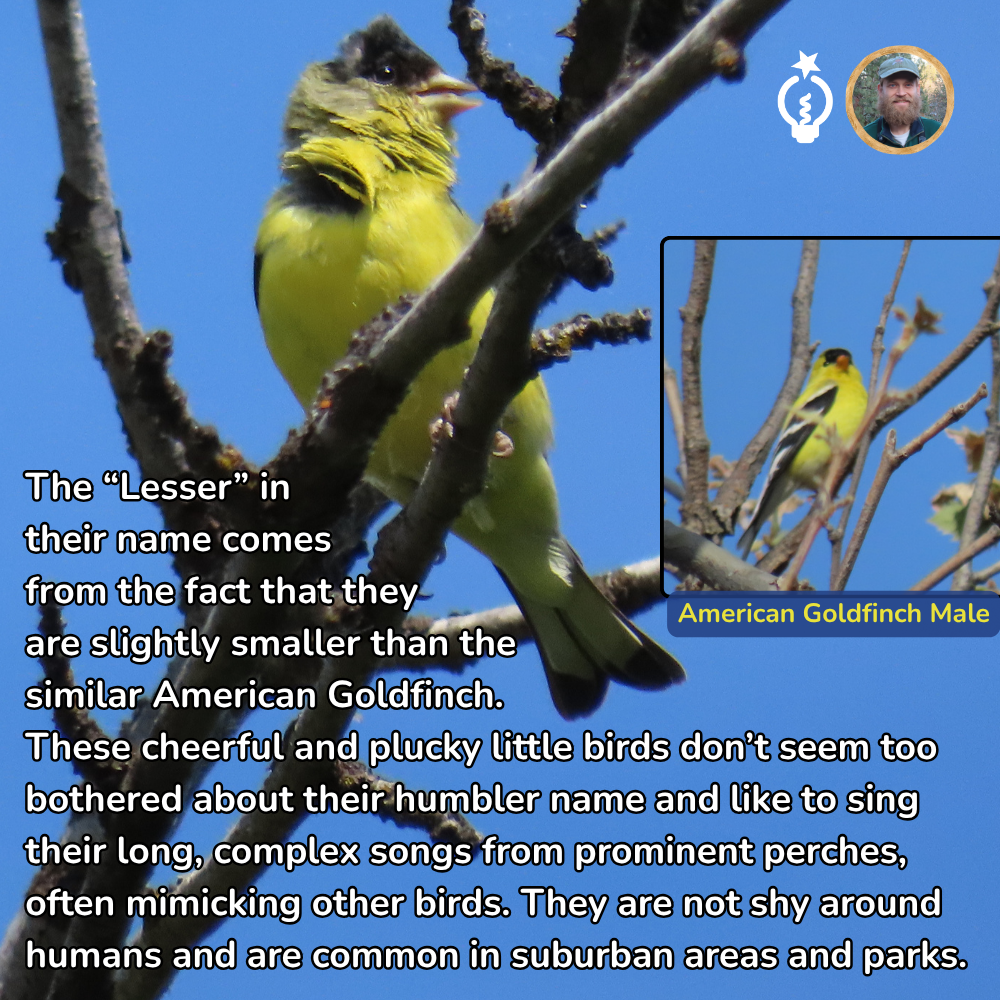
The “Lesser” in their name comes from the fact that they are slightly smaller than the similar American Goldfinch. These cheerful and plucky little birds don’t seem too bothered about their humbler name and like to sing their long, complex songs from prominent perches, often mimicking other birds. They are not shy around humans and are common in suburban areas and parks.
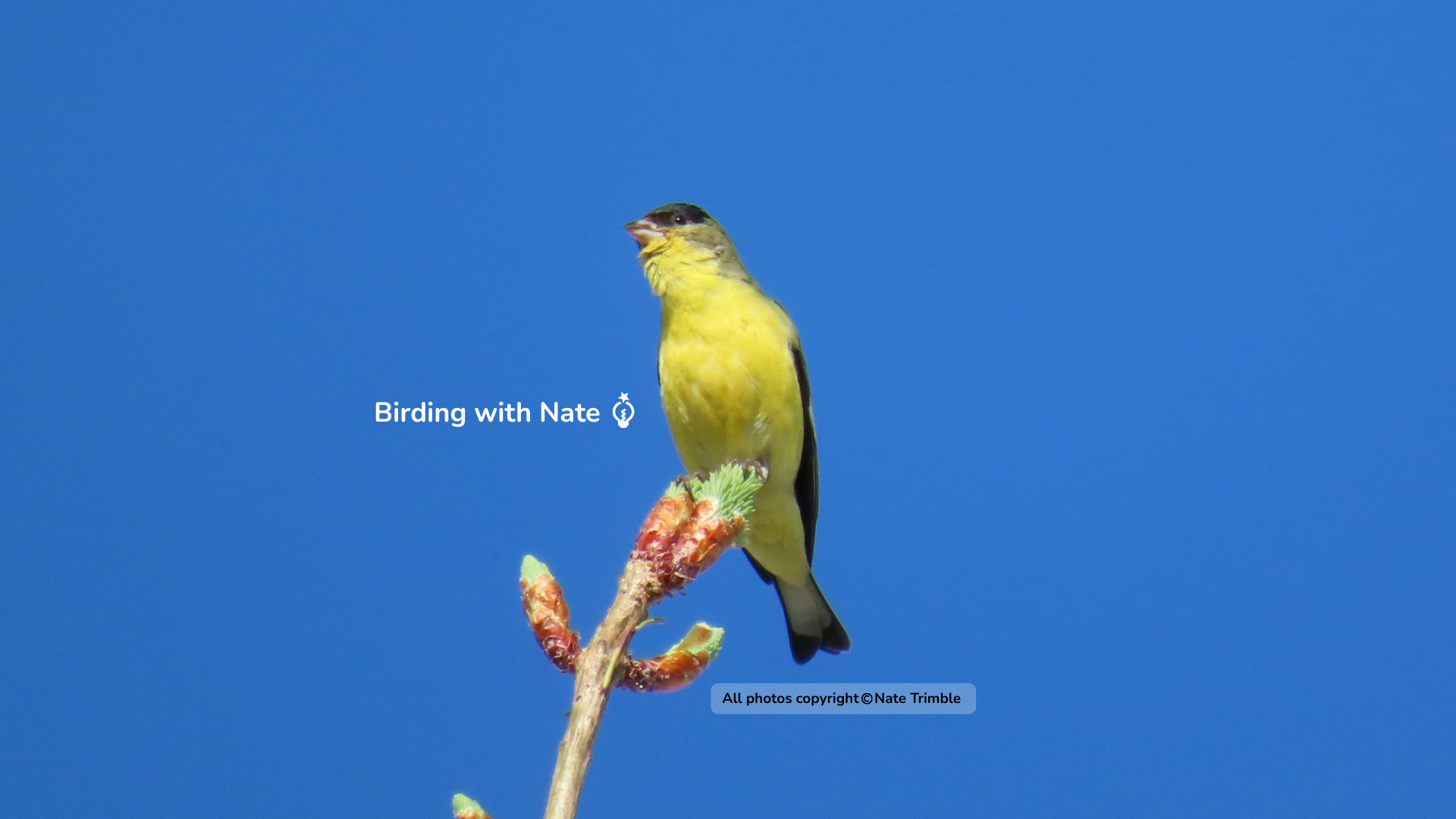
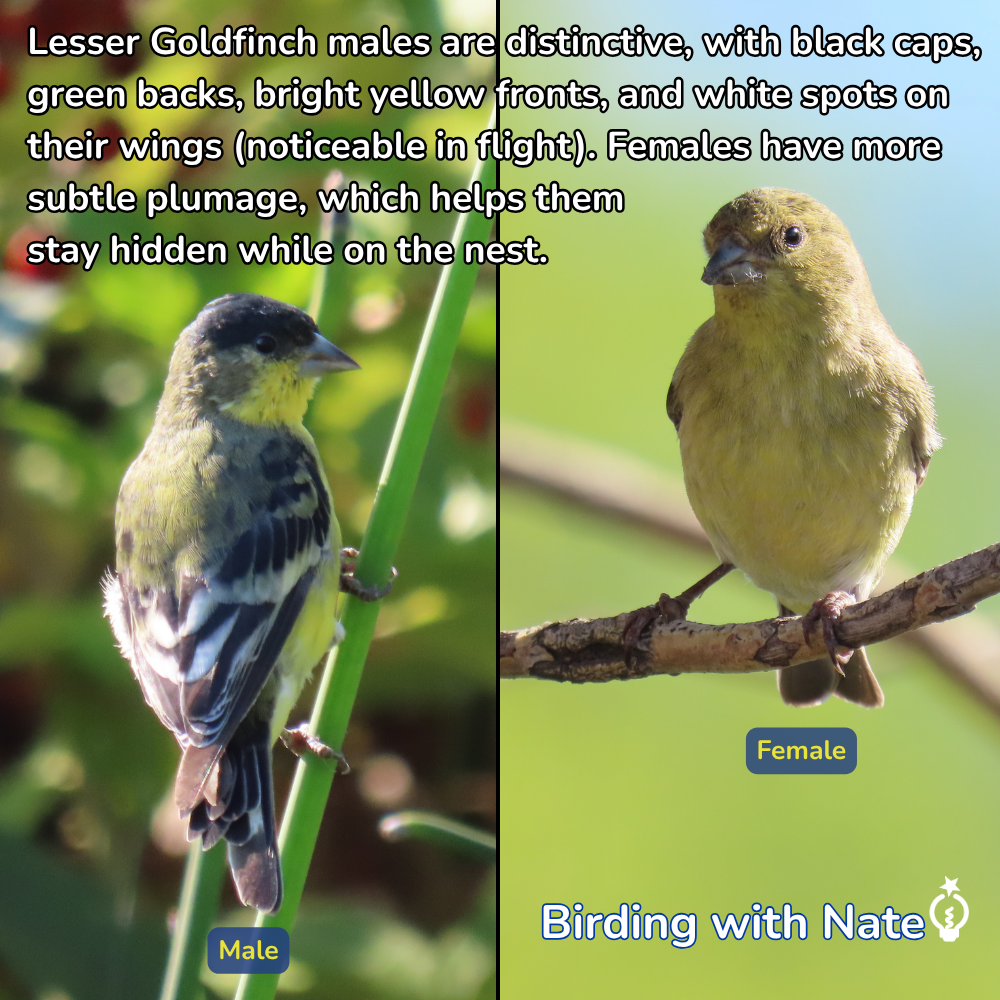
Lesser Goldfinch males are distinctive, with black caps, green backs, bright yellow fronts, and white spots on their wings (noticeable in flight). Females have more subtle plumage, which helps them stay hidden while on the nest.
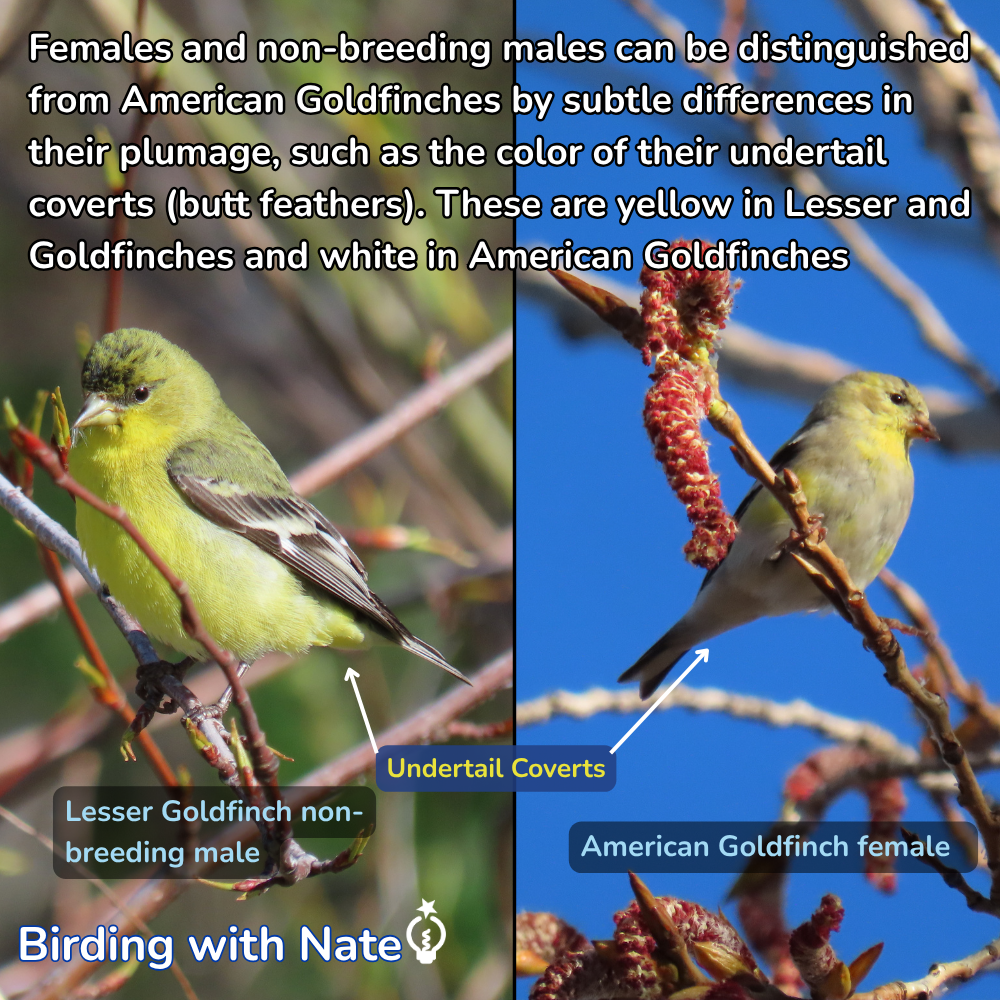
Females and non-breeding males can be distinguished from American Goldfinches by subtle differences in their plumage, such as the color of their undertail coverts (butt feathers). These are yellow in Lesser and Goldfinches and white in American Goldfinches.
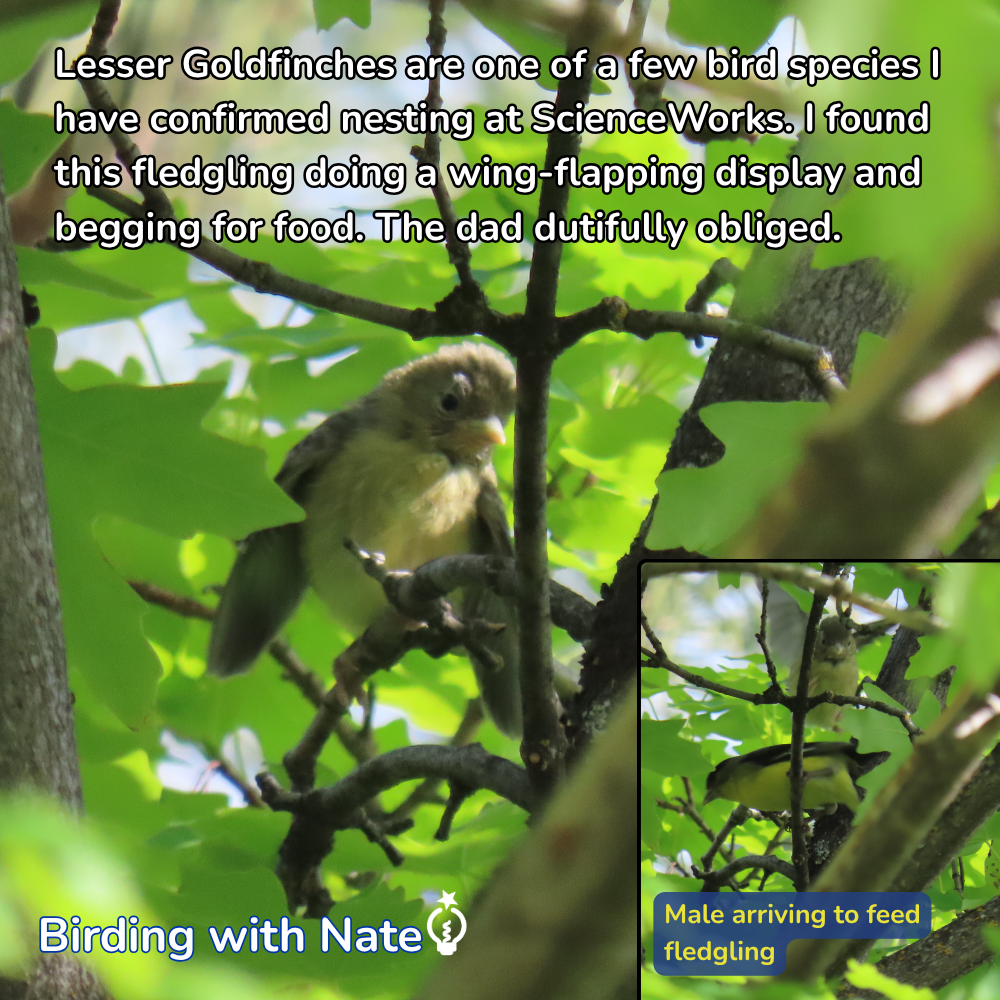
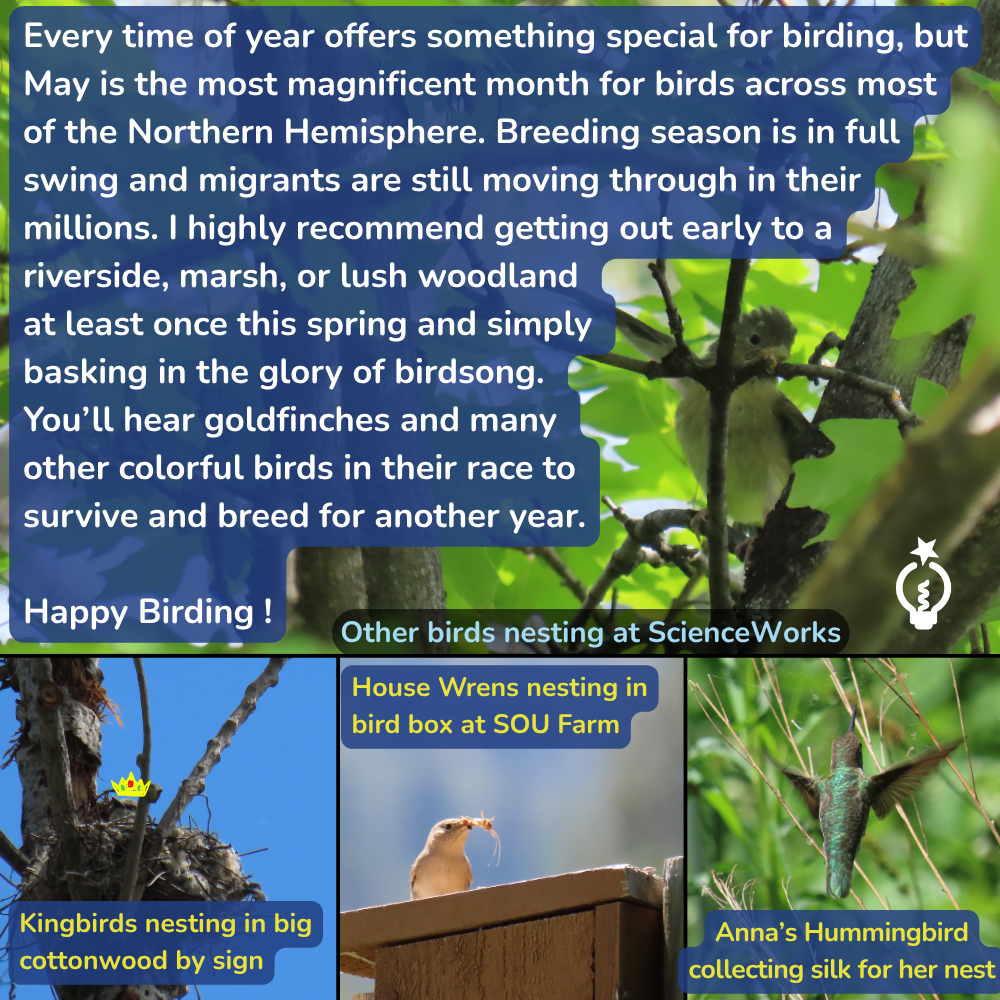
Lesser Goldfinches are one of a few bird species I have confirmed nesting at ScienceWorks. I found this fledgling doing a wing-flapping display and begging for food. The dad dutifully obliged.
Every time of year offers something special for birding, but May is the most magnificent month for birds across most of the Northern Hemisphere. Breeding season is in full swing and migrants are still moving through in their millions. I highly recommend getting out early to a riverside, marsh, or lush woodland at least once this spring and simply basking in the glory of birdsong. You’ll hear goldfinches and many other colorful birds in their race to survive and breed for another year.
Happy Birding!
And don't forget to add your own bird sightings to the ScienceWorks eBird Hotspot!
Related Articles