


Birding With Nate — March Bird of the Month: Yellow-Rumped Warbler
Birding with Nate
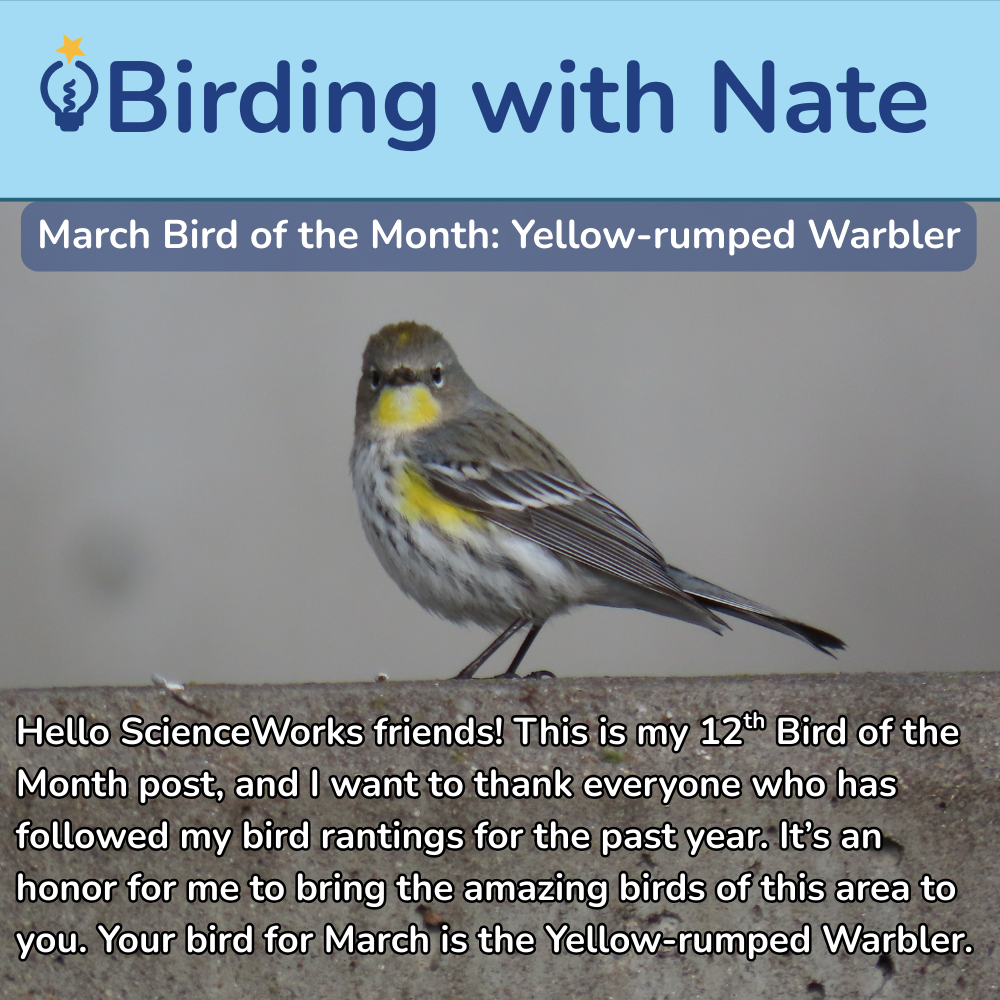
March Bird of the Month: Yellow-Rumped Warbler
Hello ScienceWorks friends!
This is my 12th Bird of the Month post, and I want to thank everyone who has followed my bird rantings for the past year. It’s an honor for me to bring the amazing birds of this area to you. Your bird for March is the Yellow-rumped Warbler.
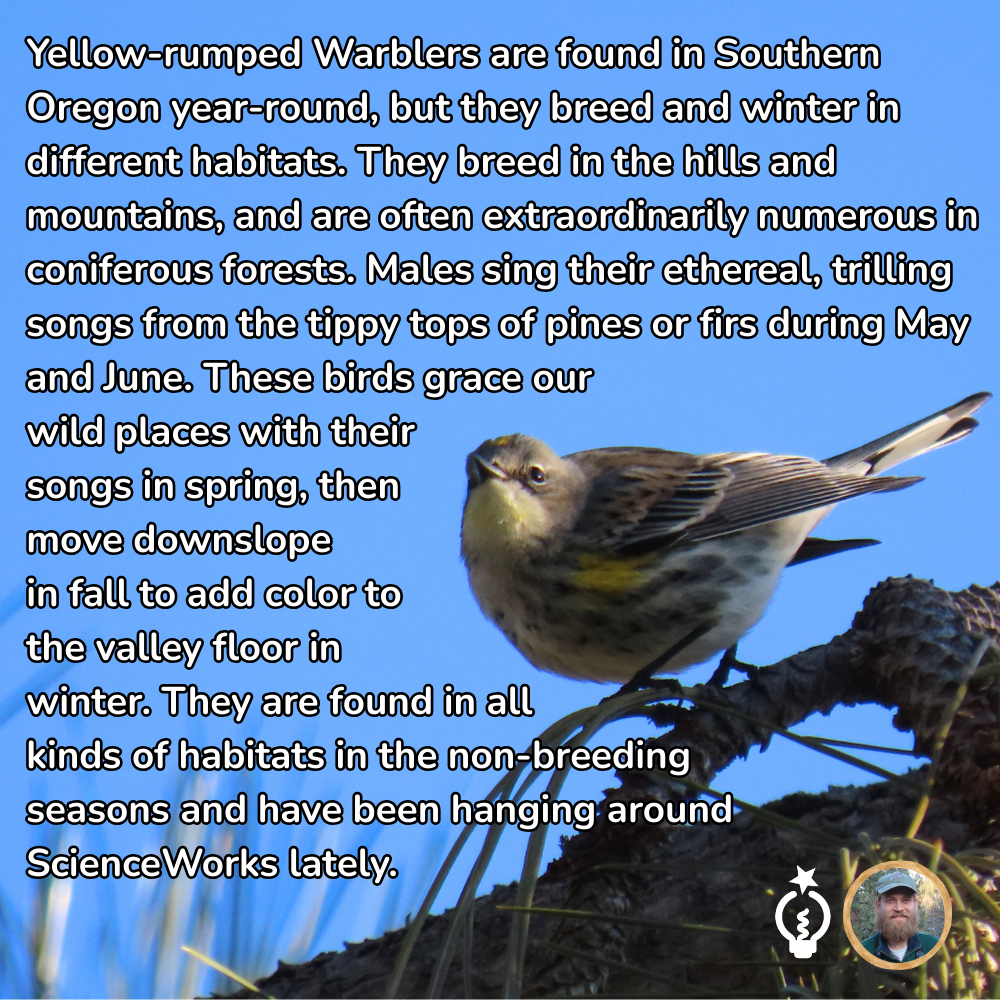
Yellow-rumped Warblers are found in Southern Oregon year-round, but they breed and winter in different habitats. They breed in the hills and mountains, and are often extraordinarily numerous in coniferous forests. Males sing their ethereal, trilling songs from the tippy tops of pines or firs during May and June. These birds grace our wild places with their songs in spring, then move downslope in fall to add color to the valley floor in winter. They are found in all
kinds of habitats in the non-breeding seasons and have been hanging around ScienceWorks lately.
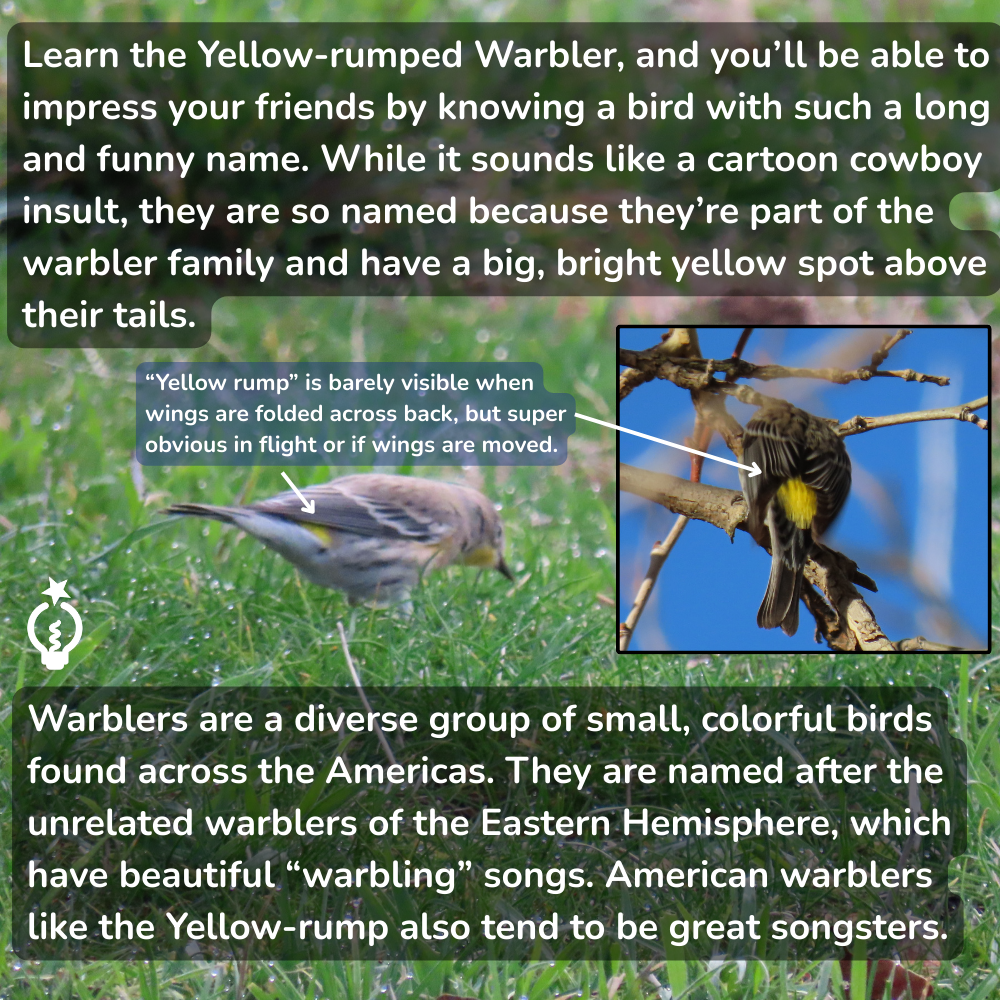
Learn the Yellow-rumped Warbler, and you'll be able to impress your friends by knowing a bird with such a long and funny name. While it sounds like a cartoon cowboy insult, they are so named because they’re part of the warbler family and have a big, bright yellow spot above their tails.
Warblers are a diverse group of small, colorful birds found across the Americas. They are named after the unrelated warblers of the Eastern Hemisphere, which have beautiful “warbling” songs. American warblers like the Yellow-rump also tend to be great songsters.
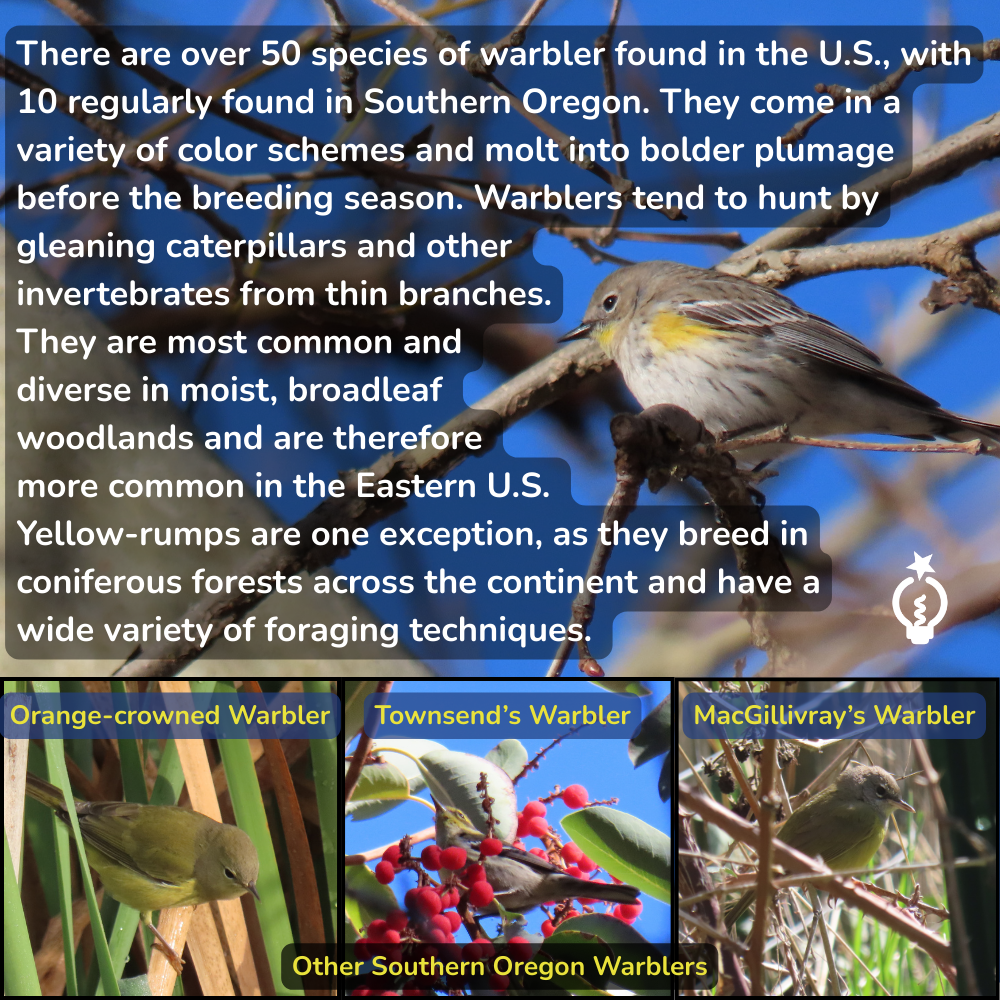
There are over 50 species of warbler found in the U.S., with 10 regularly found in Southern Oregon. They come in a variety of color schemes and molt into bolder plumage before breeding season. Warblers tend to hunt by gleaning caterpillars and other invertebrates from thin branches. They are most common and diverse in moist, broadleaf woodlands and are therefore more common in the Eastern U.S. Yellow-rumps are one exception, as they breed in coniferous forests across the continent and have a wide variety of foraging techniques.
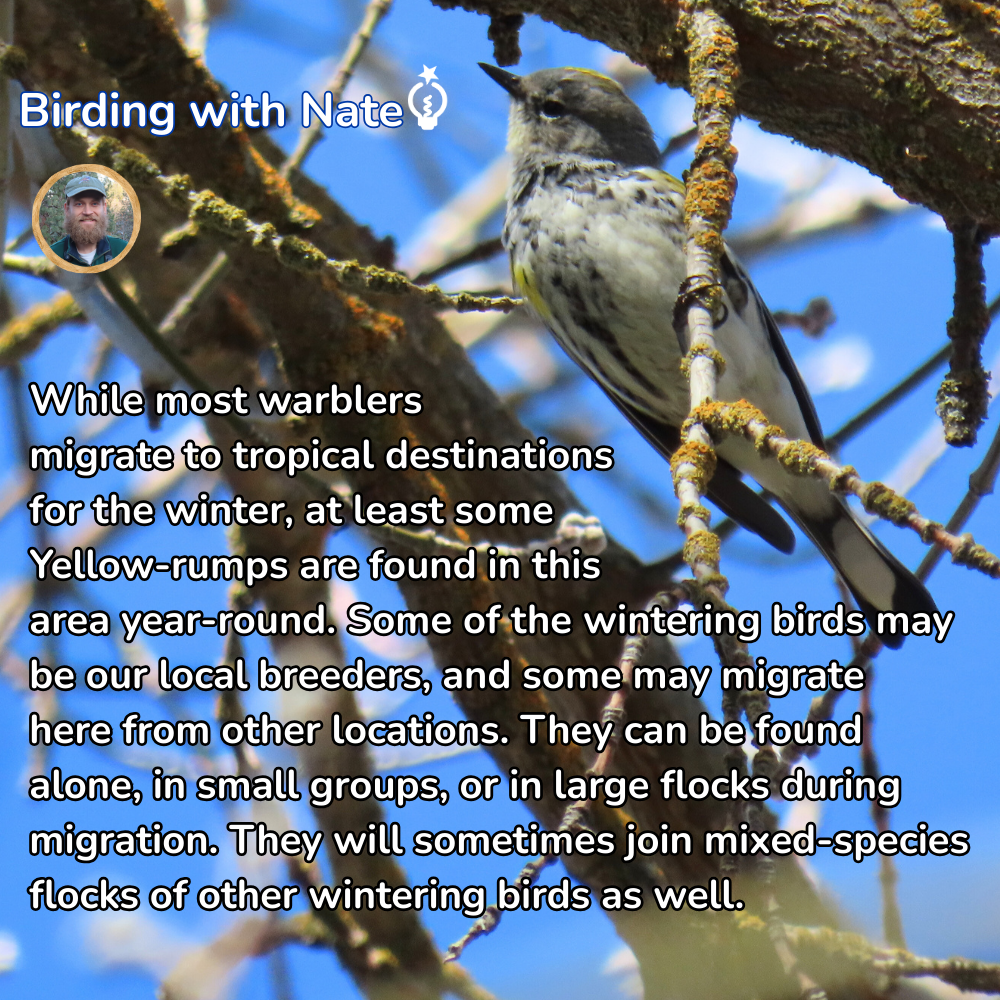
While most warblers migrate to tropical destinations for the winter, at least some Yellow-rumps are found in this area year-round. Some of the wintering birds may be our local breeders, and some may migrate here from other locations. They can be found alone, in small groups, or in large flocks during migration. They will sometimes join mixed-species flocks of other wintering birds as well.
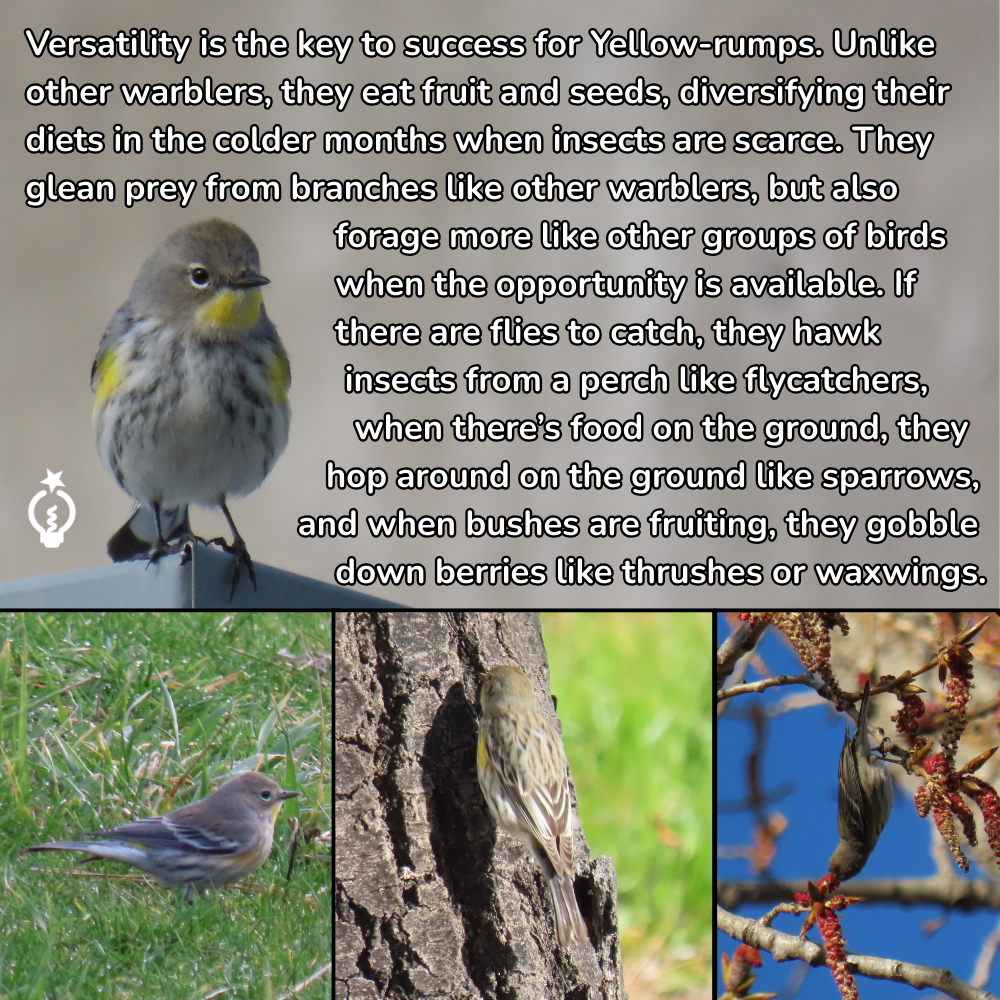
Versatility is the key to success for Yellow-rumps. Unlike other warblers, they eat fruit and seeds, diversifying their diets in the colder months when insects are scarce. They glean prey from branches like other warblers, but also forage more like other groups of birds when the opportunity is available. If there are flies to catch, they hawk insects from a perch like flycatchers, when there’s food on the ground, they hop around on the ground like sparrows, and when bushes are fruiting, they gobble down berries like thrushes or waxwings.
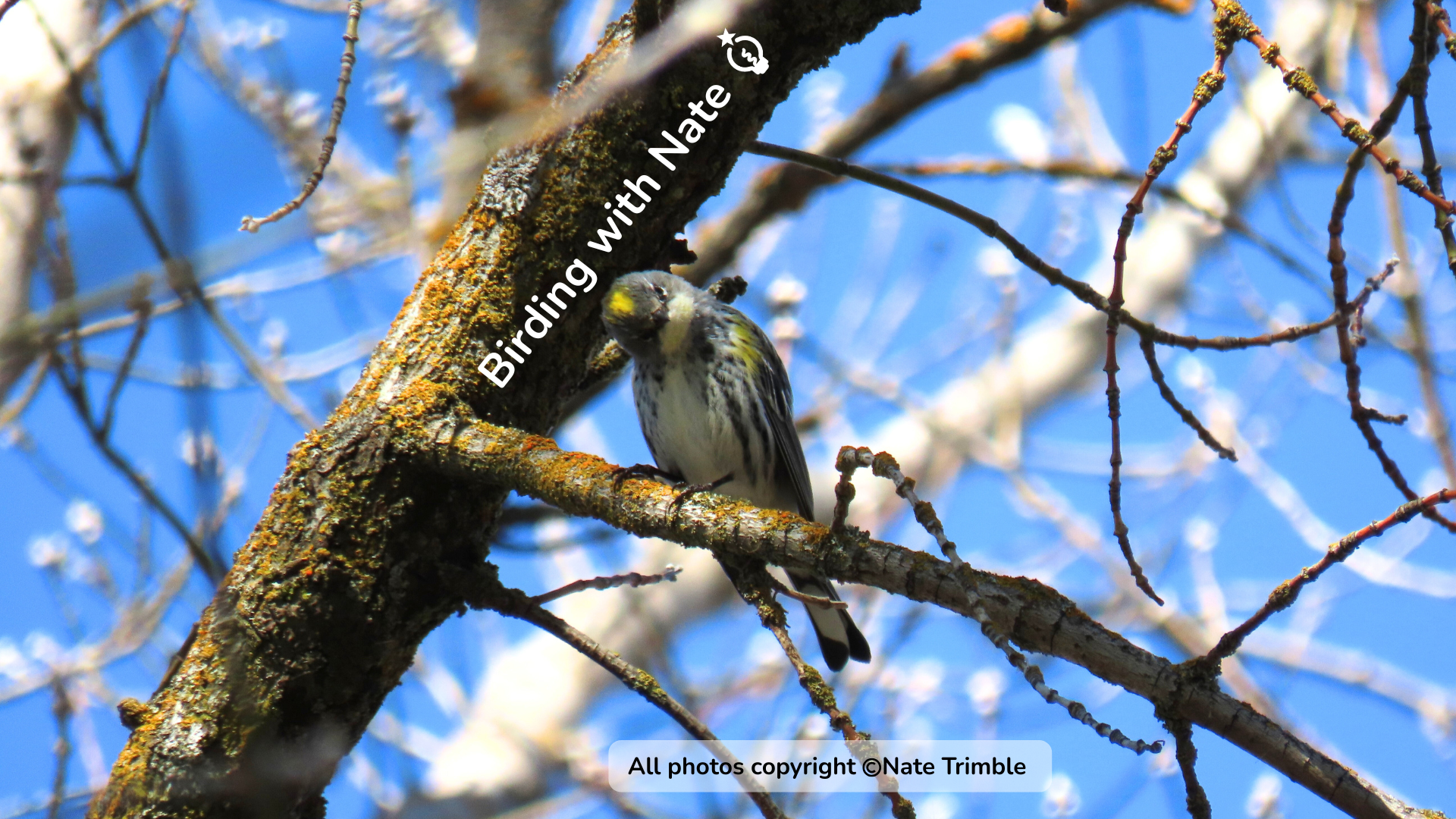
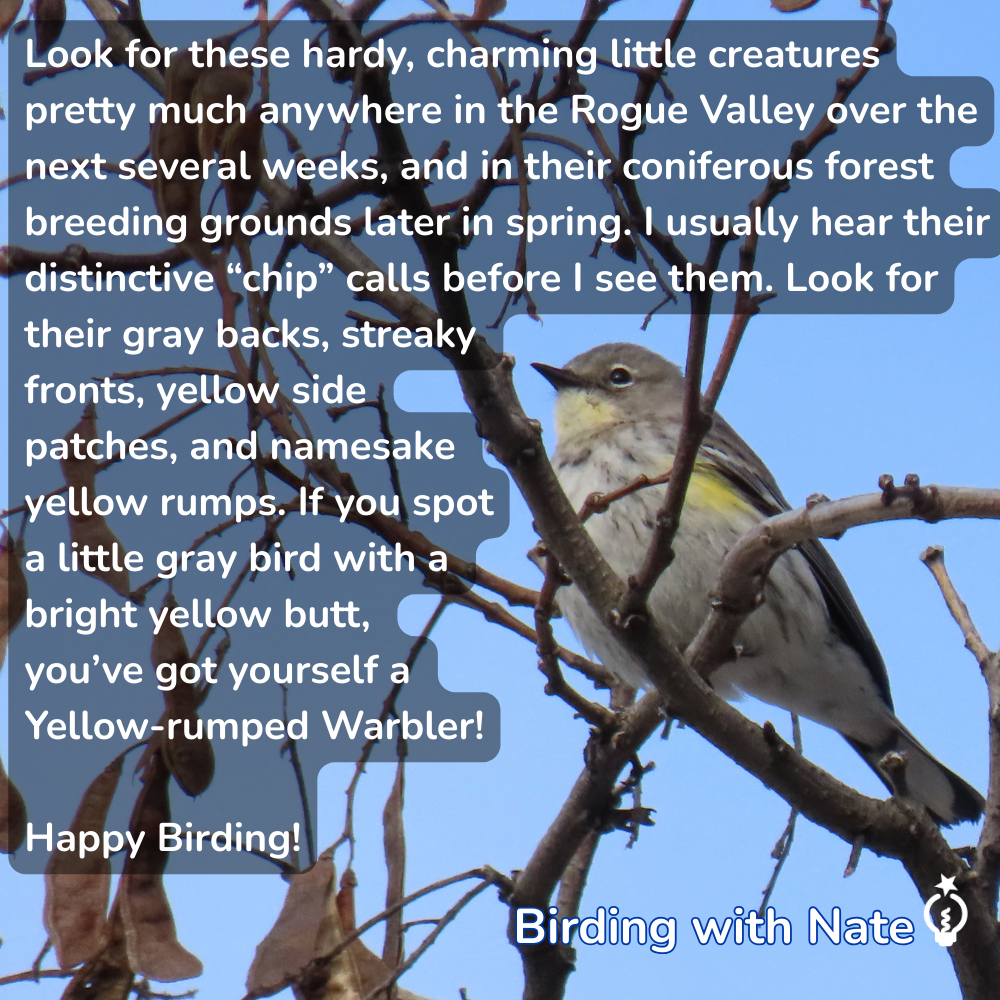
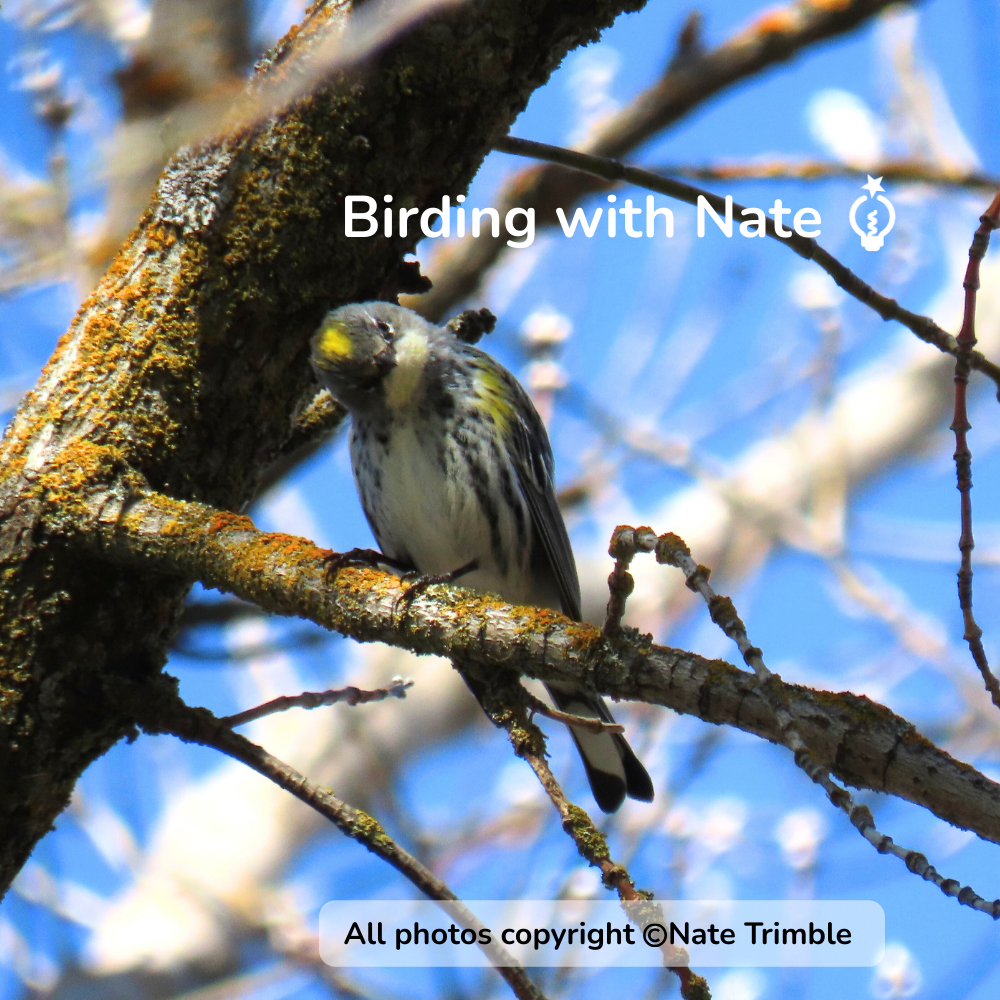
Look for these hardy, charming little creatures pretty much anywhere in the Rogue Valley over the next several weeks, and in their coniferous forest breeding grounds later in spring. I usually hear their distinctive “chip” calls before I see them. Look for their gray backs, streaky fronts, yellow side patches, and namesake yellow rumps. If you spot a little gray bird with a bright yellow butt, you’ve got yourself a Yellow-rumped Warbler!
Happy Birding!
And don't forget to add your own bird sightings to the ScienceWorks eBird Hotspot!
Related Articles