


Birding With Nate — Nesting Hummingbirds
Birding with Nate
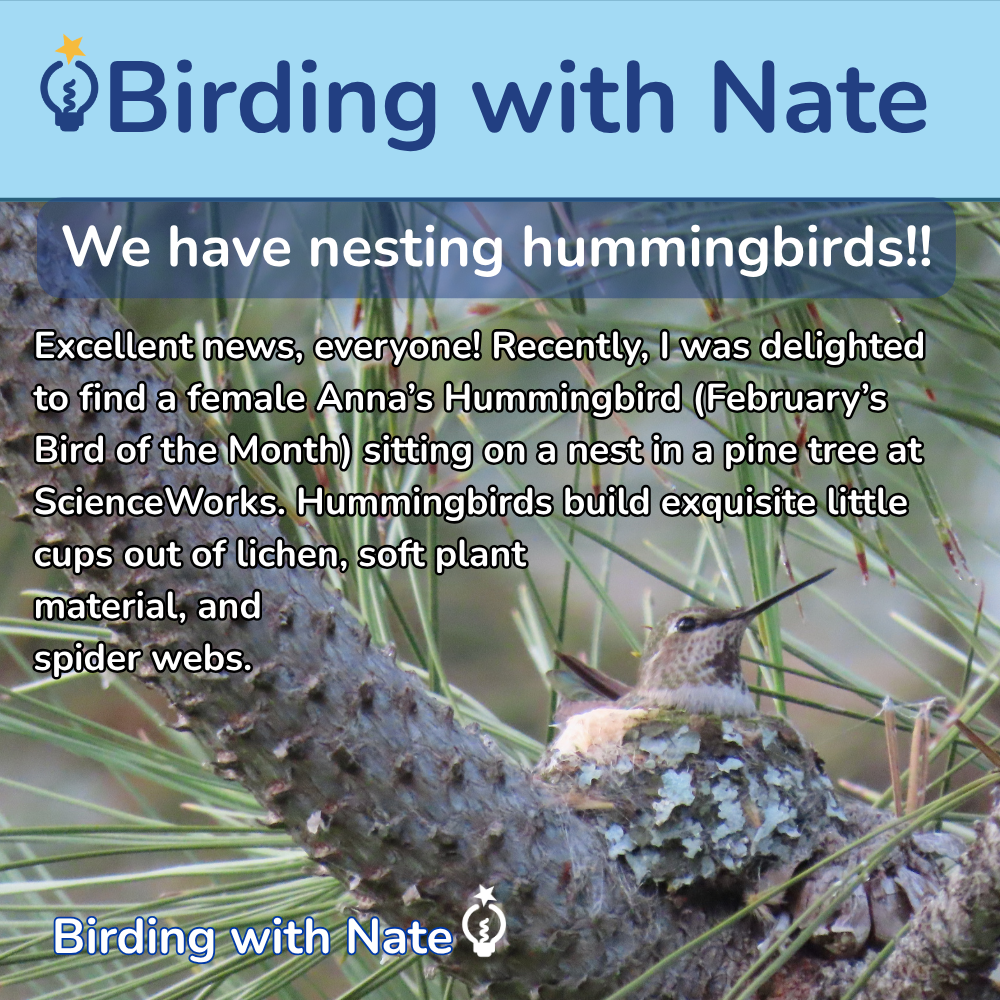
We have nesting hummingbirds!
Hello ScienceWorks friends!
We have nesting hummingbirds!!
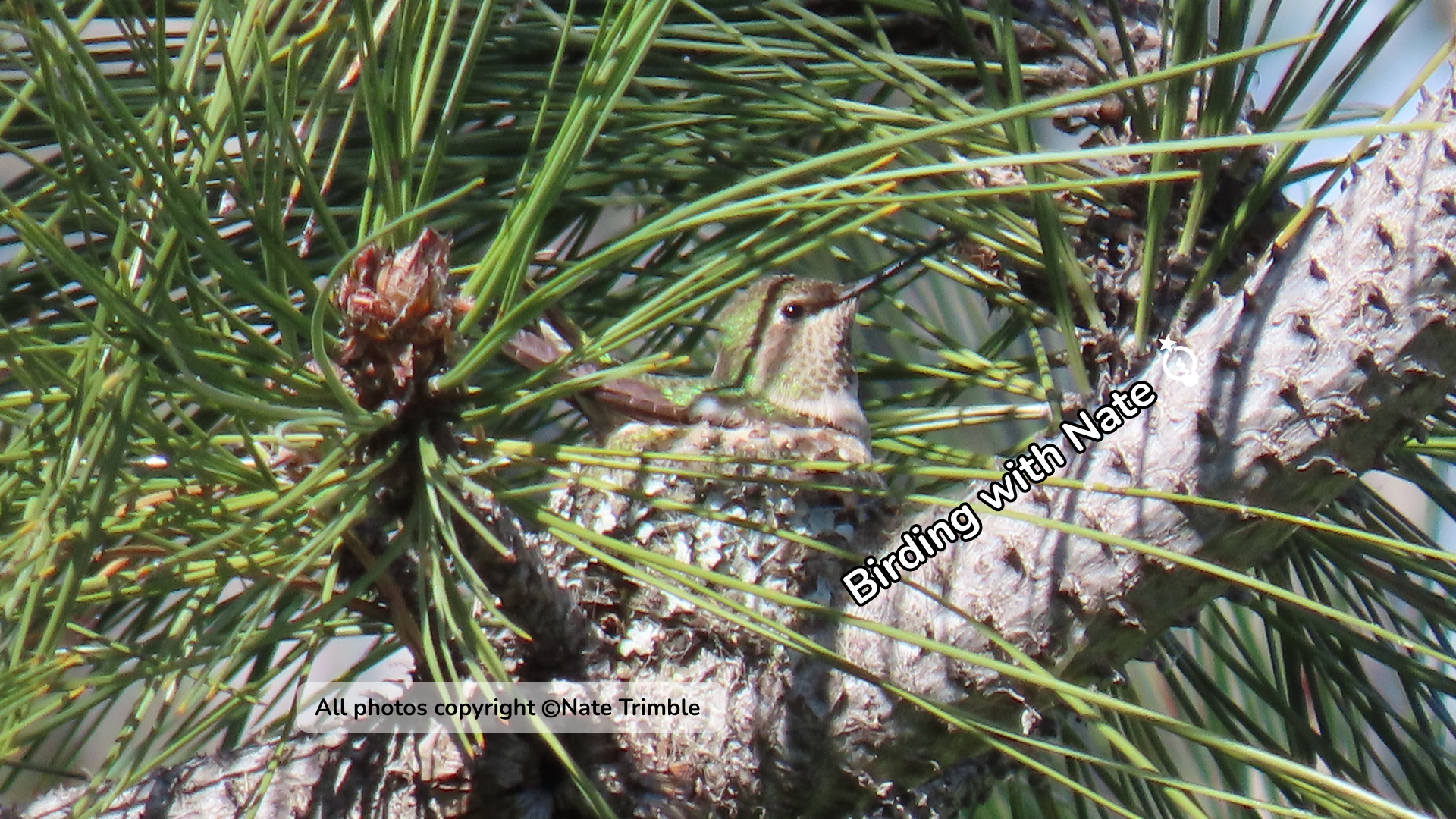
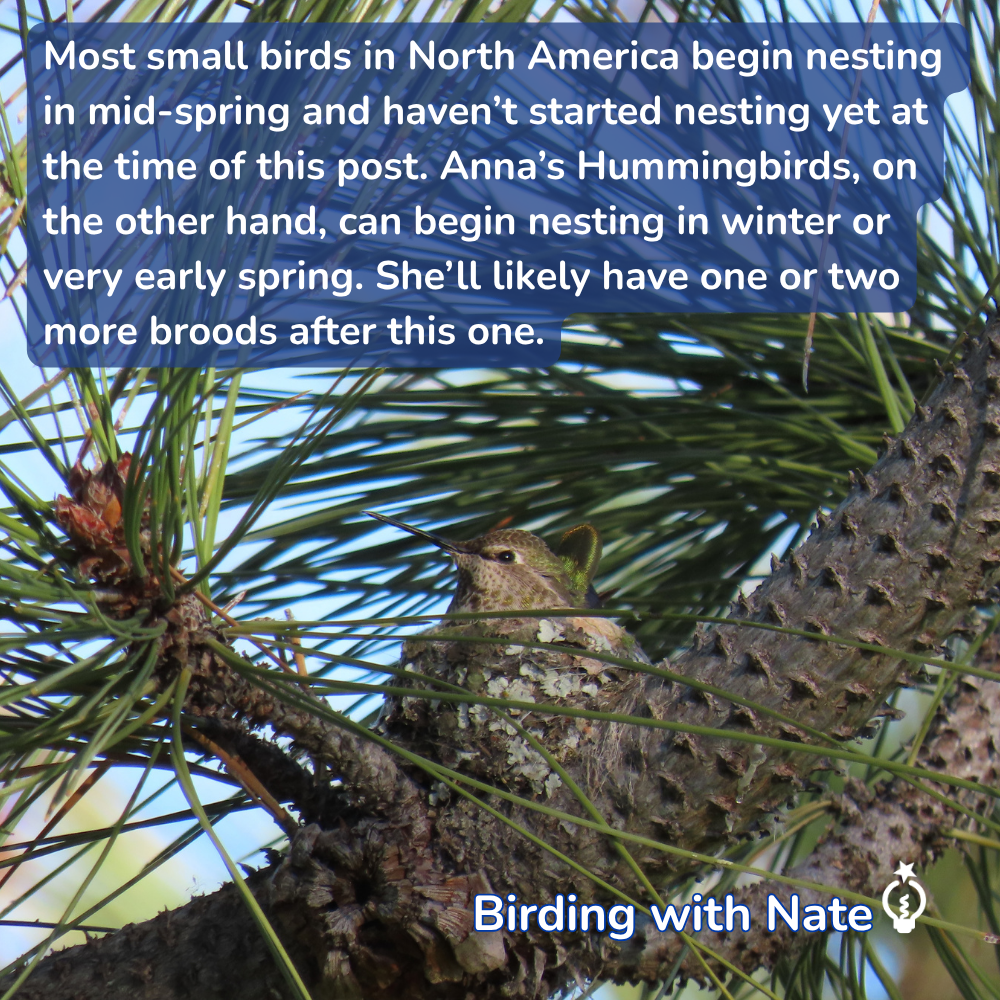
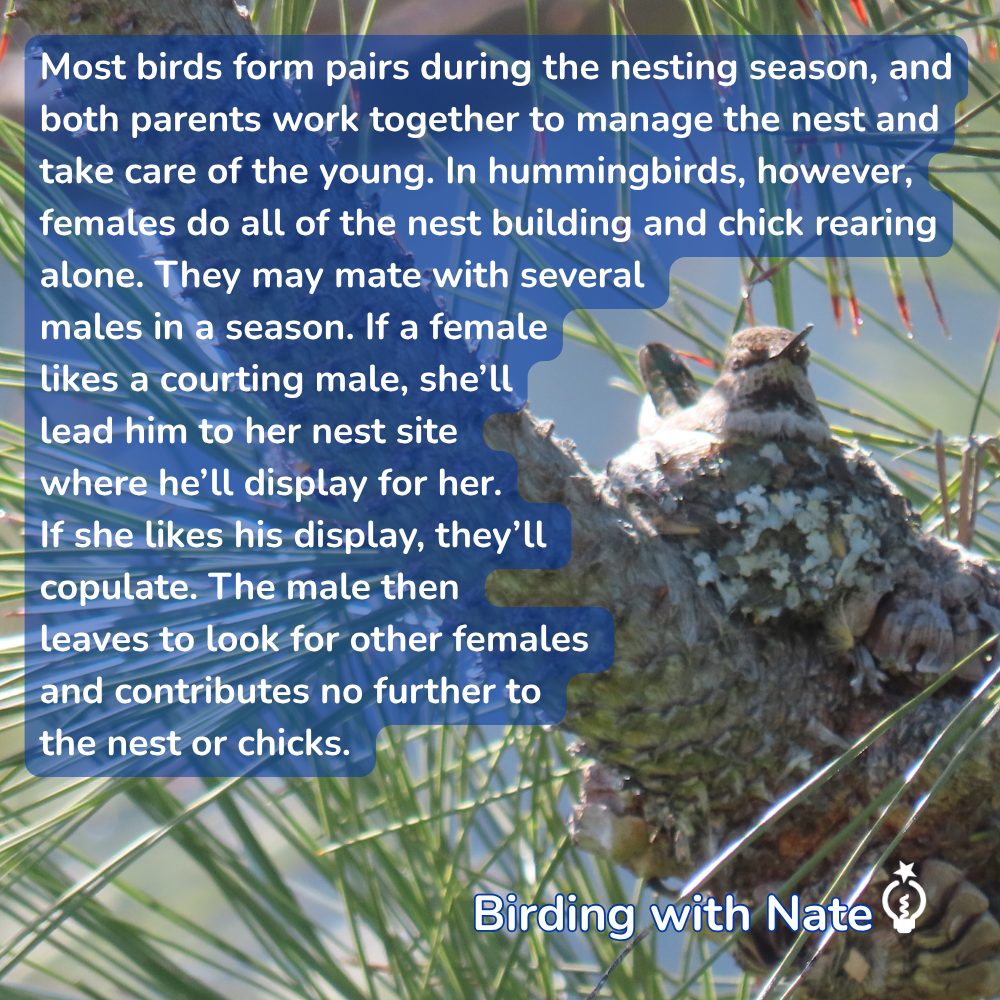
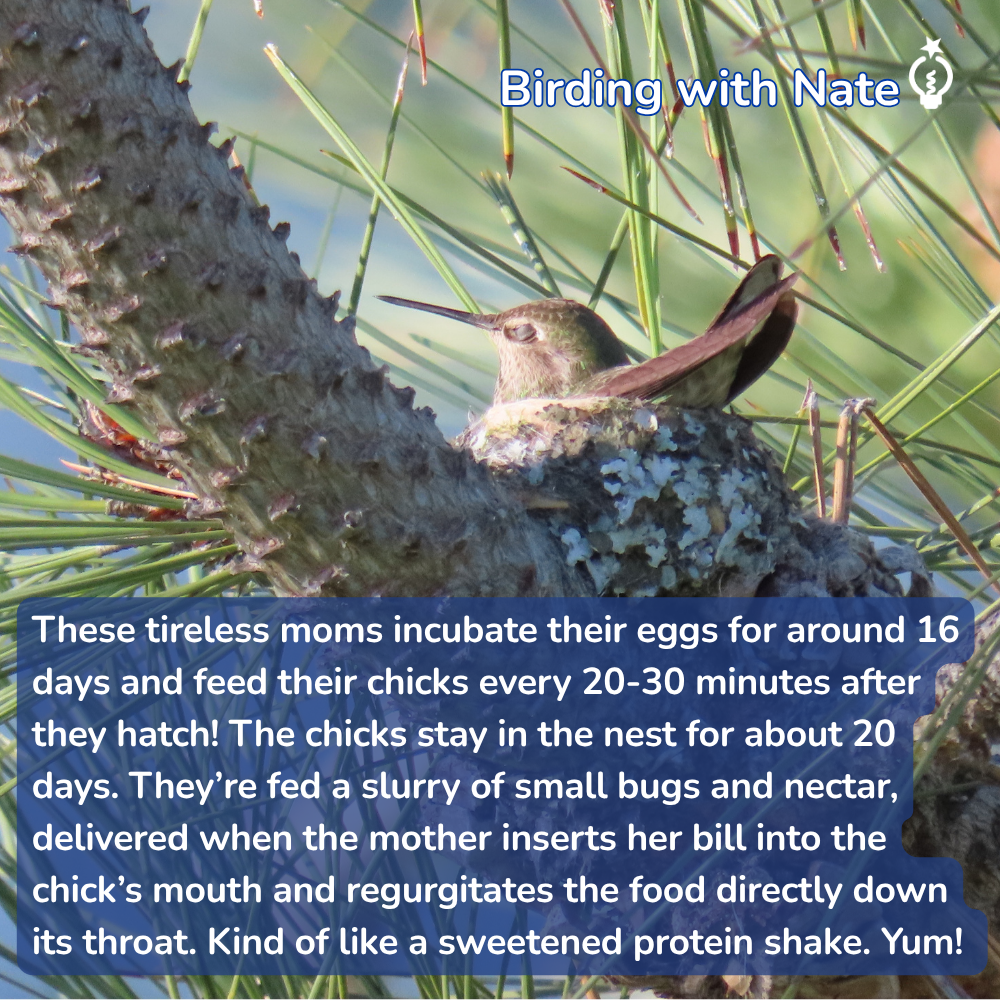
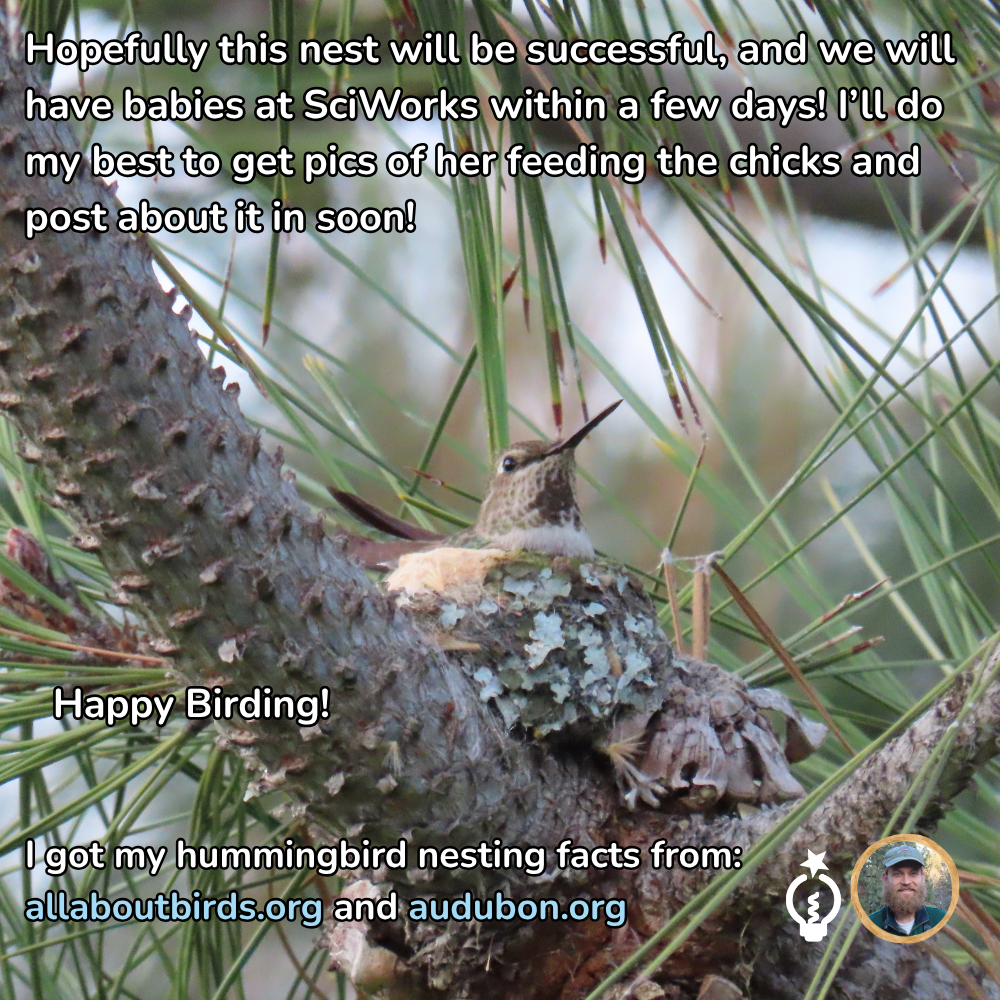
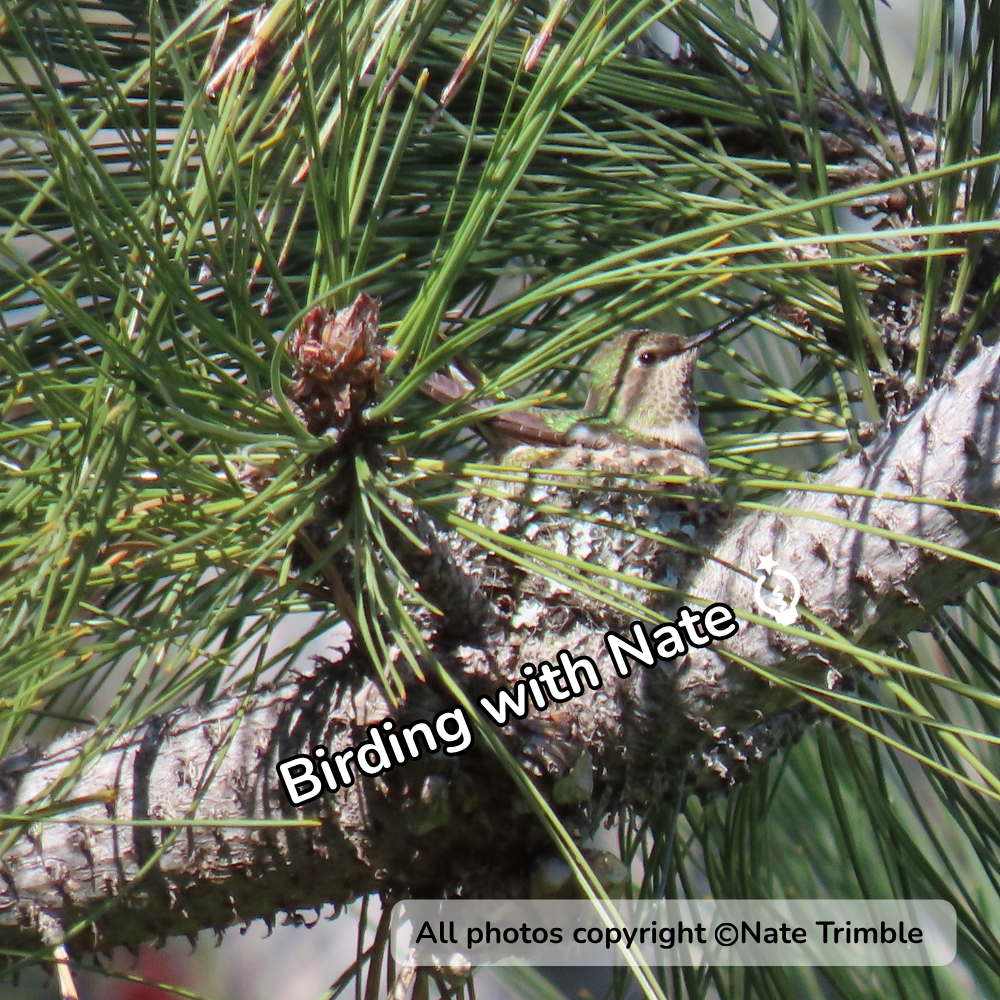
Excellent news, everyone! Recently, I was delighted to find a female Anna’s Hummingbird (February’s Bird of the Month) sitting on a nest in a pine tree at ScienceWorks. Hummingbirds build exquisite little cups out of lichen, soft plant material, and spider webs.
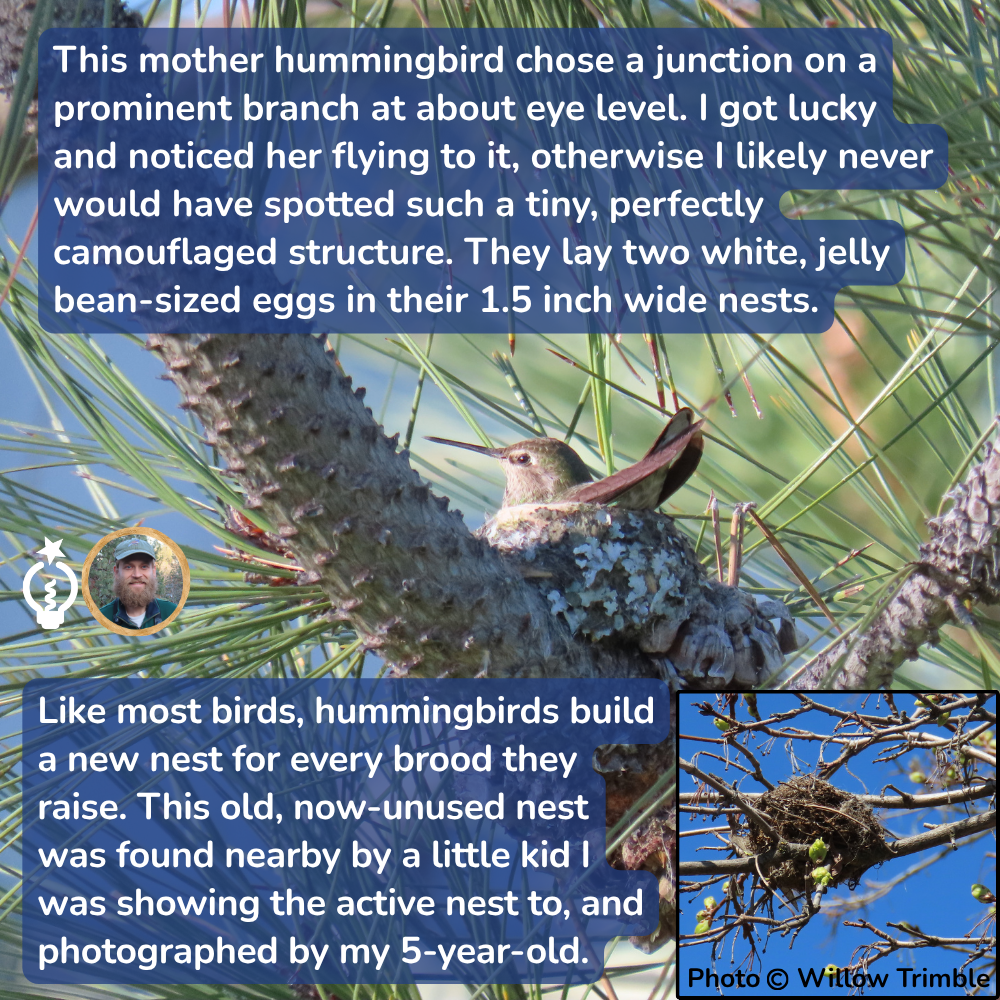
This mother hummingbird chose a junction on a prominent branch at about eye level. I got lucky and noticed her flying to it, otherwise I likely never would have spotted such a tiny, perfectly camouflaged structure. They lay two white, jelly bean-sized eggs in their 1.5 inch wide nests.
Like most birds, hummingbirds build a new nest for every brood they raise. This old, now-unused nest was found nearby by a little kid I was showing the active nest to, and photographed by my 5-year-old.
Most small birds in North America begin nesting in mid-spring and haven’t started nesting yet at the time of this post. Anna’s Hummingbirds, on the other hand, can begin nesting in winter or very early spring. She’ll likely have one or two more broods after this one.
Most birds form pairs during the nesting season, and both parents work together to manage the nest and take care of the young. In hummingbirds, however, females do all of the nest building and chick rearing alone. They may mate with several males in a season. If a female likes a courting male, she’ll lead him to her nest site, where he’ll display for her. If she likes his display, they’ll copulate. The male then leaves to look for other females and contributes no further to the nest or chicks.
These tireless moms incubate their eggs for around 16 days and feed their chicks every 20–30 minutes after they hatch! The chicks stay in the nest for about 20 days. They’re fed a slurry of small bugs and nectar, delivered when the mother inserts her bill into the chick’s mouth and regurgitates the food directly down its throat — kind of like a sweetened protein shake. Yum!
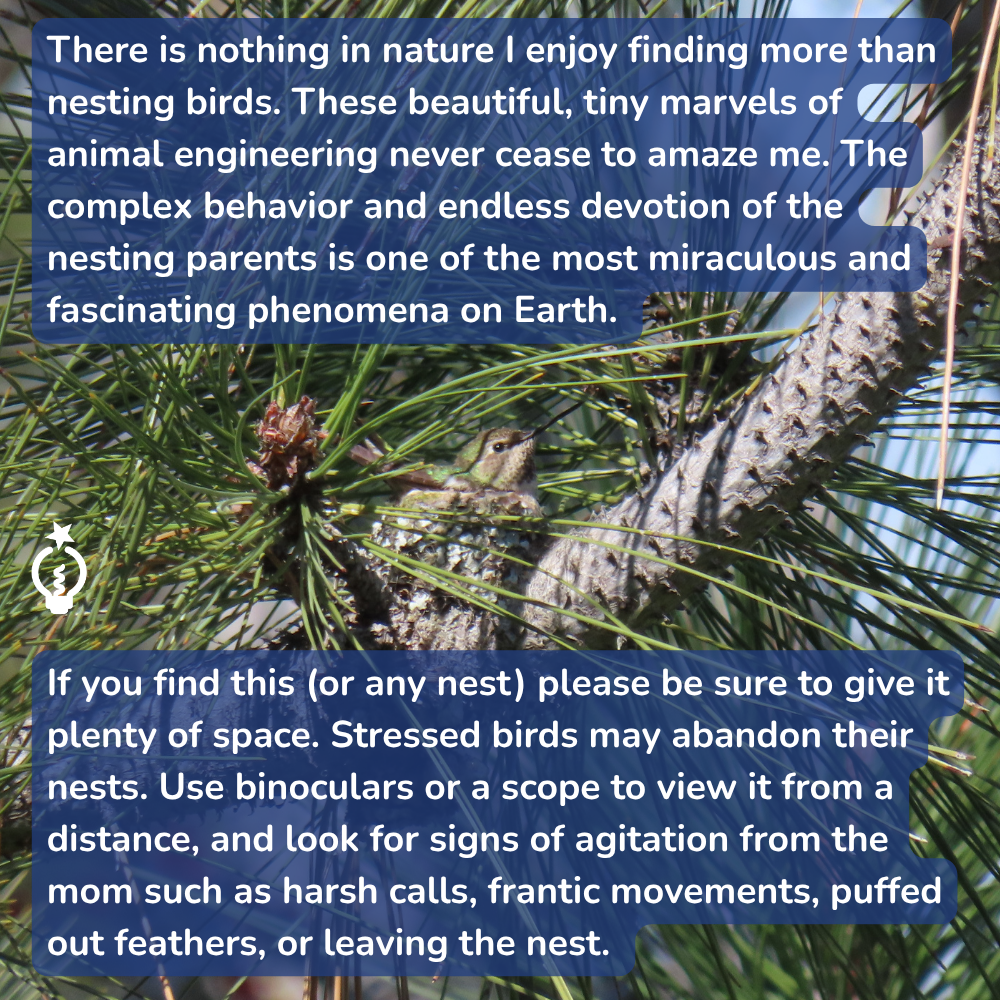
There is nothing in nature I enjoy finding more than nesting birds. These beautiful, tiny marvels of animal engineering never cease to amaze me. The complex behavior and endless devotion of the nesting parents is one of the most miraculous and fascinating phenomena on Earth.
If you find this (or any nest) please be sure to give it plenty of space. Stressed birds may abandon their nests. Use binoculars or a scope to view it from a distance, and look for signs of agitation from the mom such as harsh calls, frantic movements, puffed out feathers, or leaving the nest.
Hopefully this nest will be successful, and we will have babies at ScienceWorks within a few days! I’ll do my best to get pics of her feeding the chicks and post about it in soon!
Happy Birding!
I got my hummingbird nesting facts from: allaboutbirds.org and audubon.org
And don't forget to add your own bird sightings to the ScienceWorks eBird Hotspot!
Related Articles