


Birding With Nate — December Bird of the Month: Greater White-Fronted Goose
Birding with Nate
December Bird of the Month: Greater White-Fronted Goose
Hello ScienceWorks friends!
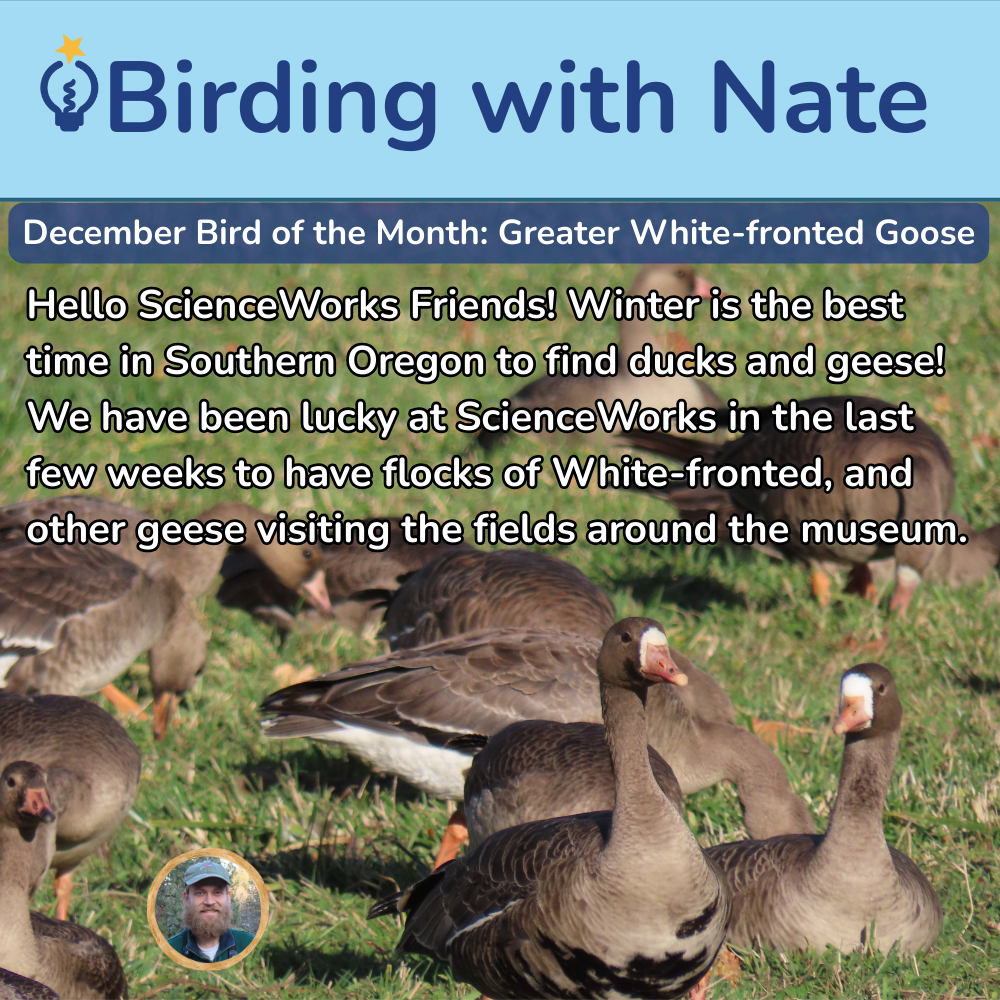
Winter is the best time in Southern Oregon to find ducks and geese! We have been lucky at ScienceWorks in the last few weeks to have flocks of White-fronted, and other geese visiting the fields around the museum.
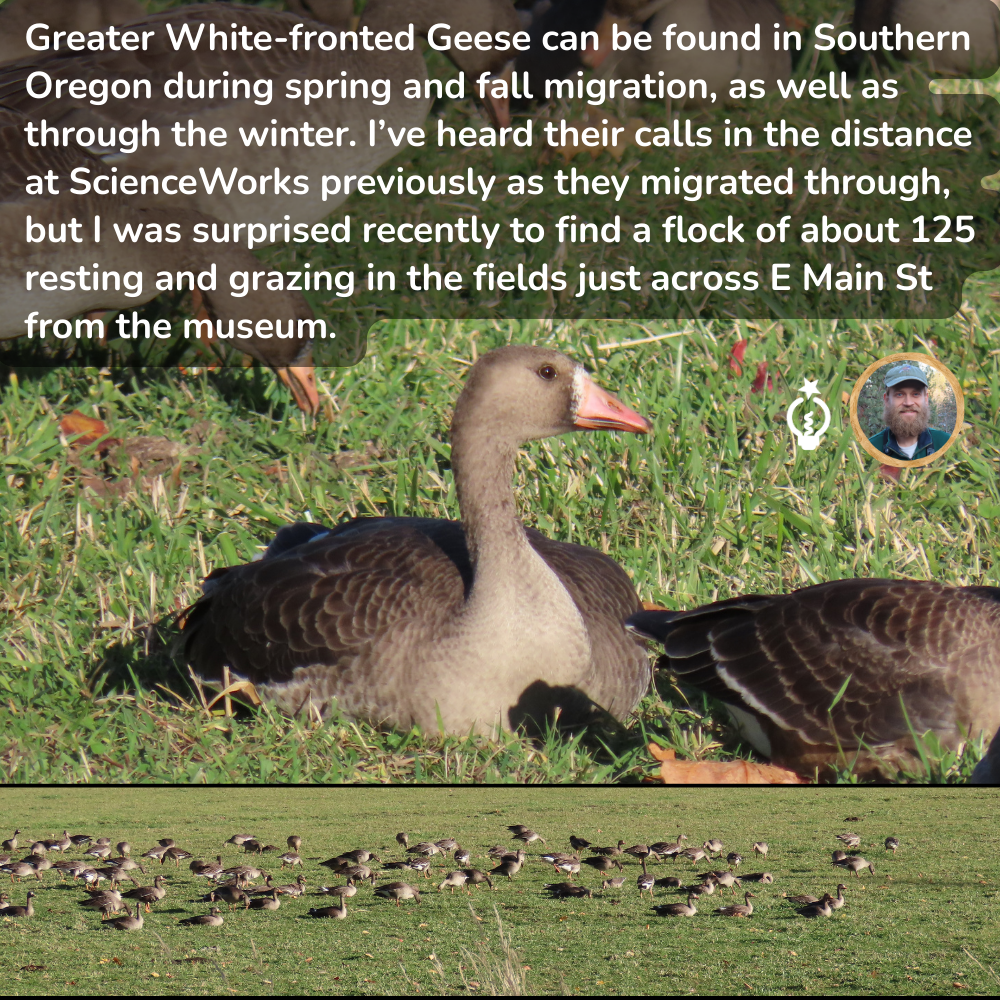
Greater White-fronted Geese can be found in Southern Oregon during spring and fall migration, as well as through the winter. I’ve heard their calls in the distance at ScienceWorks previously as they migrated through, but I was surprised recently to find a flock of about 125 resting and grazing in the fields just across E Main St from the museum.
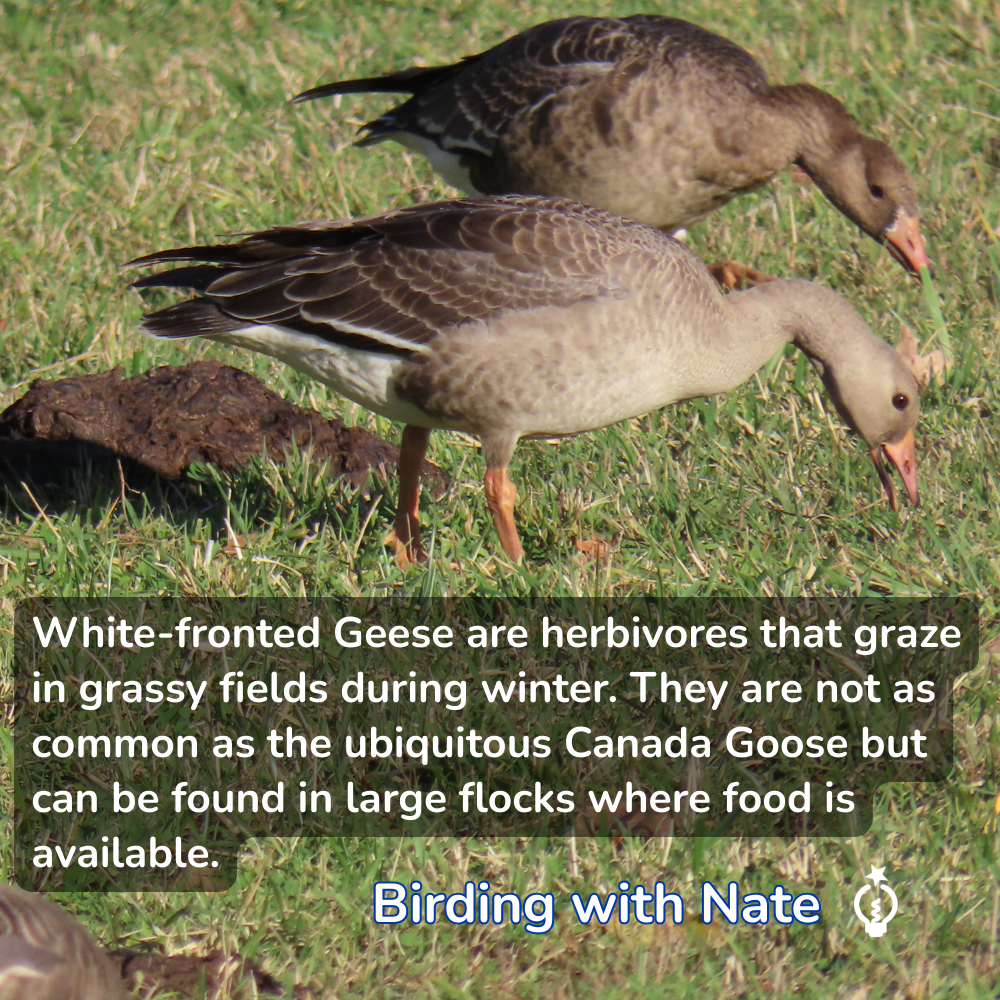
White-fronted Geese are herbivores that graze in grassy fields during winter. They are not as common as the ubiquitous Canada Goose but can be found in large flocks where food is available.
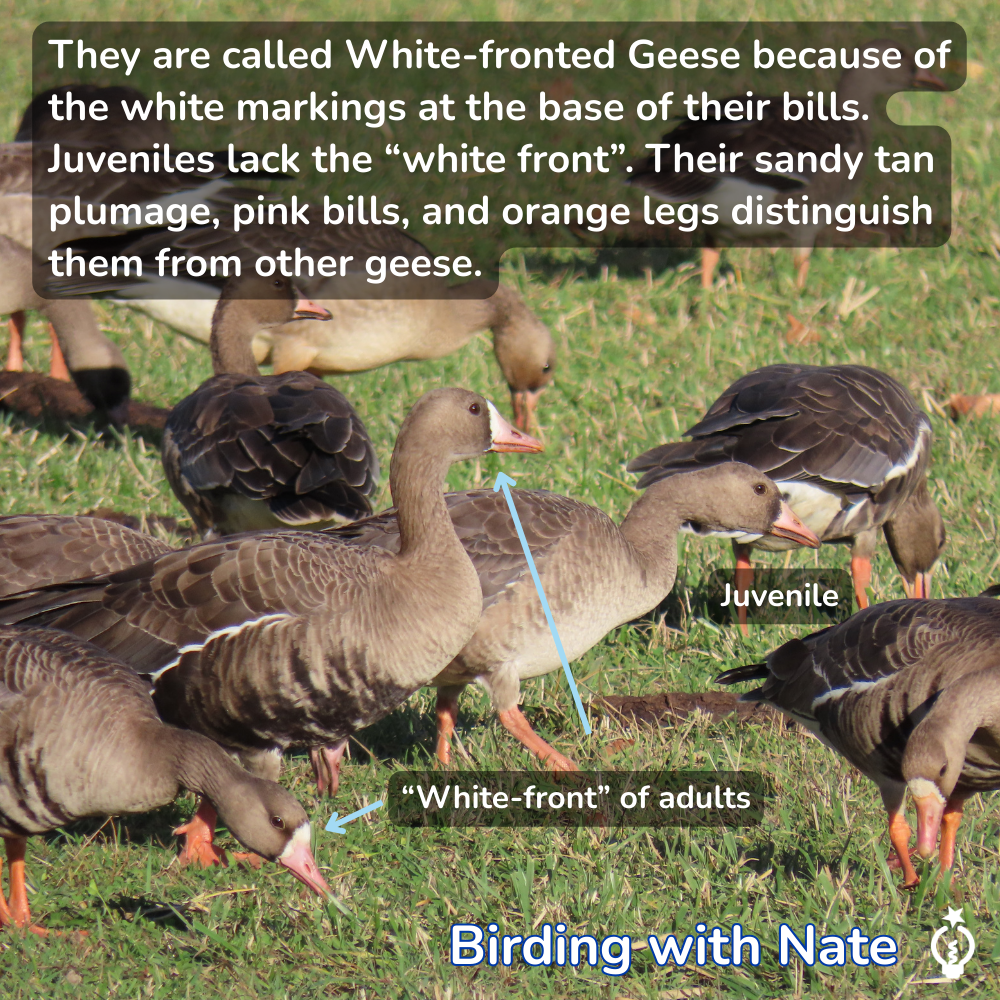
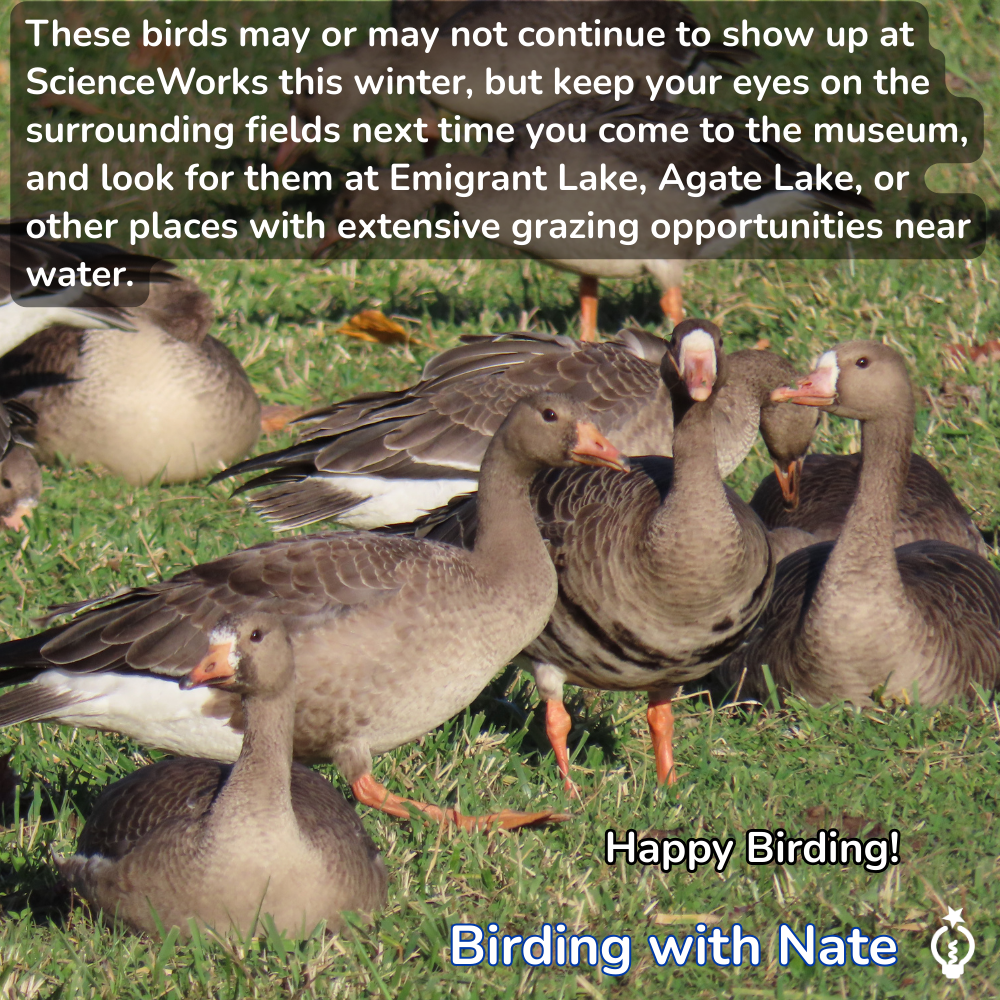
They are called White-fronted Geese because of the white markings at the base of their bills. Juveniles lack the “white front”. Their sandy tan plumage, pink bills, and orange legs distinguish them from other geese.
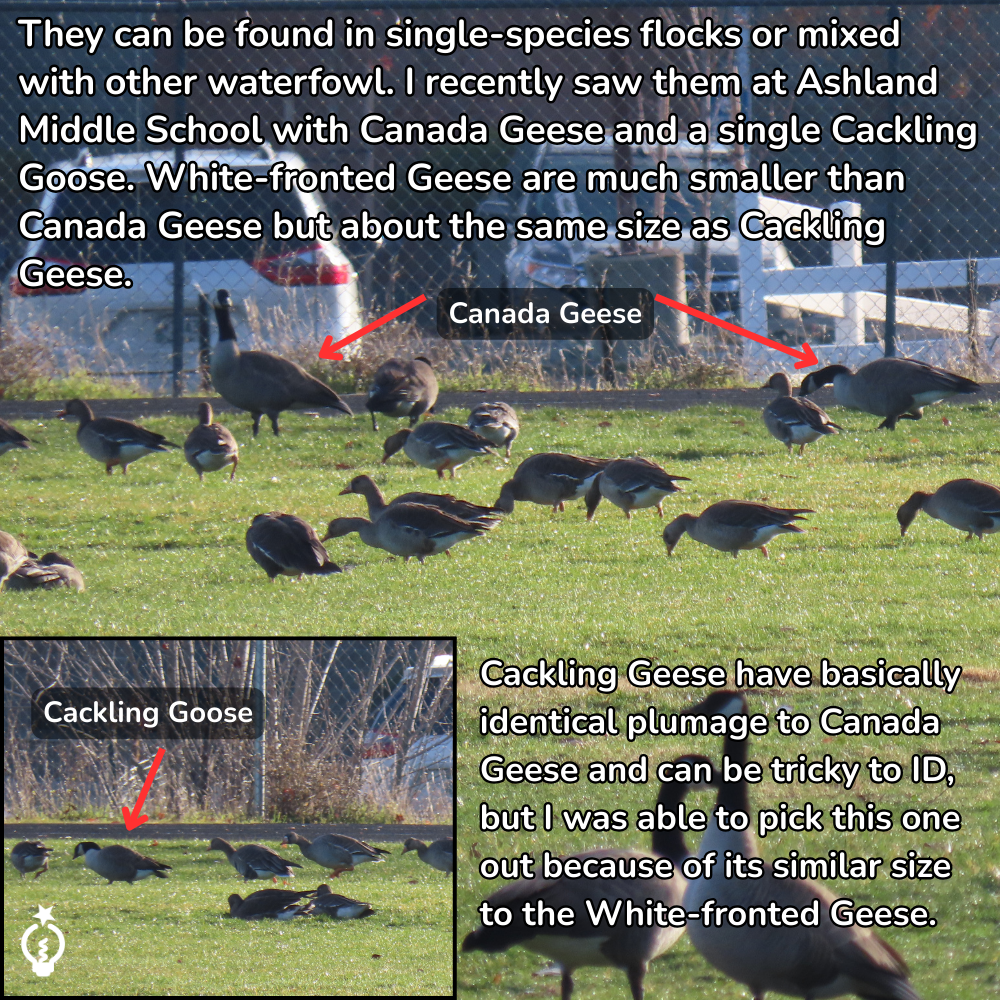
They can be found in single-species flocks or mixed with other waterfowl. I recently saw them at Ashland Middle School with Canada Geese and a single Cackling Goose. White-fronted Geese are much smaller than Canada Geese but about the same size as Cackling Geese. Cackling Geese have basically identical plumage to Canada Geese and can be tricky to ID, but I was able to pick this one out because of its similar size to the White-fronted Geese.
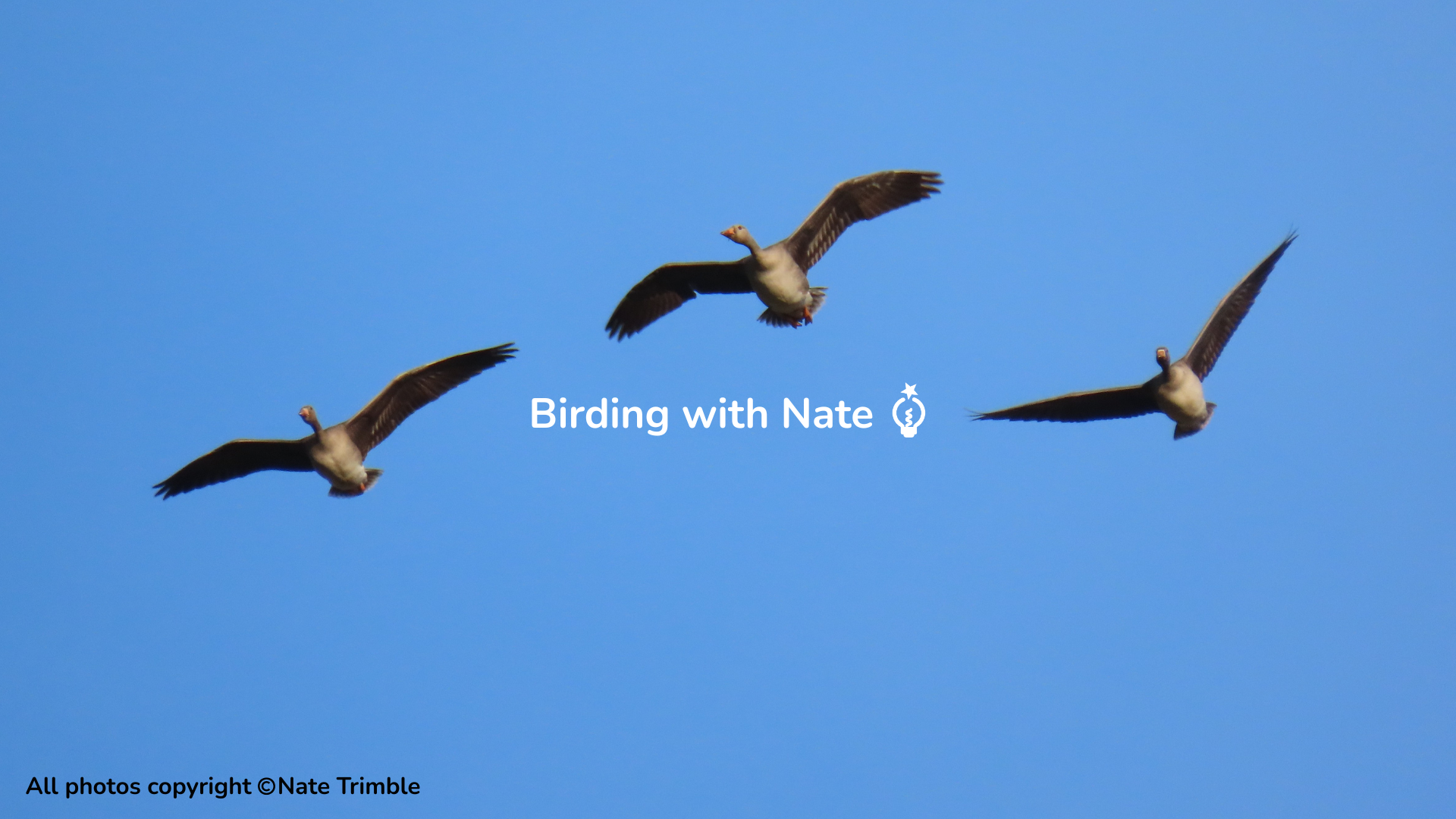
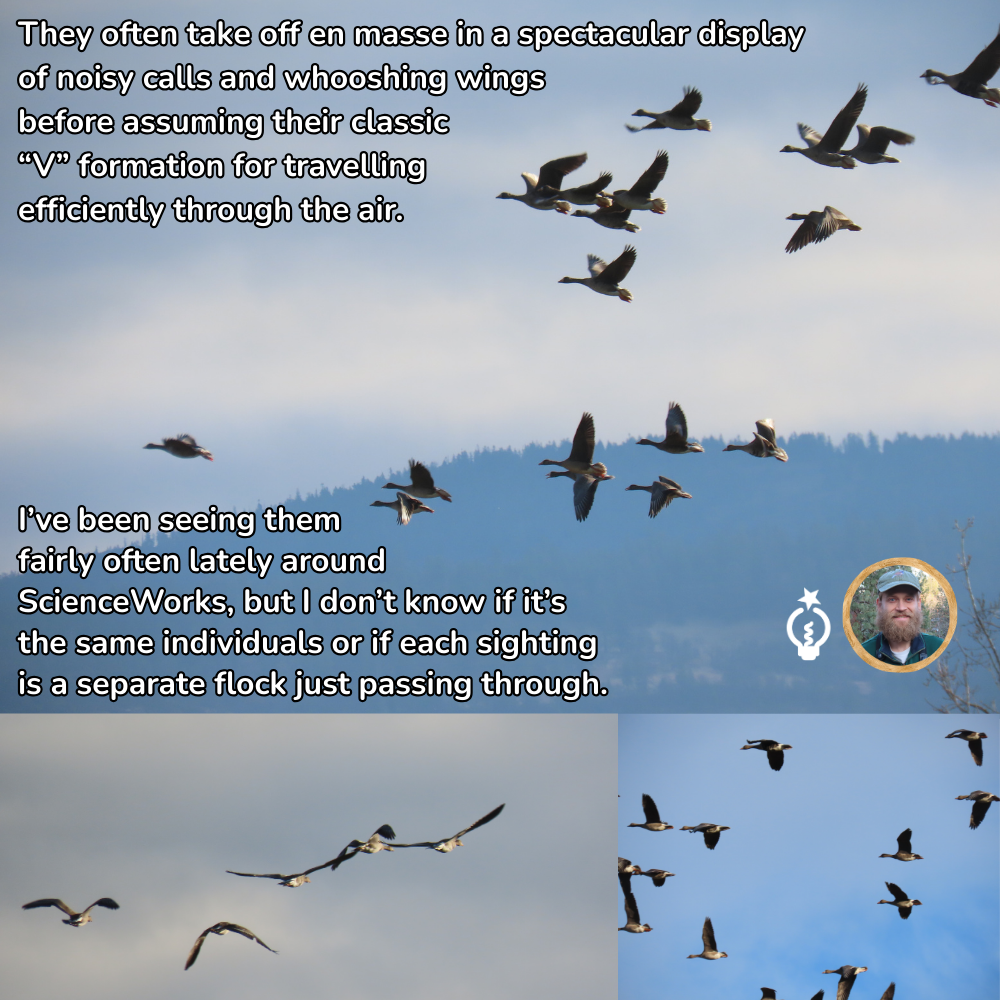
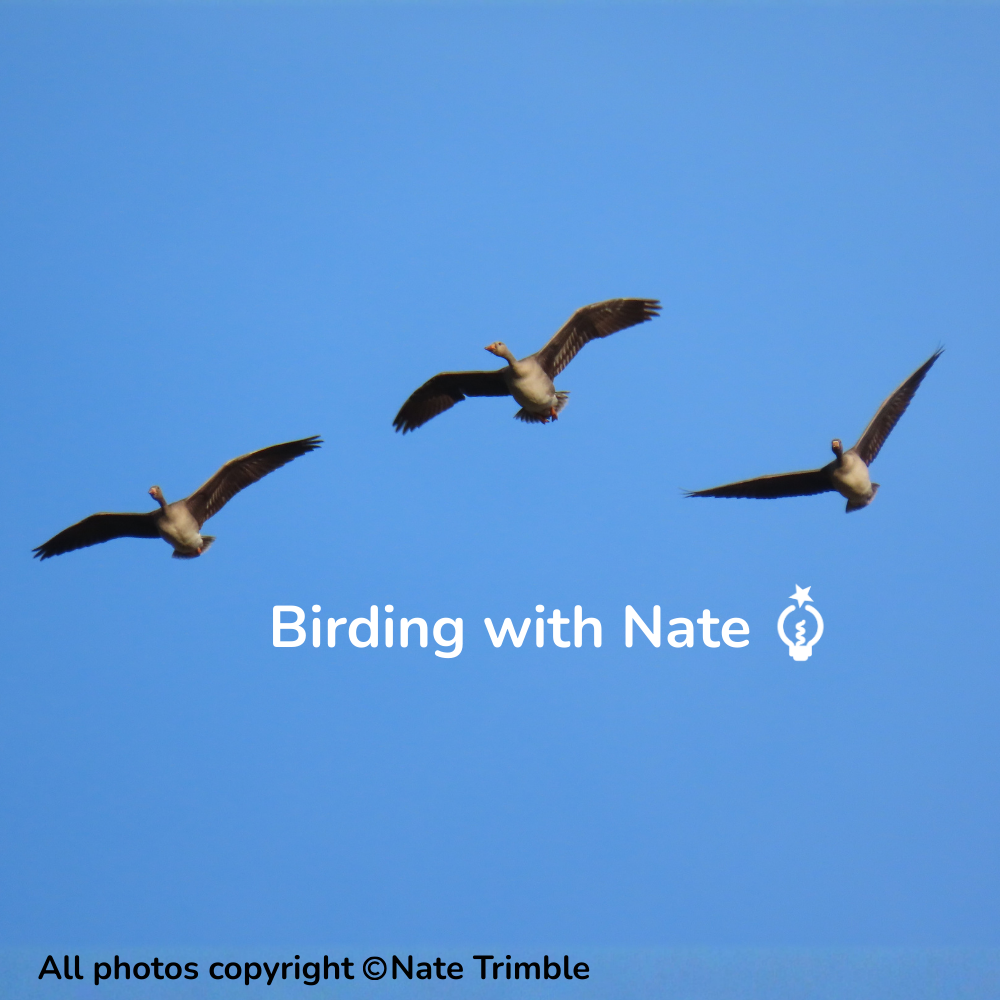
Greater White-fronted geese often take off en masse in a spectacular display of noisy calls and whooshing wings before assuming their classic “V” formation for travelling efficiently through the air. I’ve been seeing them fairly often lately around ScienceWorks, but I don’t know if it’s the same individuals or if each sighting is a separate flock just passing through.
These birds may or may not continue to show up at ScienceWorks this winter, but keep your eyes on the surrounding fields next time you come to the museum, and look for them at Emigrant Lake, Agate Lake, or other places with extensive grazing opportunities near water.
Happy Birding!
And don't forget to add your own bird sightings to the ScienceWorks eBird Hotspot!
Related Articles