


Birding With Nate — Black Phoebe
Birding with Nate
Black Phoebe
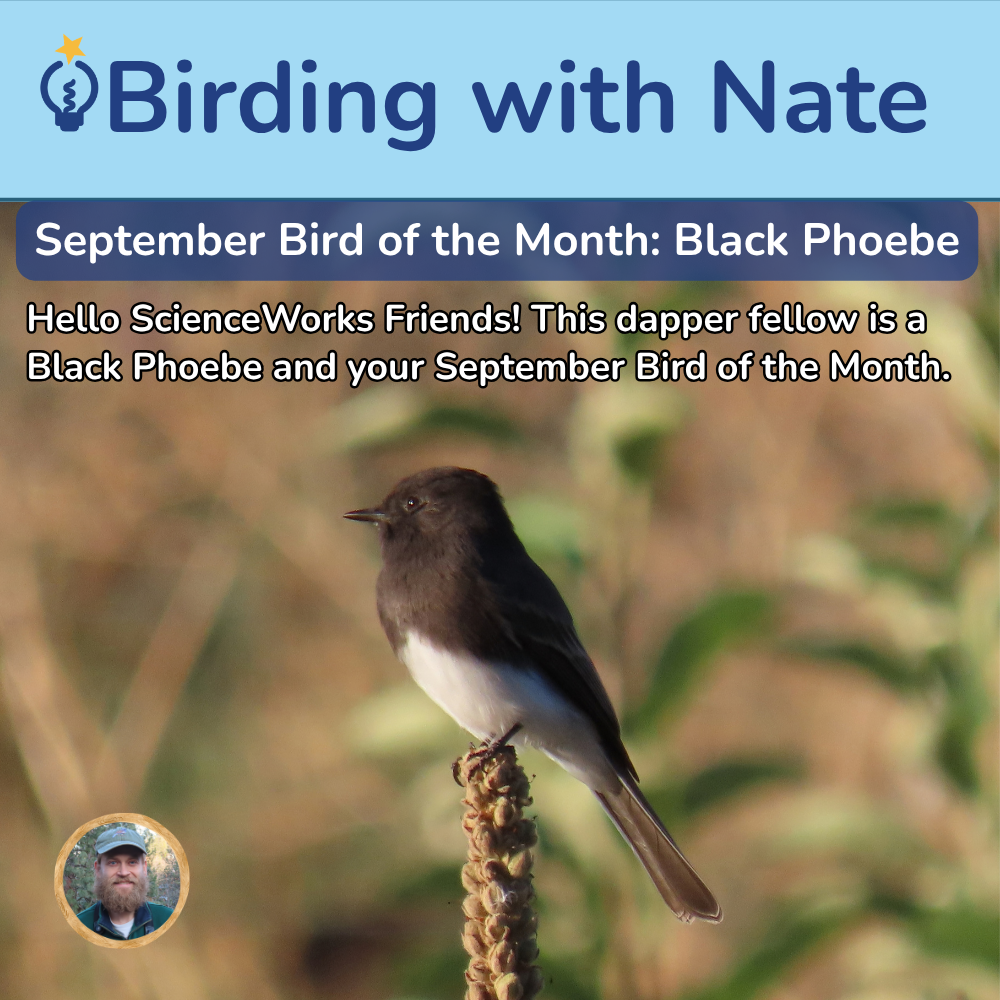
Hello ScienceWorks friends!
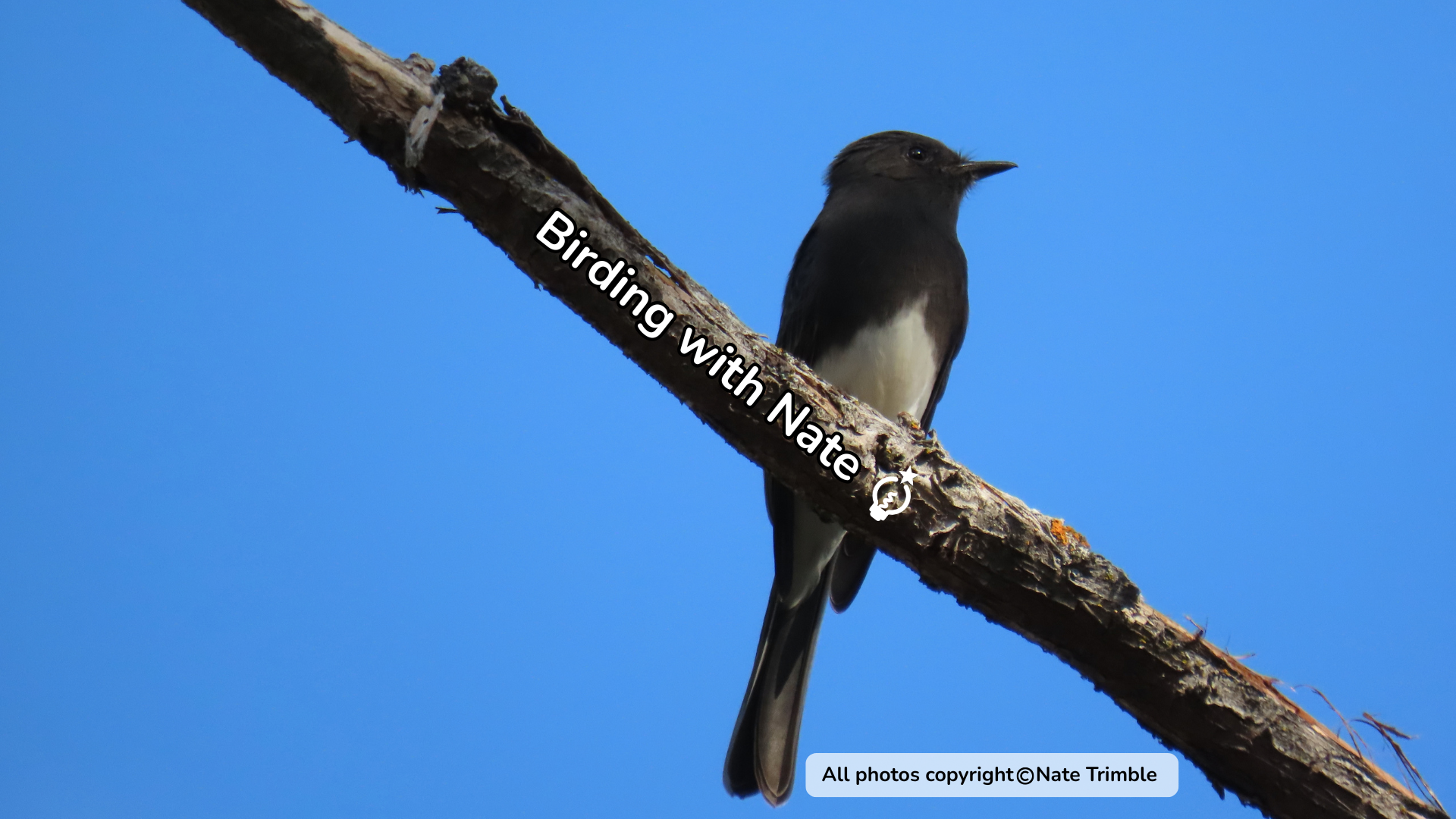
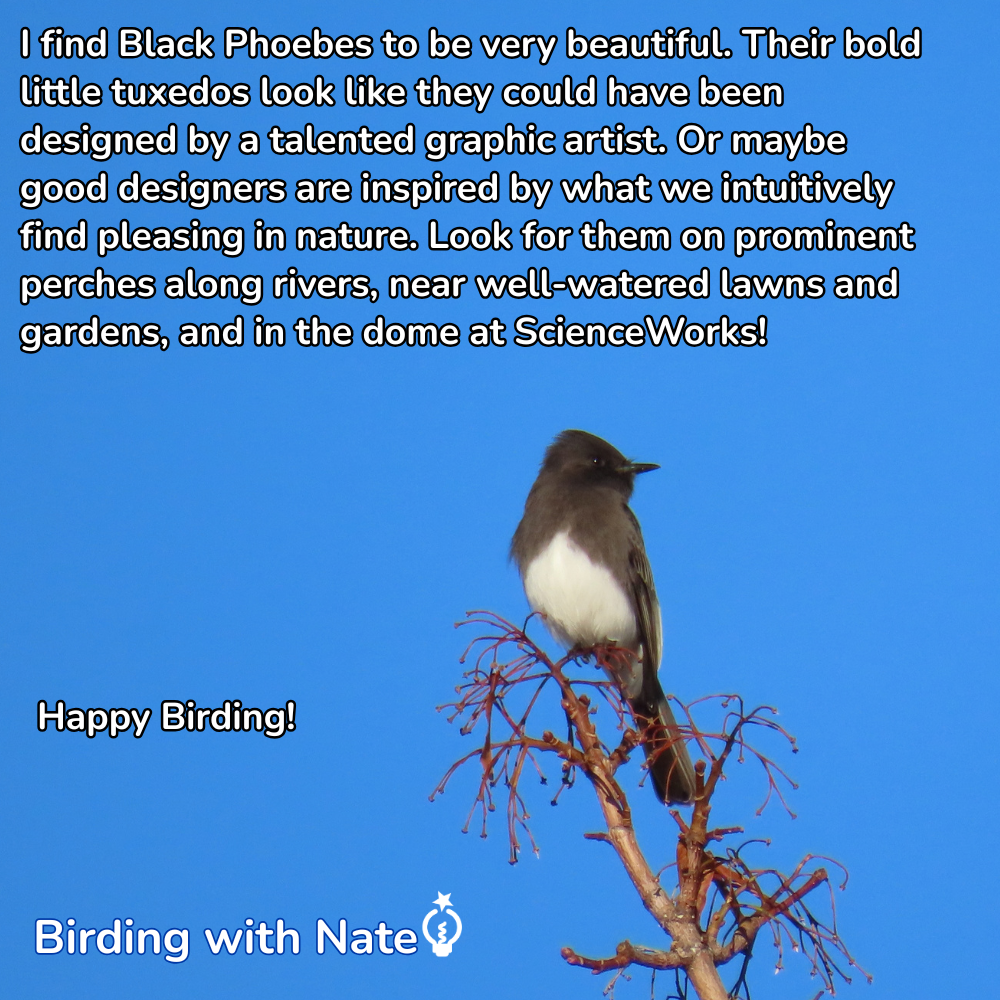
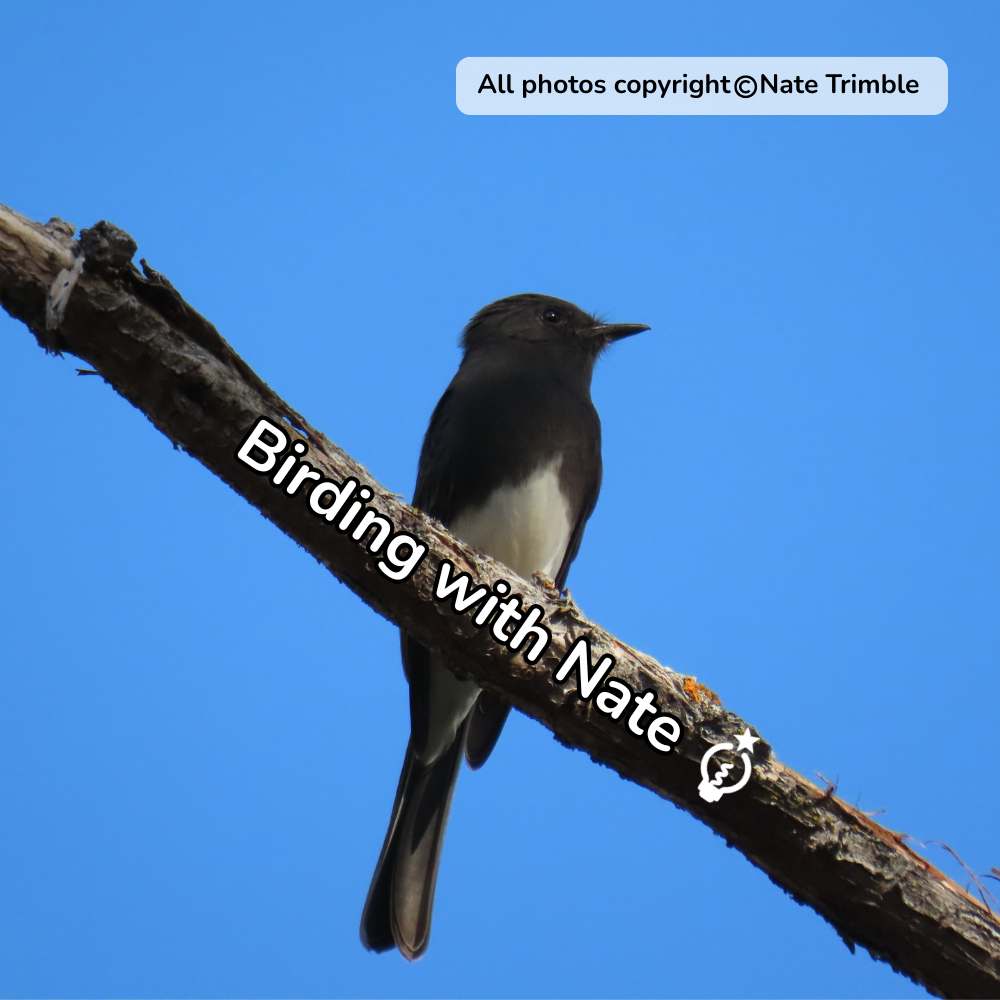
This dapper fellow is a Black Phoebe and your September Bird of the Month.
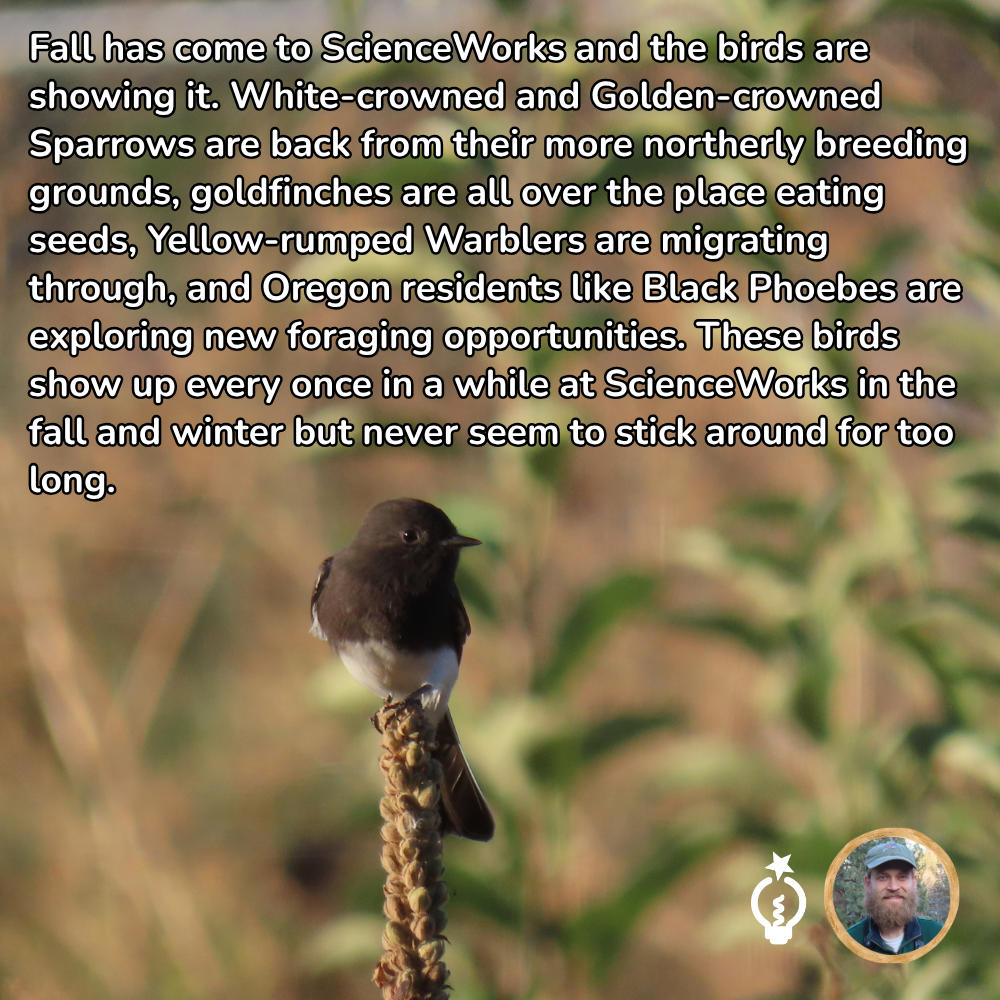
Fall has come to ScienceWorks and the birds are showing it. White-crowned and Golden-crowned
Sparrows are back from their more northerly breeding grounds, goldfinches are all over the place eating seeds, Yellow-rumped Warblers are migrating through, and Oregon residents like Black Phoebes are exploring new foraging opportunities. These birds show up every once in a while at ScienceWorks in the fall and winter but never seem to stick around for too long.
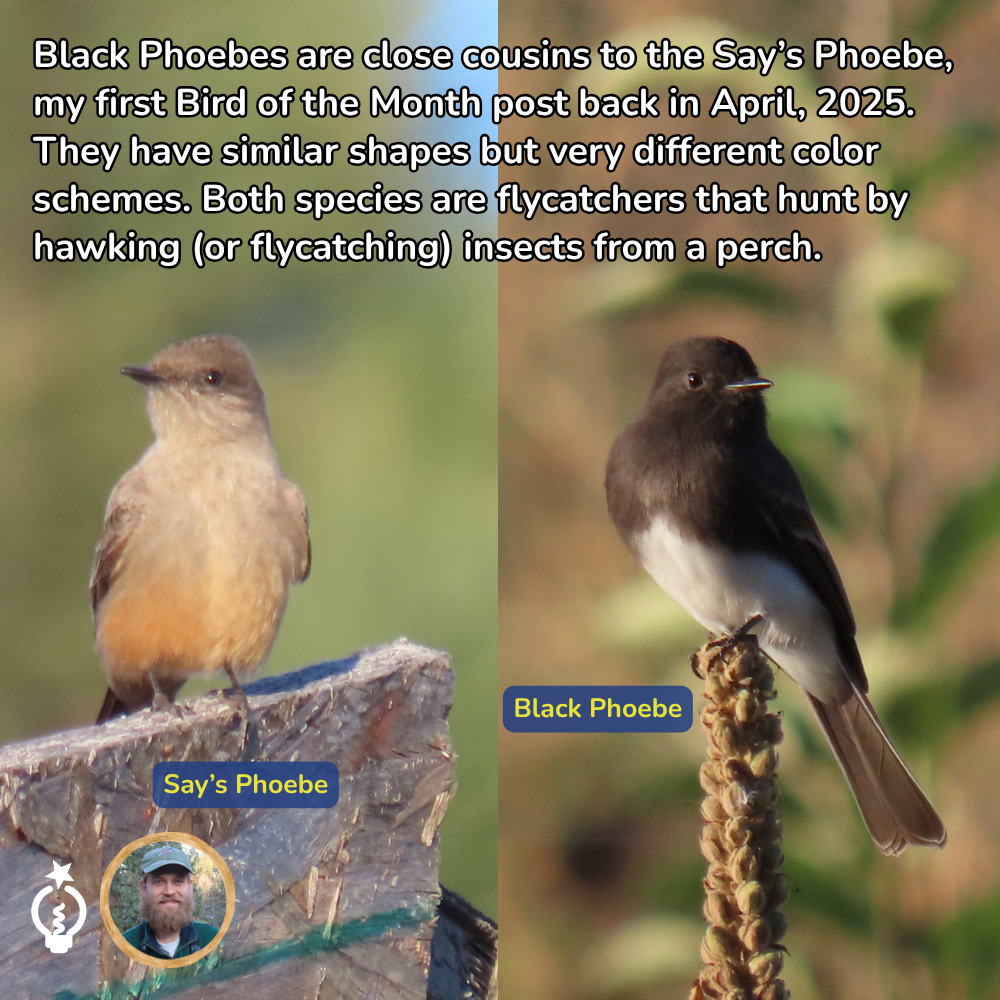
Black Phoebes are close cousins to the Say’s Phoebe,
my first Bird of the Month post back in April, 2025. They have similar shapes but very different color schemes. Both species are flycatchers that hunt by hawking (or flycatching) insects from a perch.
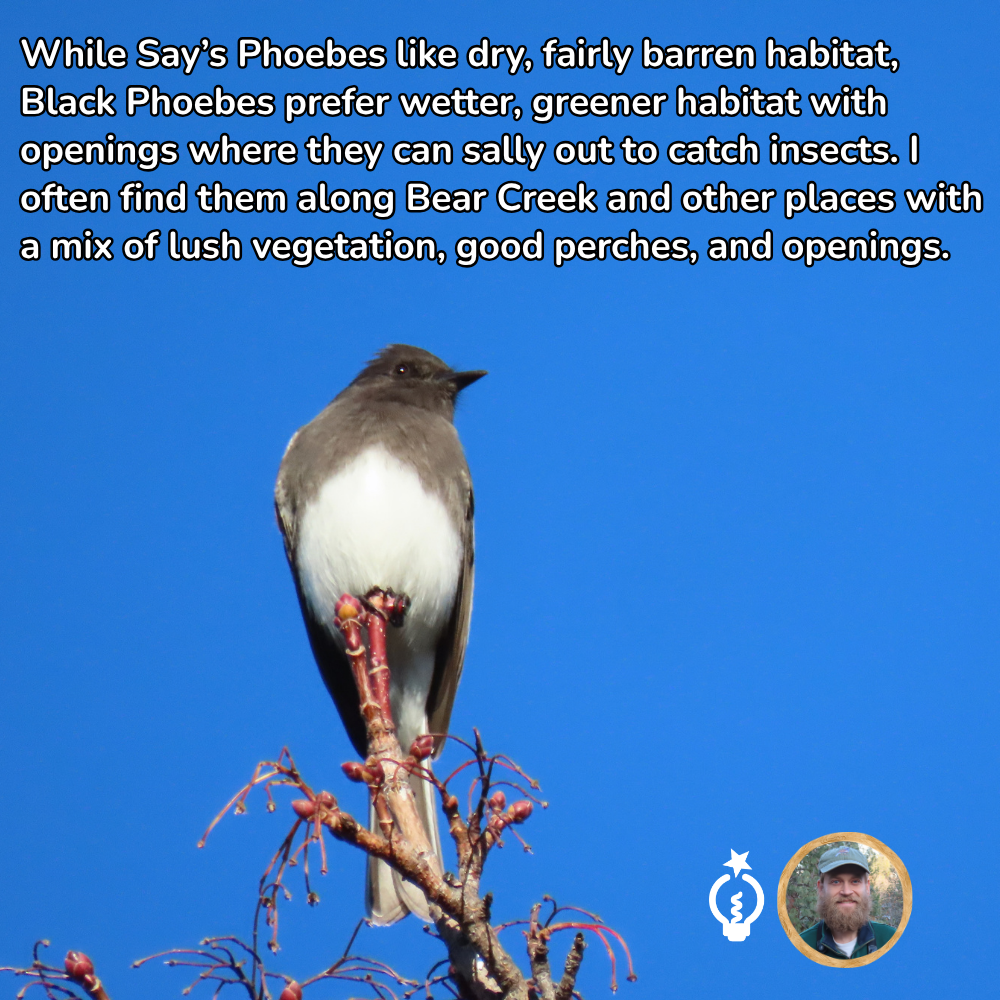
While Say’s Phoebes like dry, fairly barren habitat, Black Phoebes prefer wetter, greener habitat with openings where they can sally out to catch insects. I often find them along Bear Creek and other places with a mix of lush vegetation, good perches, and openings.
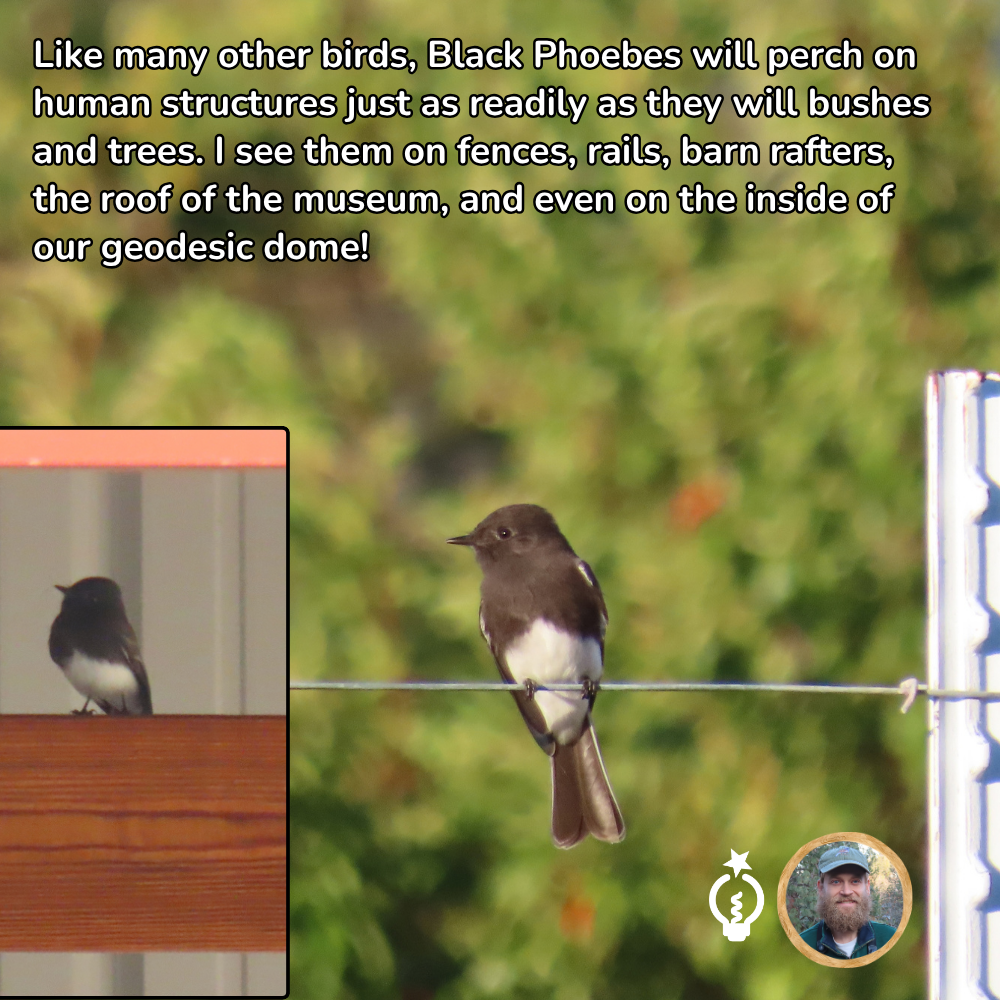
Like many other birds, Black Phoebes will perch on human structures just as readily as they will bushes and trees. I see them on fences, rails, barn rafters, the roof of the museum, and even on the inside of our geodesic dome!
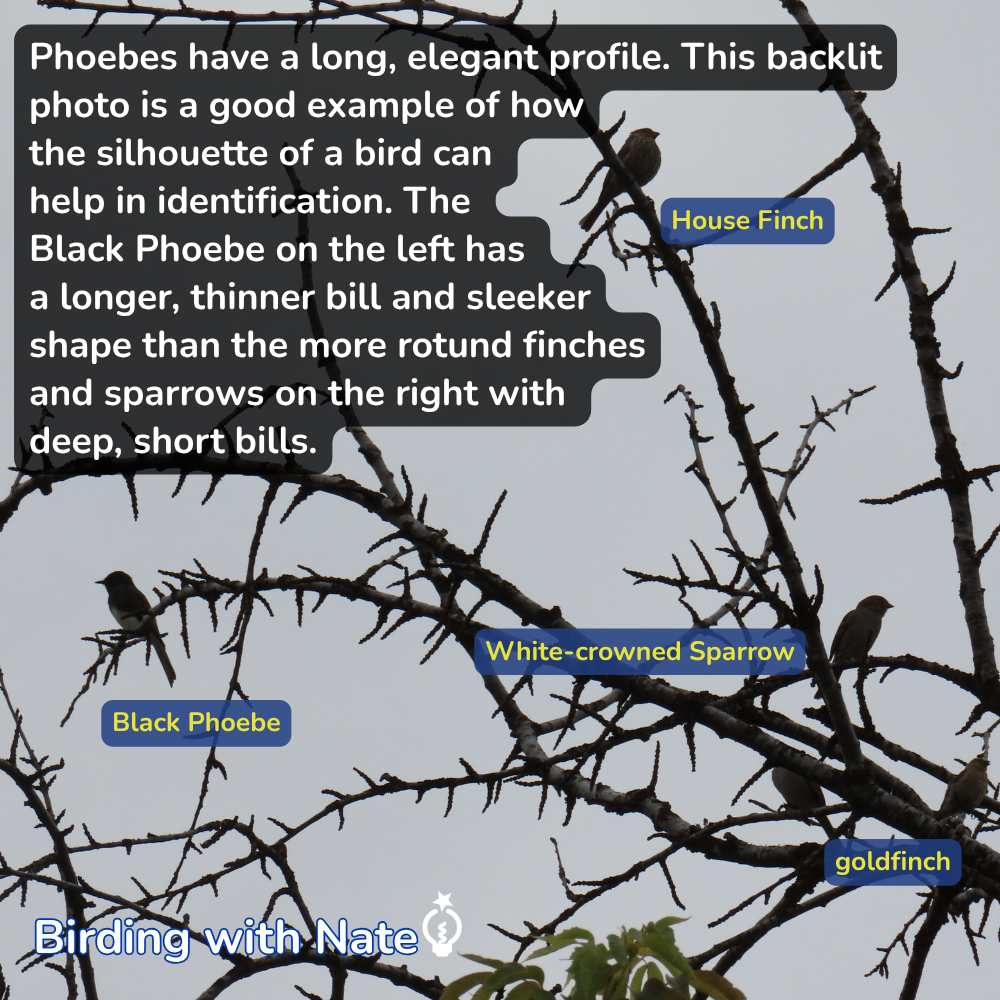
Phoebes have a long, elegant profile. This backlit photo is a good example of how the silhouette of a bird can help in identification. The Black Phoebe on the left has a longer, thinner bill and sleeker shape than the more rotund finches and sparrows on the right with deep, short bills.
I find Black Phoebes to be very beautiful. Their bold little tuxedos look like they could have been designed by a talented graphic artist. Or maybe good designers are inspired by what we intuitively find pleasing in nature. Look for them on prominent perches along rivers, near well-watered lawns and gardens, and in the dome at ScienceWorks!
Happy Birding!
And don't forget to add your own bird sightings to the ScienceWorks eBird Hotspot!
Related Articles