

Birding With Nate — Common Raven
Birding with Nate
Common Raven
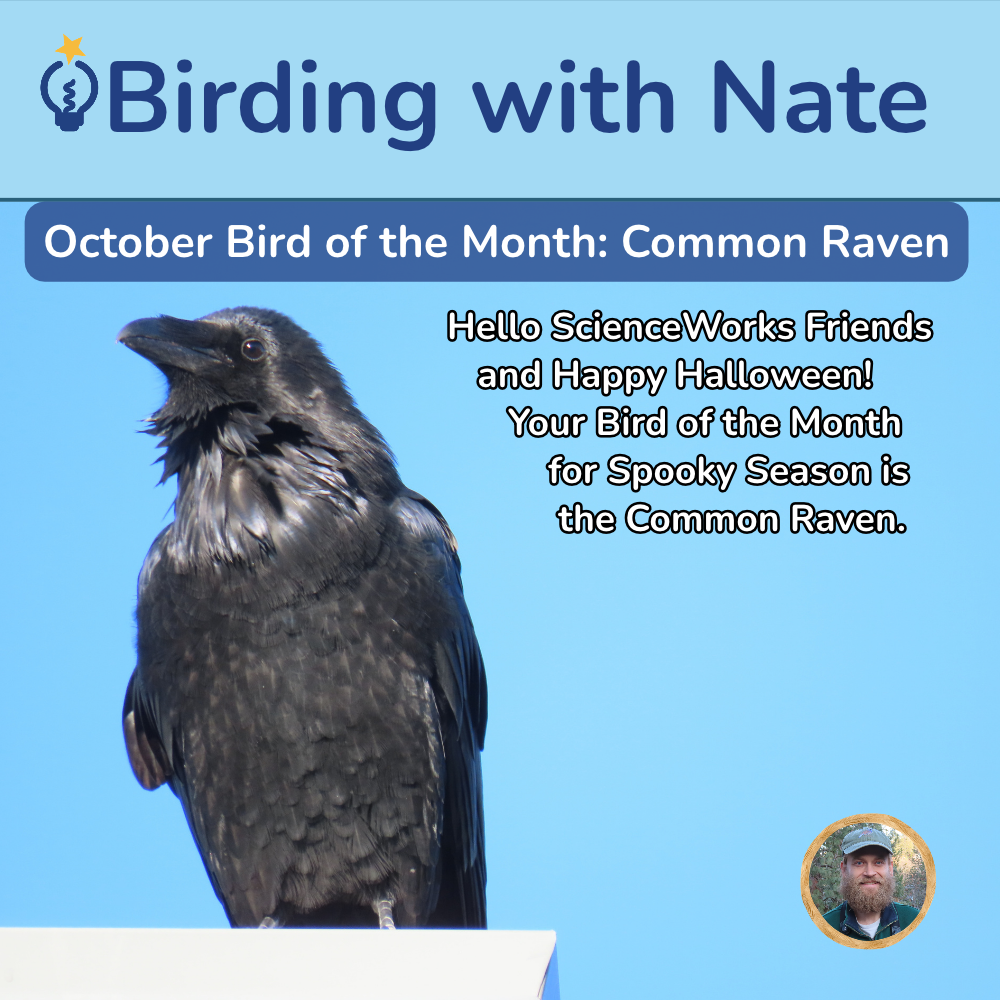
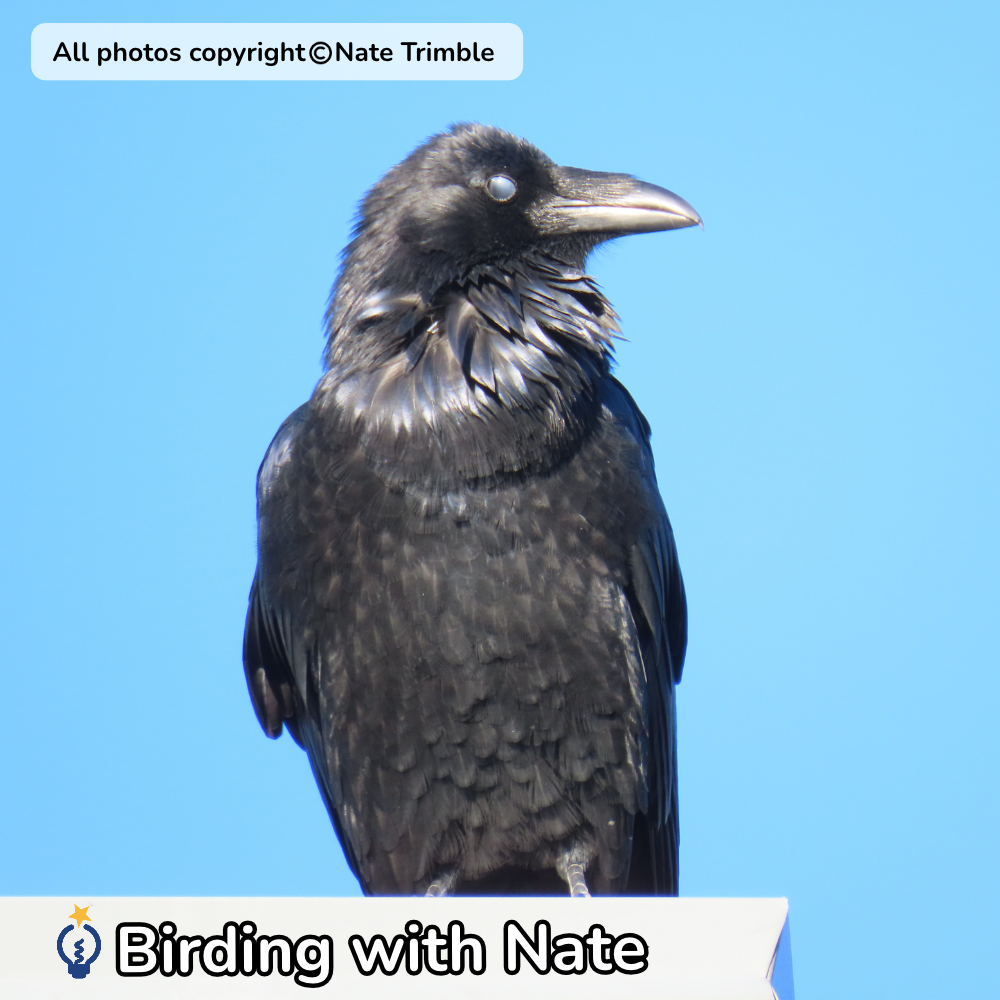
Hello ScienceWorks friends and Happy Halloween!
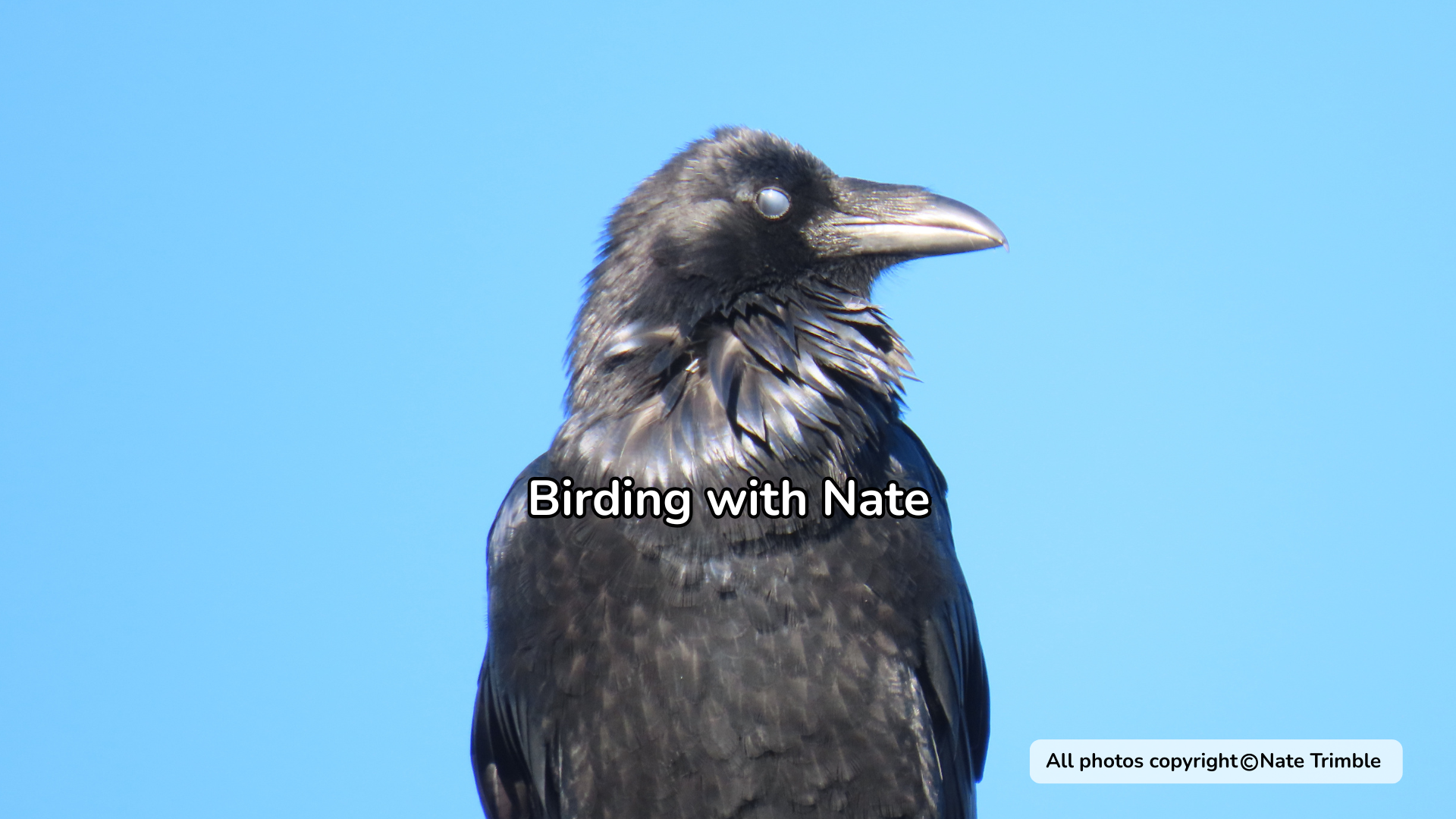
Your Bird of the Month for Spooky Season is the Common Raven.
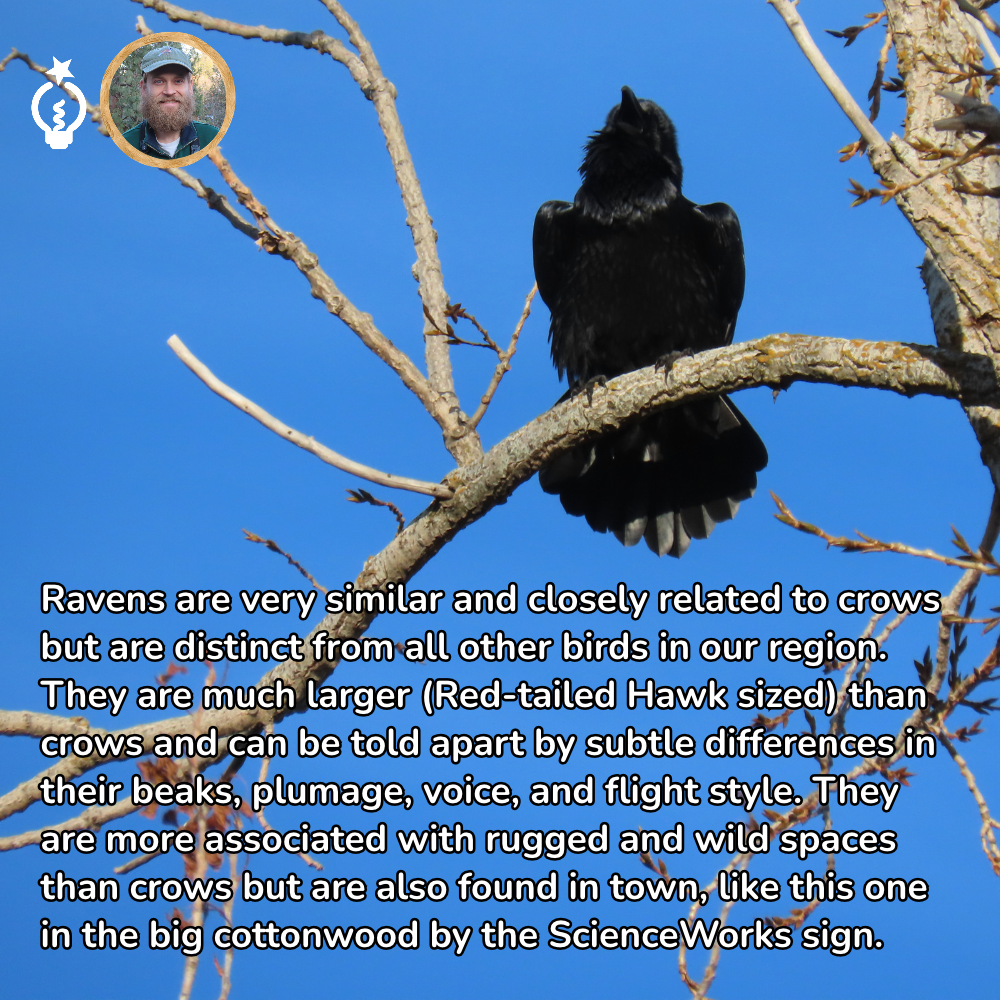
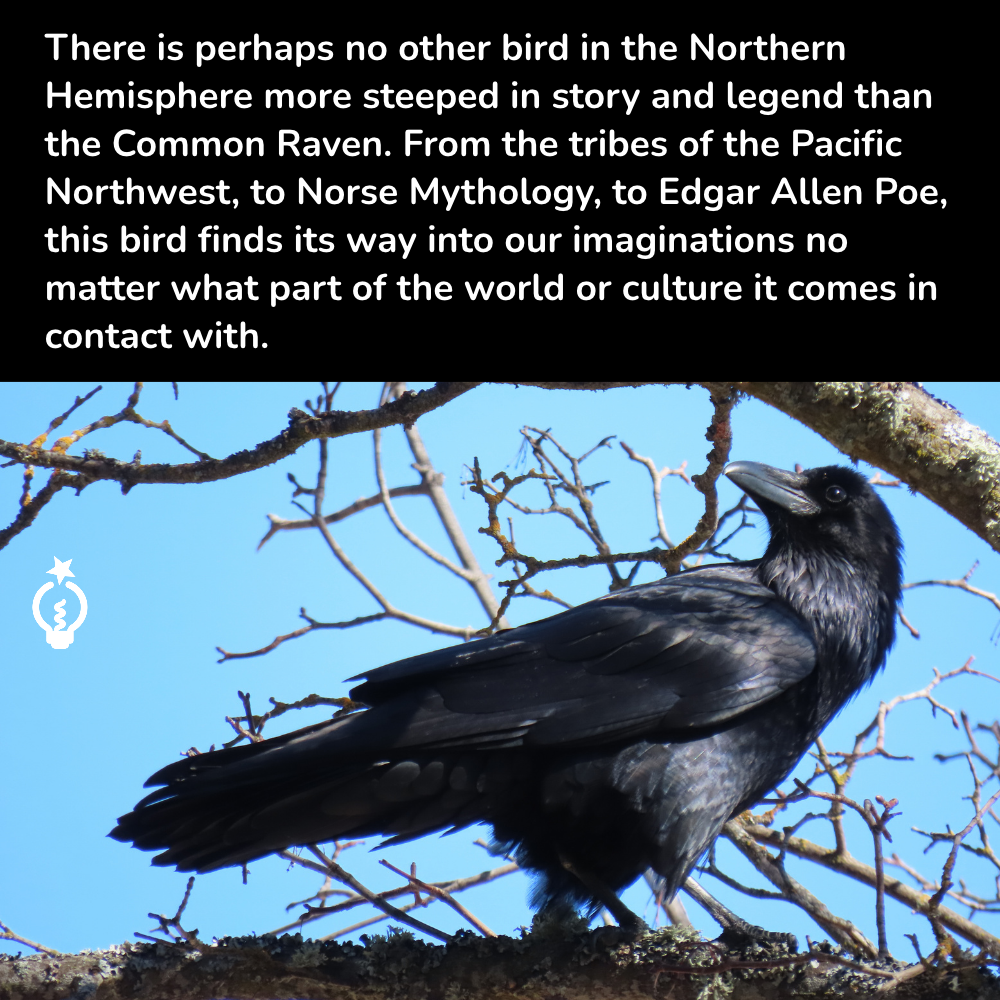
Ravens are very similar and closely related to crows but are distinct from all other birds in our region. They are much larger (Red-tailed Hawk sized) than crows and can be told apart by subtle differences in their beaks, plumage, voice, and flight style. They are more associated with rugged and wild spaces than crows but are also found in town, like this one in the big cottonwood by the ScienceWorks sign.
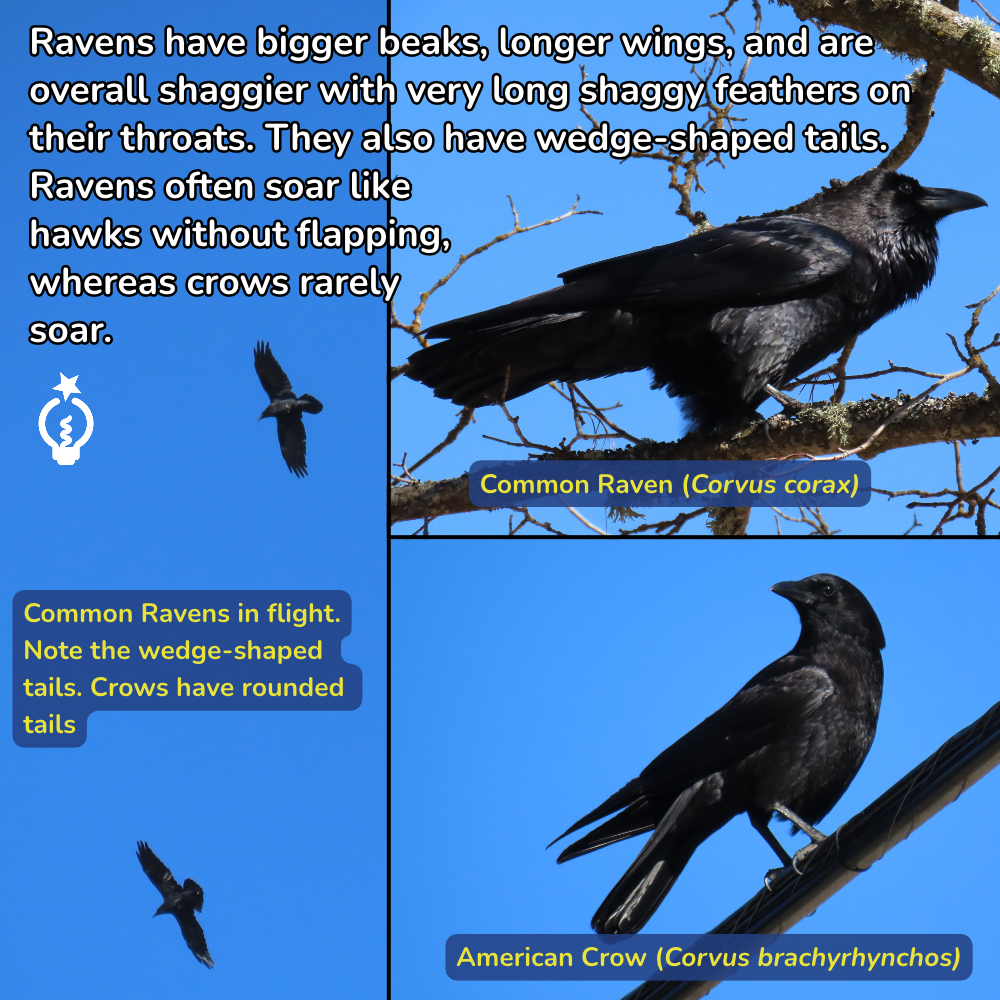
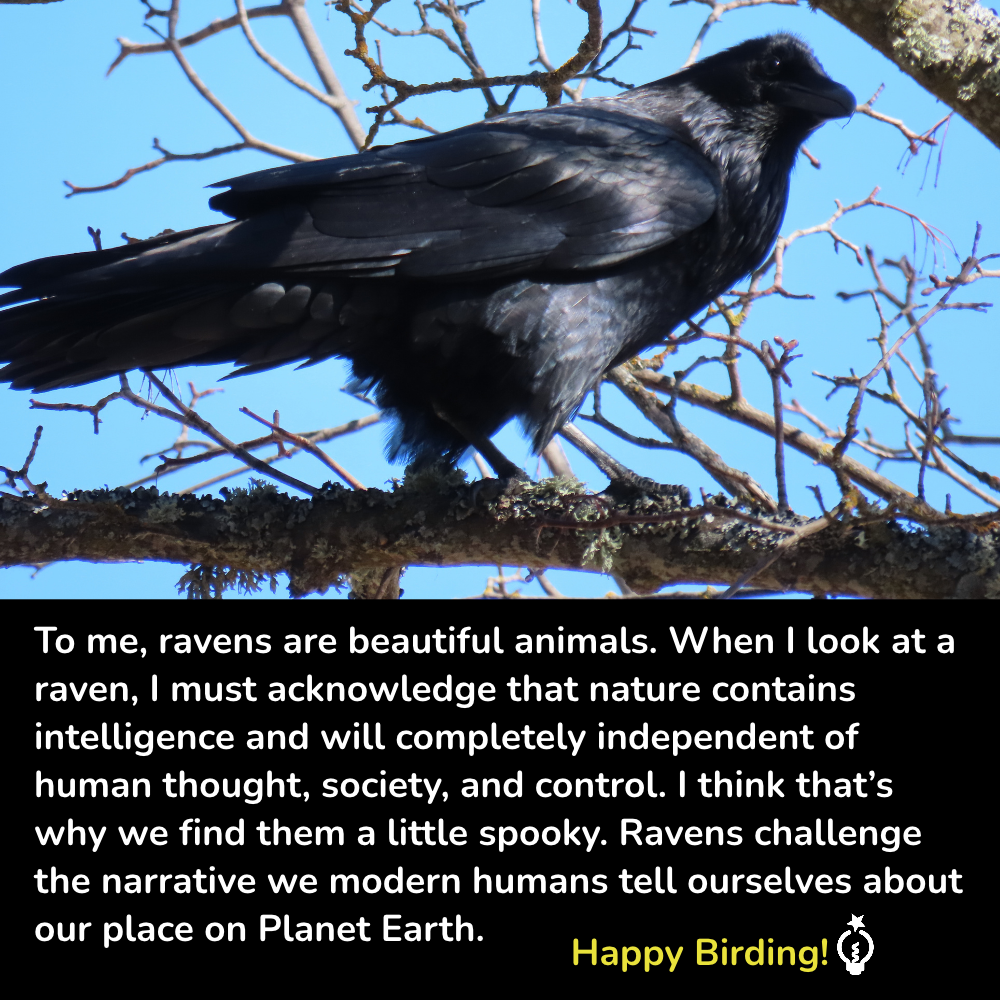
Ravens have bigger beaks, longer wings, and are overall shaggier with very long shaggy feathers on their throats. They also have wedge-shaped tails. Ravens often soar like hawks without flapping, whereas crows rarely soar.
There is perhaps no other bird in the Northern Hemisphere more steeped in story and legend than the Common Raven. From the tribes of the Pacific Northwest, to Norse Mythology, to Edgar Allen Poe, this bird finds its way into our imaginations no matter what part of the world or culture it comes in contact with.
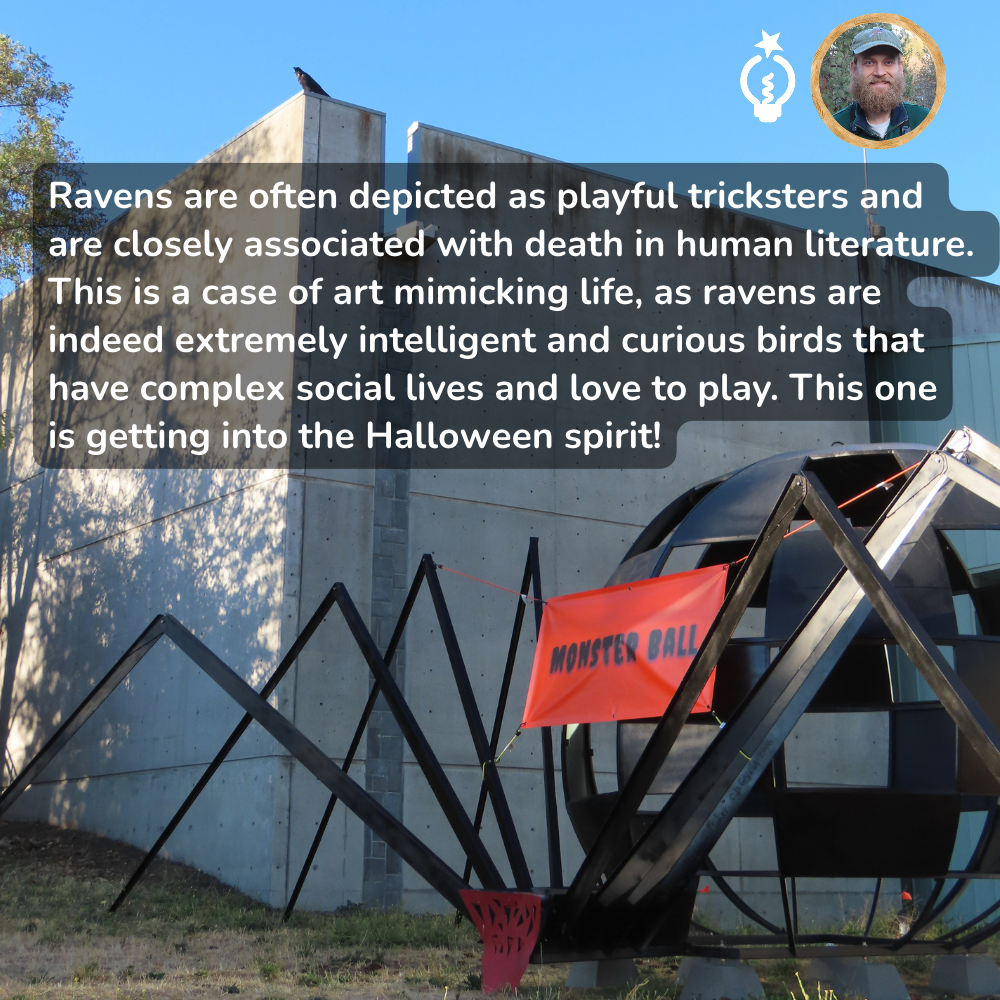
Ravens are often depicted as playful tricksters and are closely associated with death in human literature. This is a case of art mimicking life, as ravens are indeed extremely intelligent and curious birds that have complex social lives and love to play. This one is getting into the Halloween spirit!
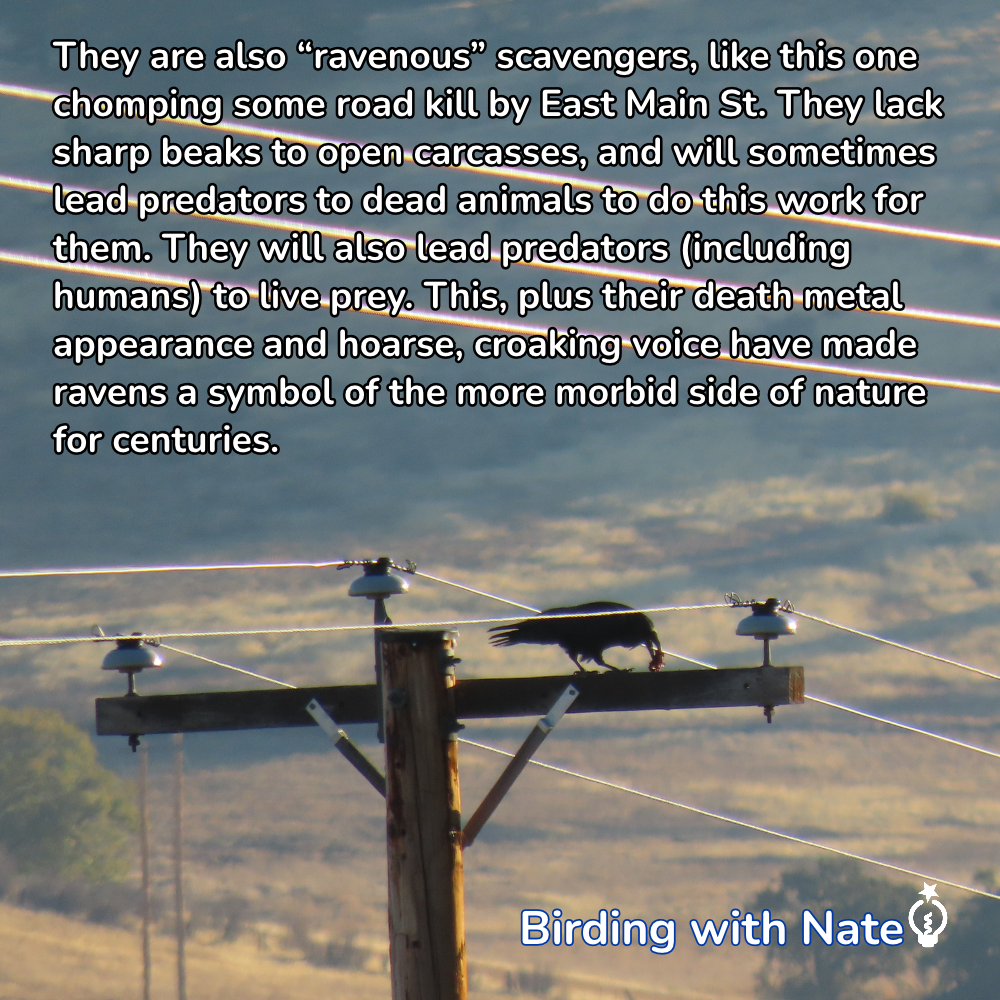
They are also “ravenous” scavengers, like this one chomping some road kill by East Main St. They lack sharp beaks to open carcasses, and will sometimes lead predators to dead animals to do this work for them. They will also lead predators (including humans) to live prey. This, plus their death metal appearance and hoarse, croaking voice have made ravens a symbol of the more morbid side of nature for centuries.
To me, ravens are beautiful animals. When I look at a raven, I must acknowledge that nature contains intelligence and will completely independent of human thought, society, and control. I think that’s why we find them a little spooky. Ravens challenge the narrative we modern humans tell ourselves about our place on Planet Earth.
Happy Birding!
And don't forget to add your own bird sightings to the ScienceWorks eBird Hotspot!
Related Articles