


Birding With Nate — Golden-Crowned Sparrow
Birding with Nate
Golden-Crowned Sparrows
Hello ScienceWorks friends and happy spring!
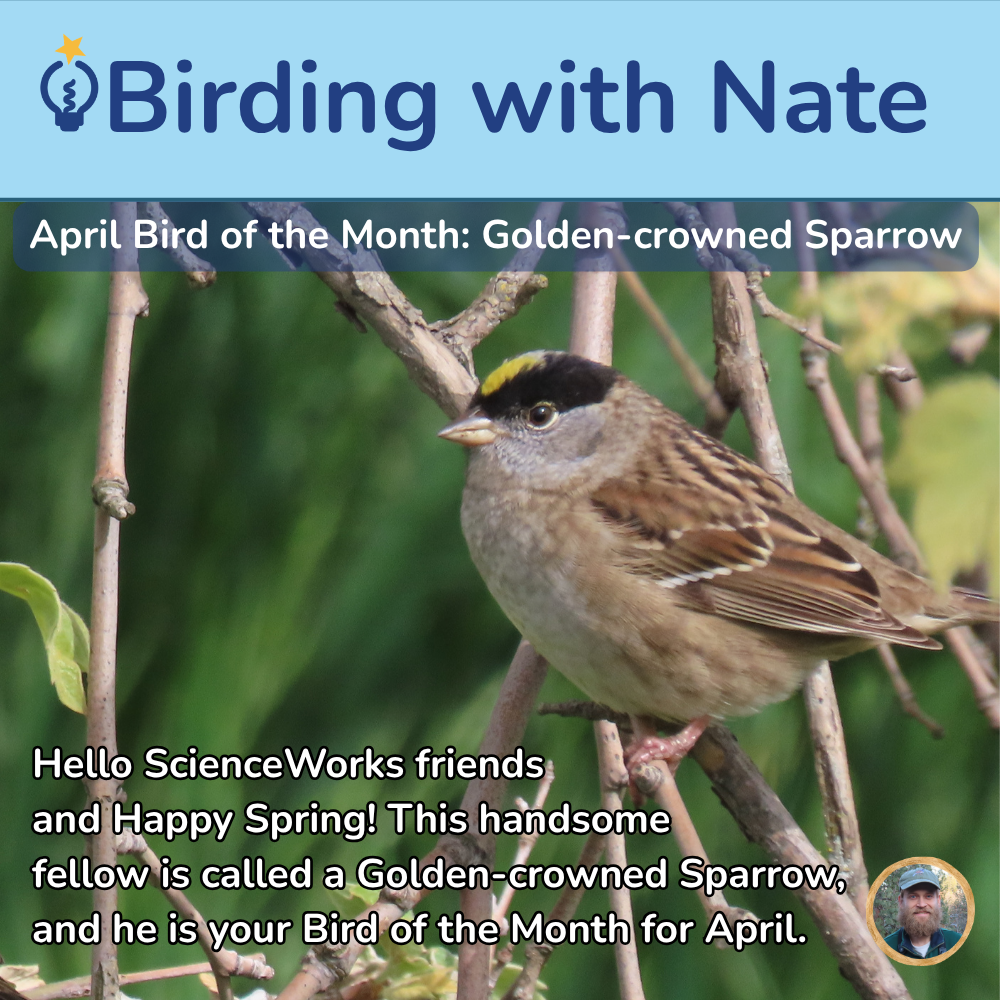
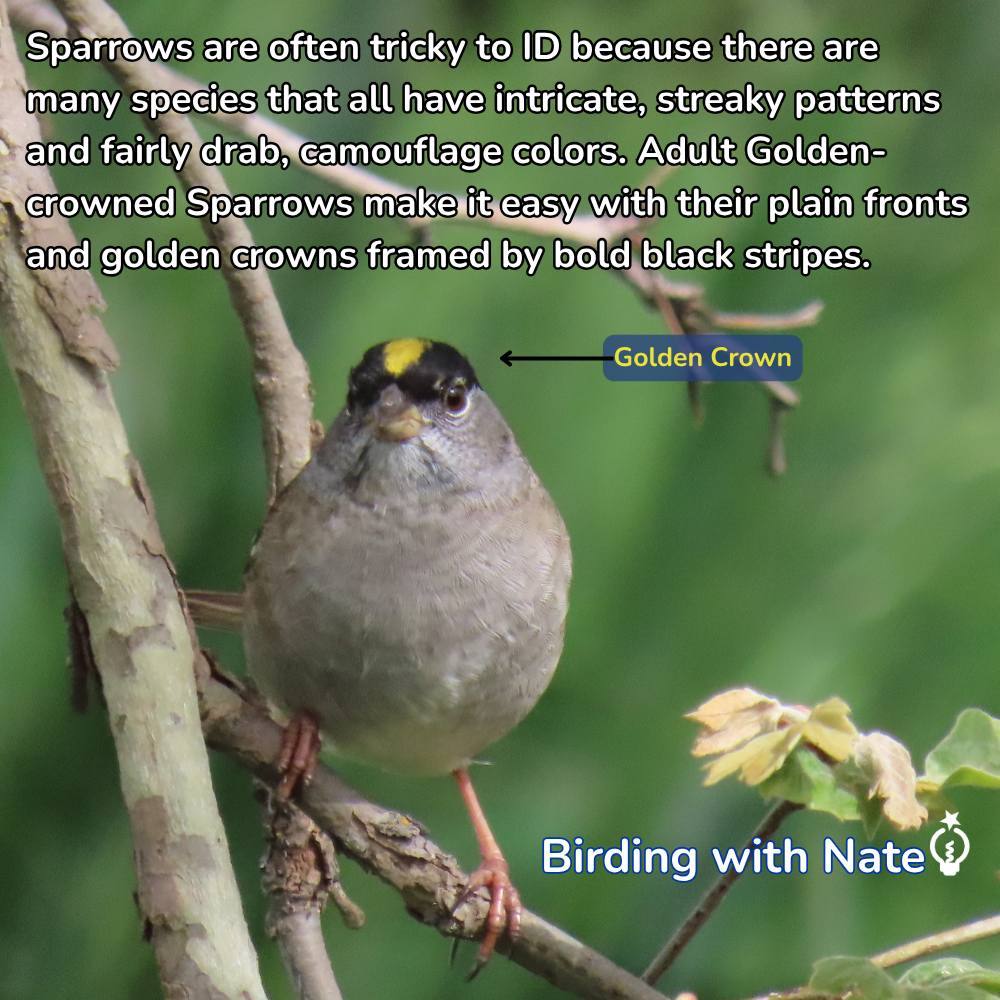
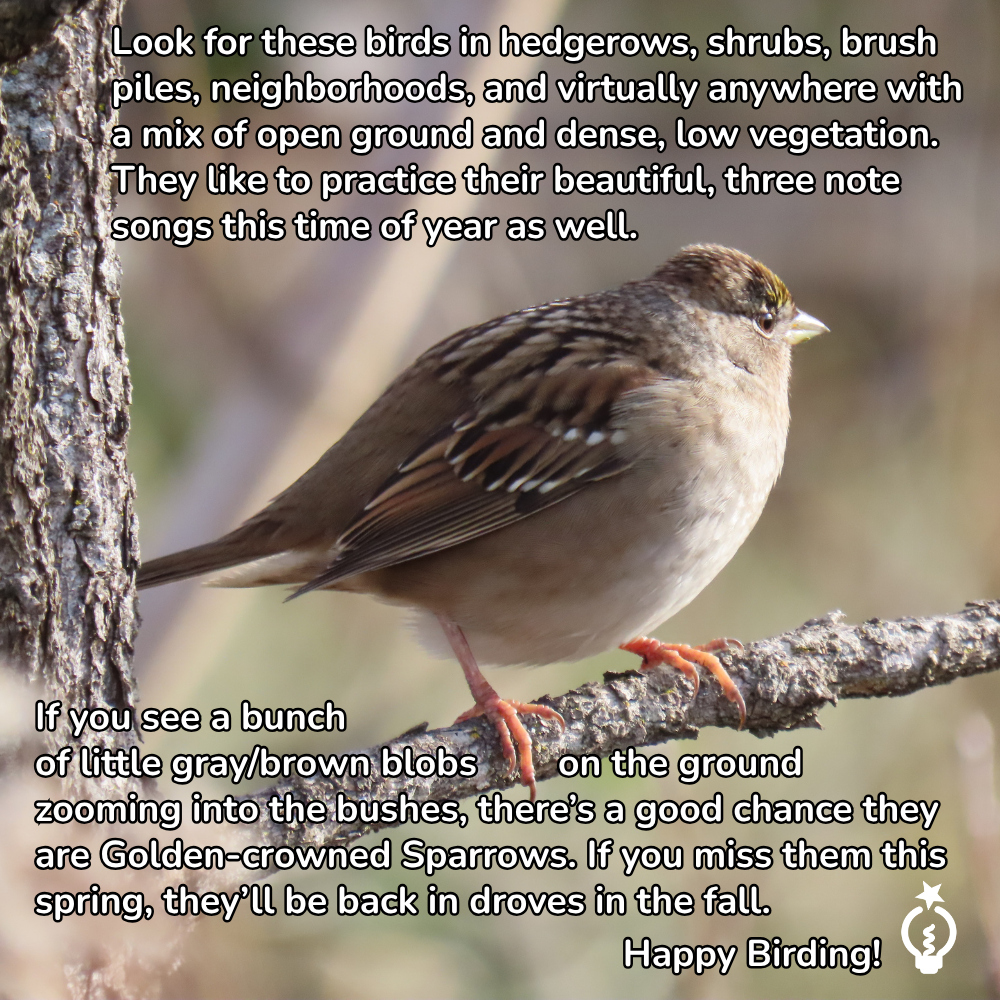
This handsome fellow is called a Golden-crowned Sparrow, and he is your Bird of the Month for April.
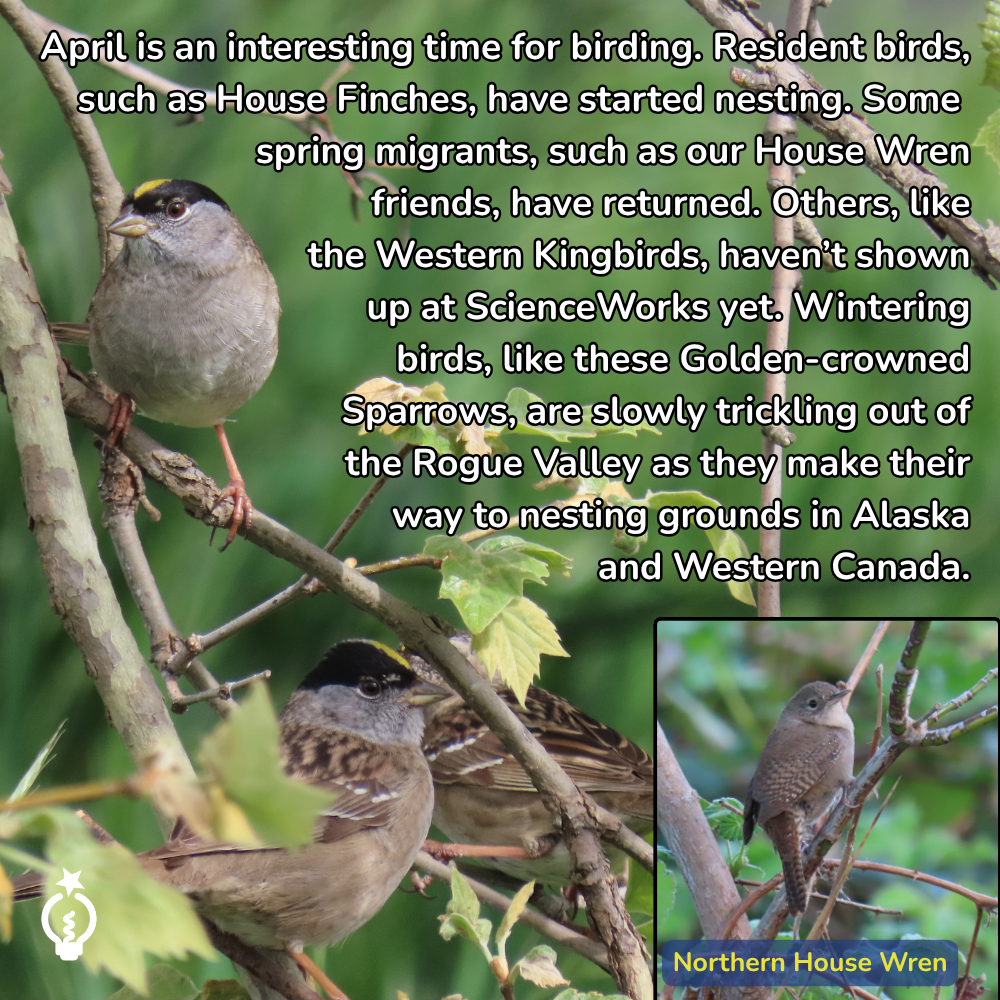
April is an interesting time for birding. Resident birds, such as House Finches, have started nesting. Some spring migrants, such as our House Wren friends, have returned. Others, like the Western Kingbirds, haven’t shown up at ScienceWorks yet. Wintering birds, like these Golden-crowned Sparrows, are slowly trickling out of the Rogue Valley as they make their way to nesting grounds in Alaska and Western Canada.
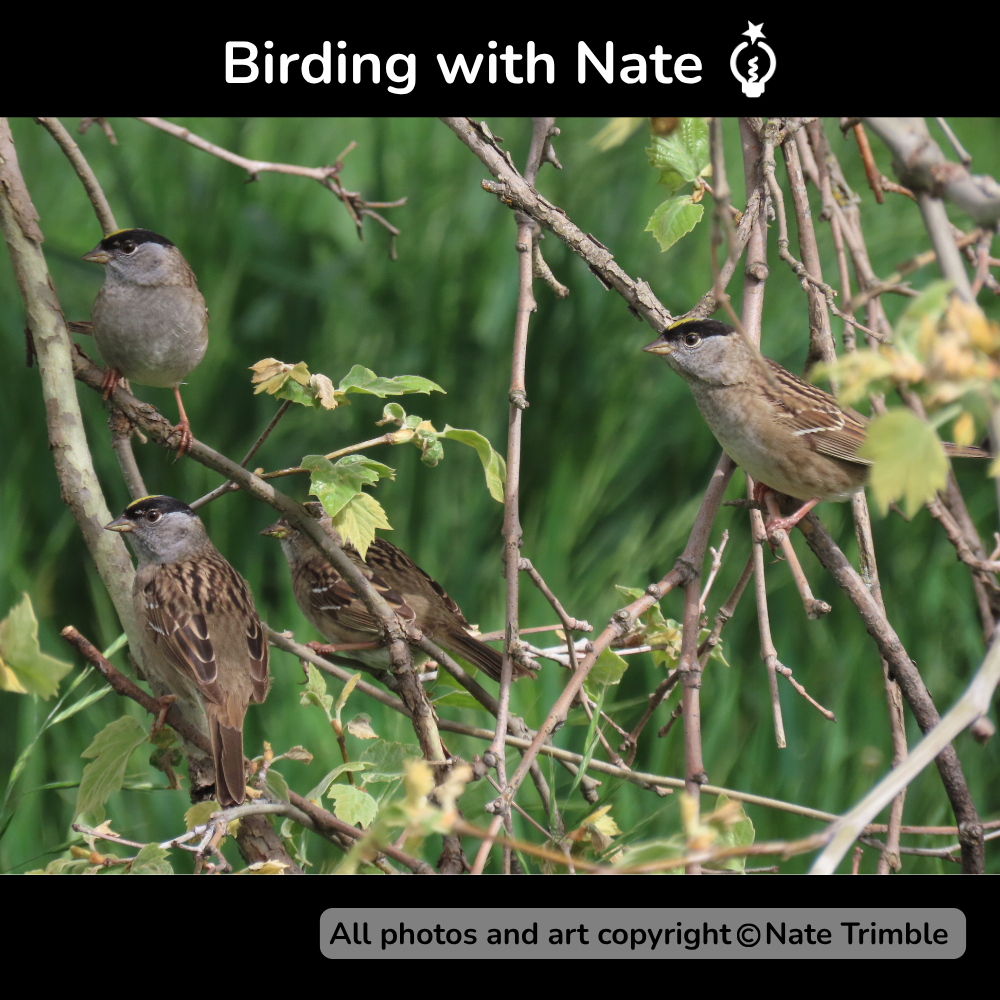
Sparrows are often tricky to ID because there are many species that all have intricate, streaky patterns and fairly drab, camouflage colors. Adult Golden-crowned Sparrows make it easy with their plain fronts and golden crowns framed by bold black stripes.
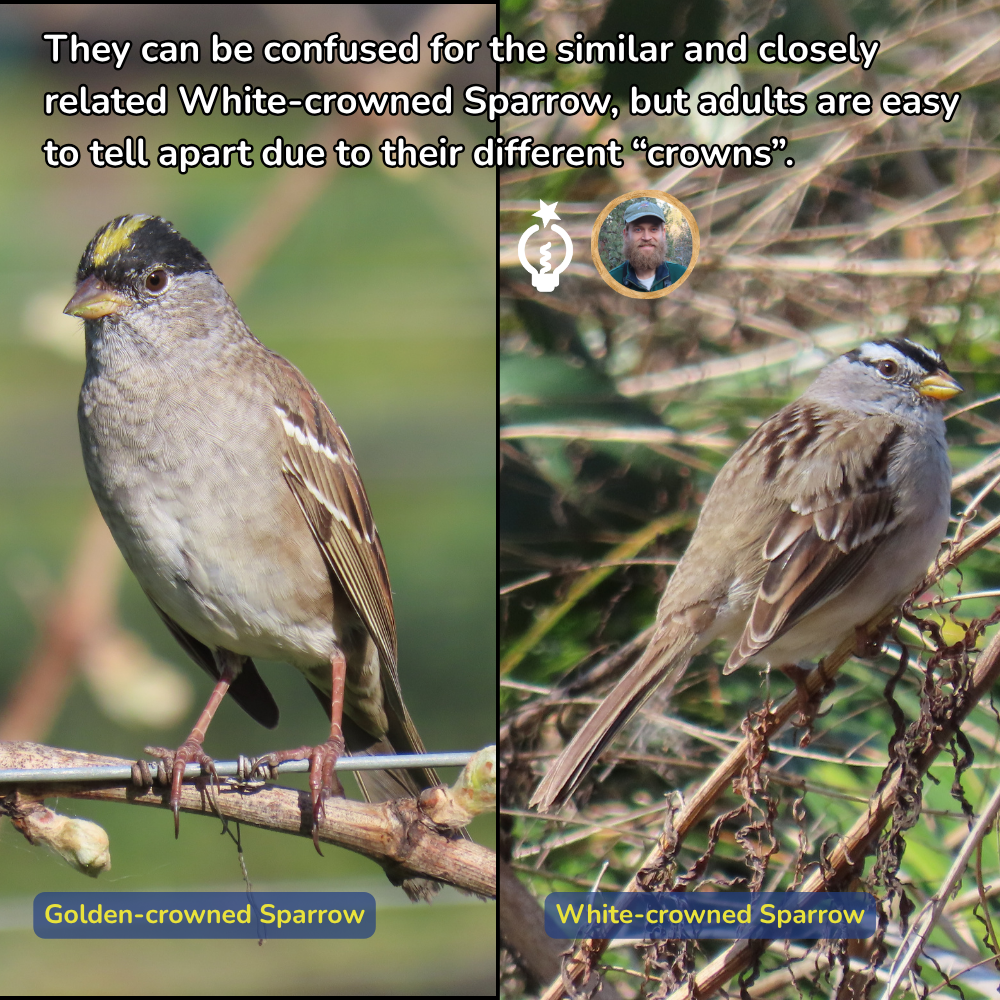
They can be confused for the similar and closely related White-crowned Sparrow, but adults are easy to tell apart due to their different “crowns”.
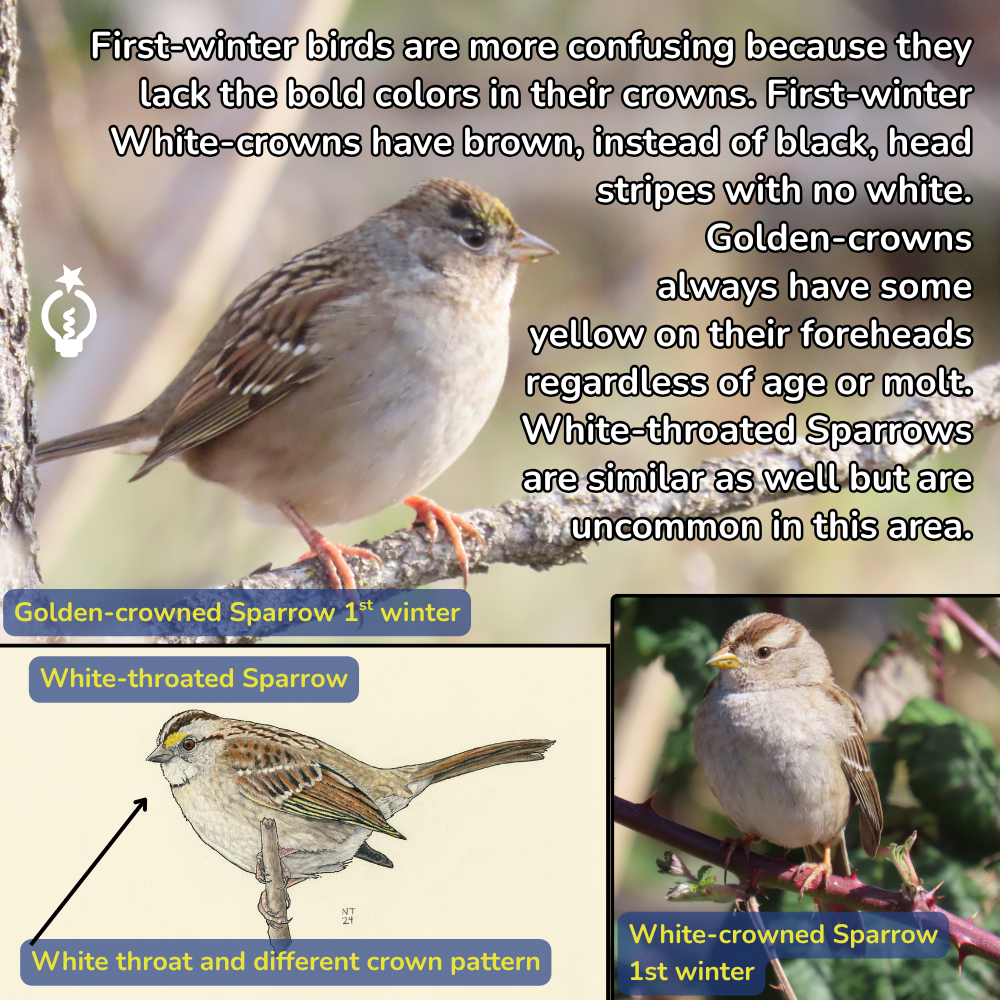
First-winter birds are more confusing because they lack the bold colors in their crowns. First-winter White-crowns have brown, instead of black, head stripes with no white. Golden-crowns always have some yellow on their foreheads regardless of age or molt. White-throated Sparrows are similar as well but are uncommon in this area.
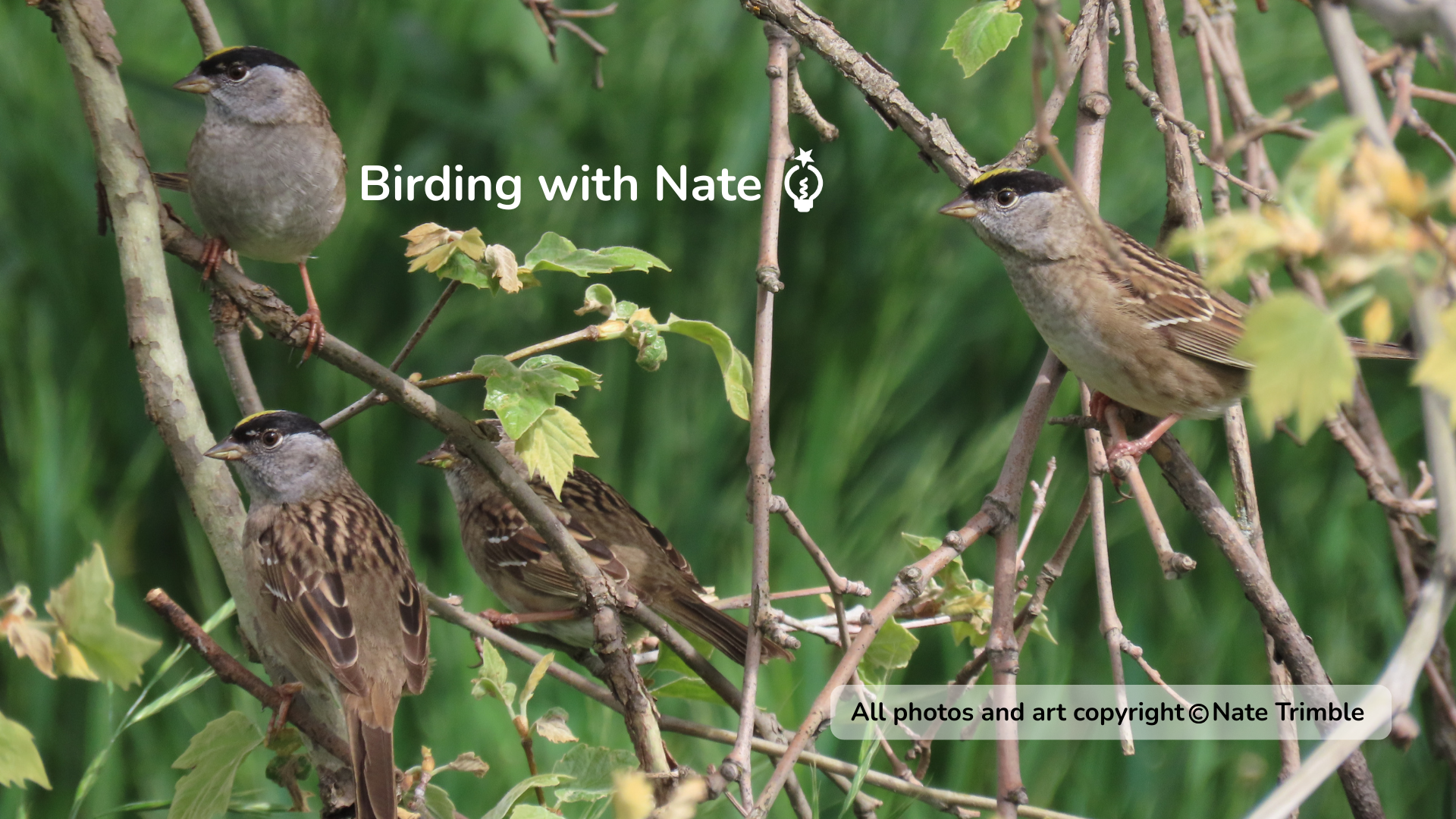
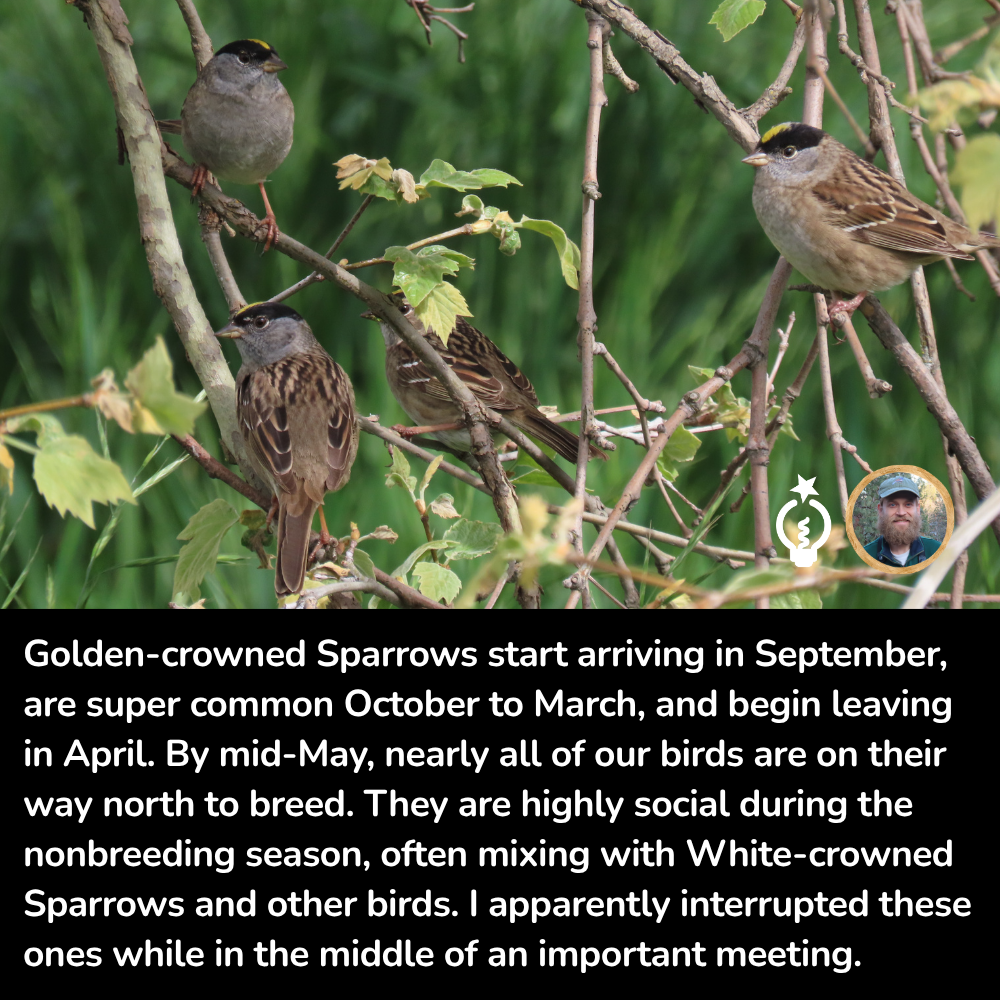
Golden-crowned Sparrows start arriving in September, are super common October to March, and begin leaving in April. By mid-May, nearly all of our birds are on their way north to breed. They are highly social during the nonbreeding season, often mixing with White-crowned Sparrows and other birds. I apparently interrupted these ones while in the middle of an important meeting.
Look for these birds in hedgerows, shrubs, brush piles, neighborhoods, and virtually anywhere with a mix of open ground and dense, low vegetation. They like to practice their beautiful, three note songs this time of year as well.
If you see a bunch of little gray/brown blobs on the ground zooming into the bushes, there’s a good chance they are Golden-crowned Sparrows. If you miss them this spring, they’ll be back in droves in the fall.
Happy Birding!
And don't forget to add your own bird sightings to the ScienceWorks eBird Hotspot!
Related Articles