


Birding With Nate — California Scrub-Jay
Birding with Nate
California Scrub-Jay
Hello ScienceWorks friends!
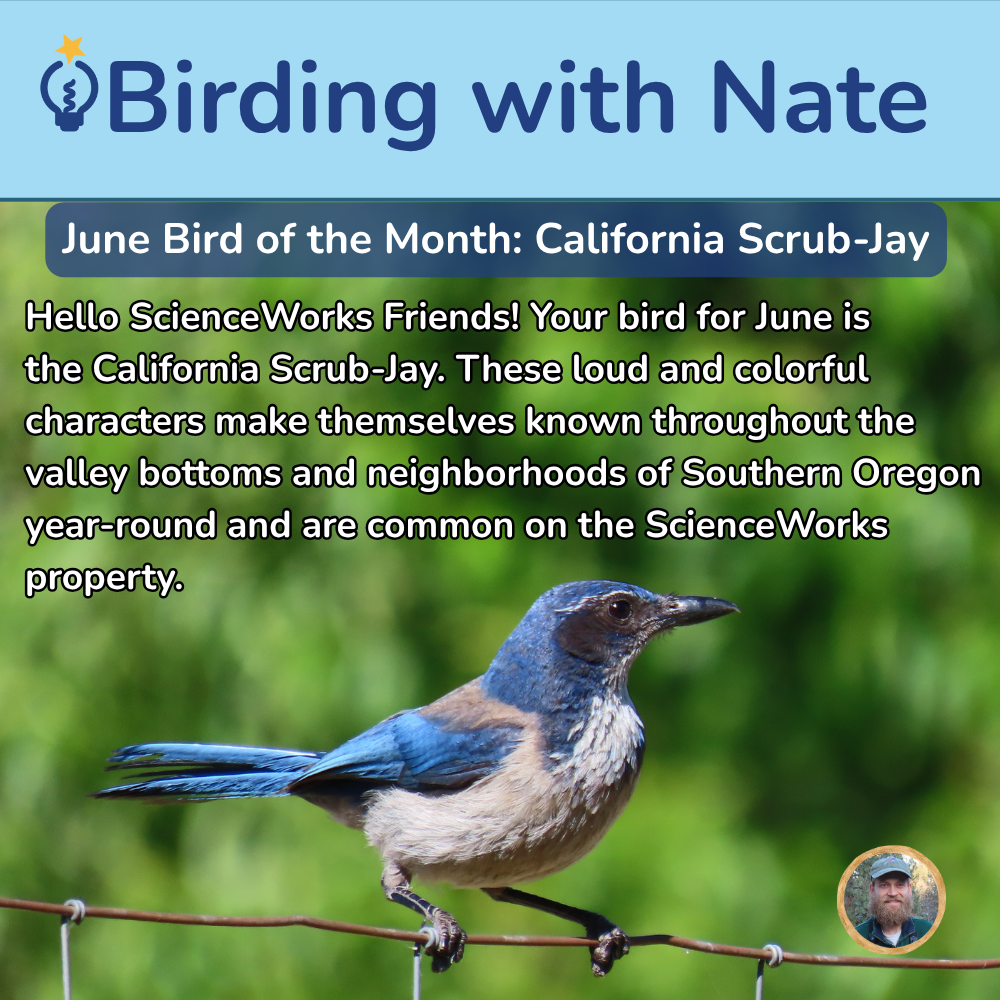
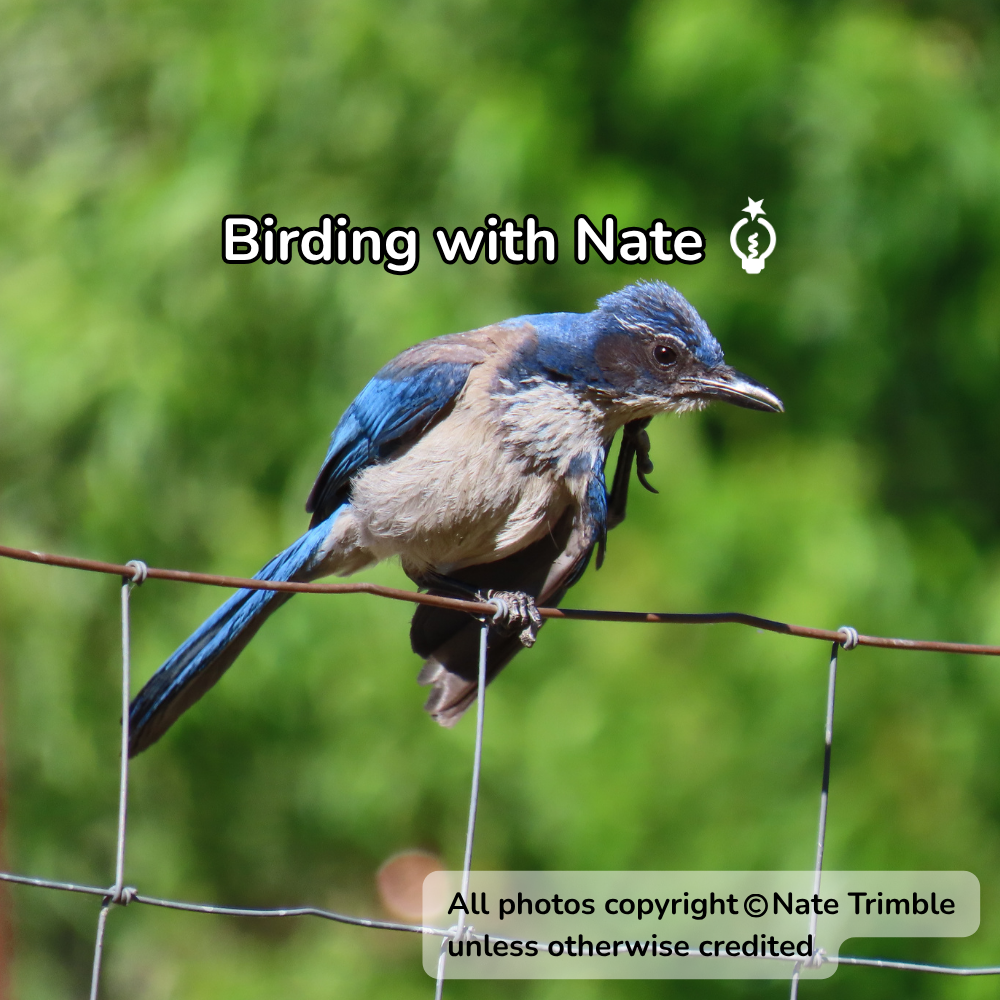
Your bird for June is the California Scrub-Jay. These loud, colorful characters make themselves known throughout the valley bottoms and neighborhoods of Southern Oregon year-round and are common on the ScienceWorks property.
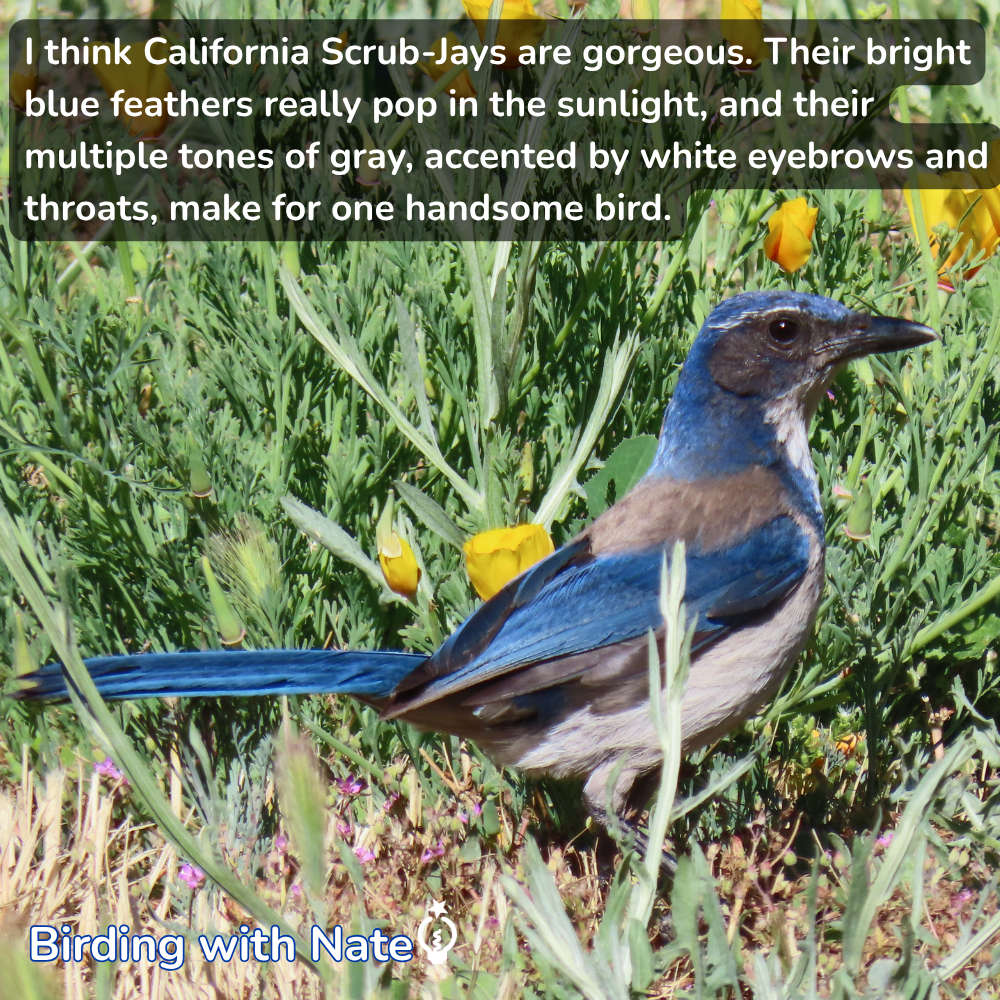
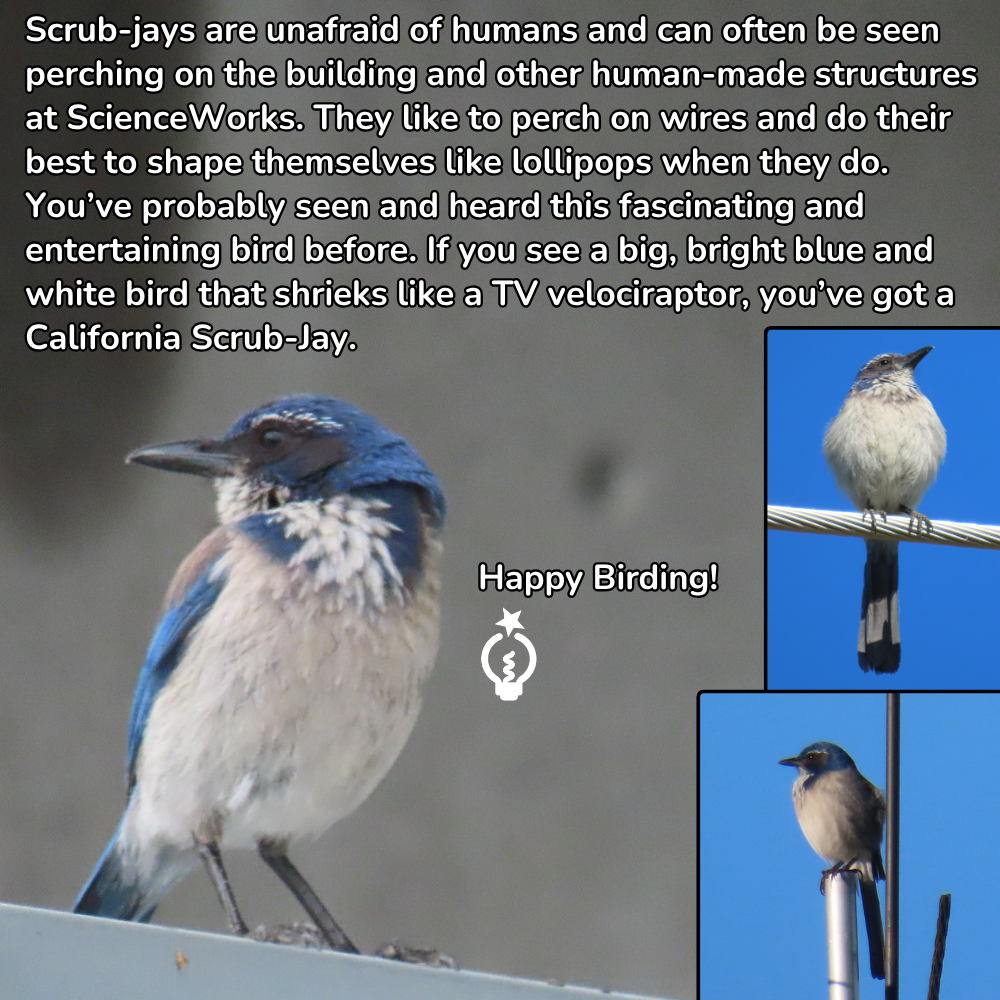
I think California Scrub-Jays are gorgeous. Their bright blue feathers really pop in the sunlight, and their multiple tones of gray, accented by white eyebrows and throats, make for one handsome bird.
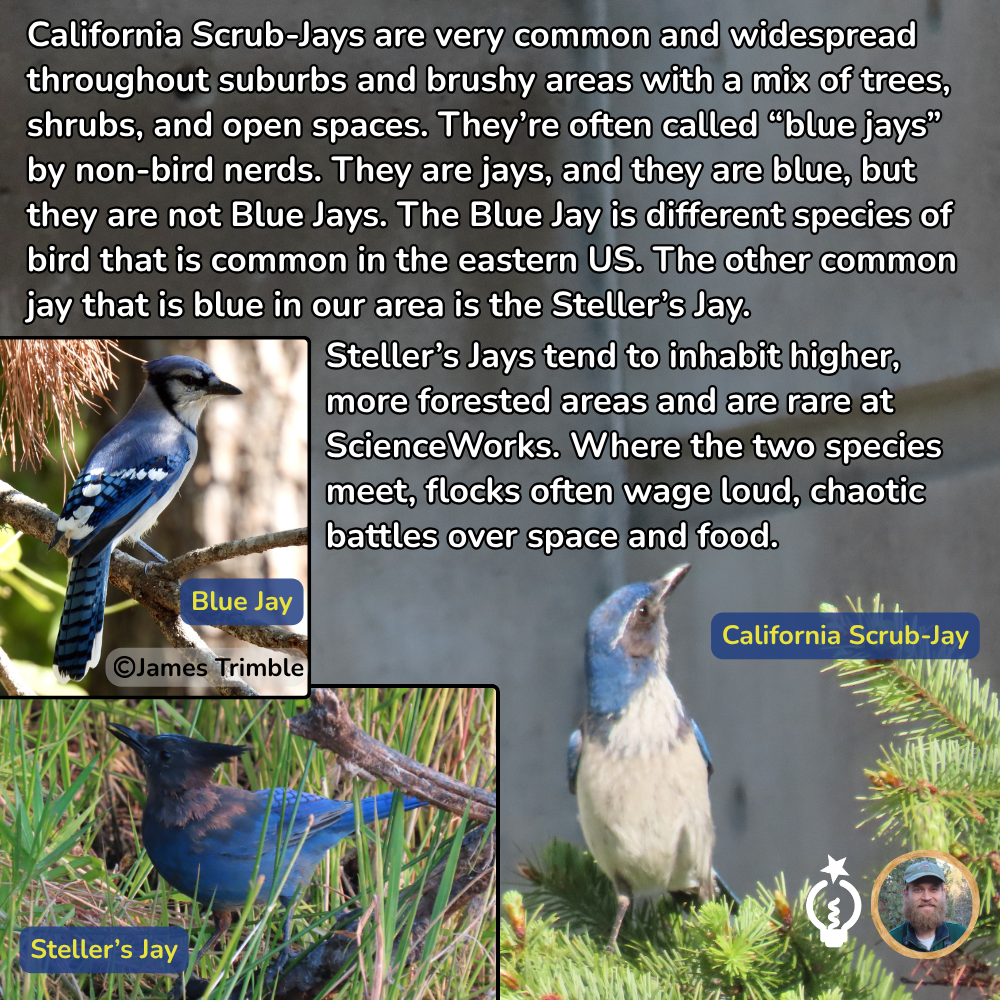
California Scrub-Jays are very common and widespread throughout suburbs and brushy areas with a mix of trees, shrubs, and open spaces. They’re often called “blue jays” by non-bird nerds. They are jays, and they are blue, but they are not Blue Jays. The Blue Jay is different species of bird that is common in the eastern US. The other common jay that is blue in our area is the Steller’s Jay. Steller’s Jays tend to inhabit higher, more forested areas and are rare at ScienceWorks. Where the two species meet, flocks often wage loud, chaotic battles over space and food.
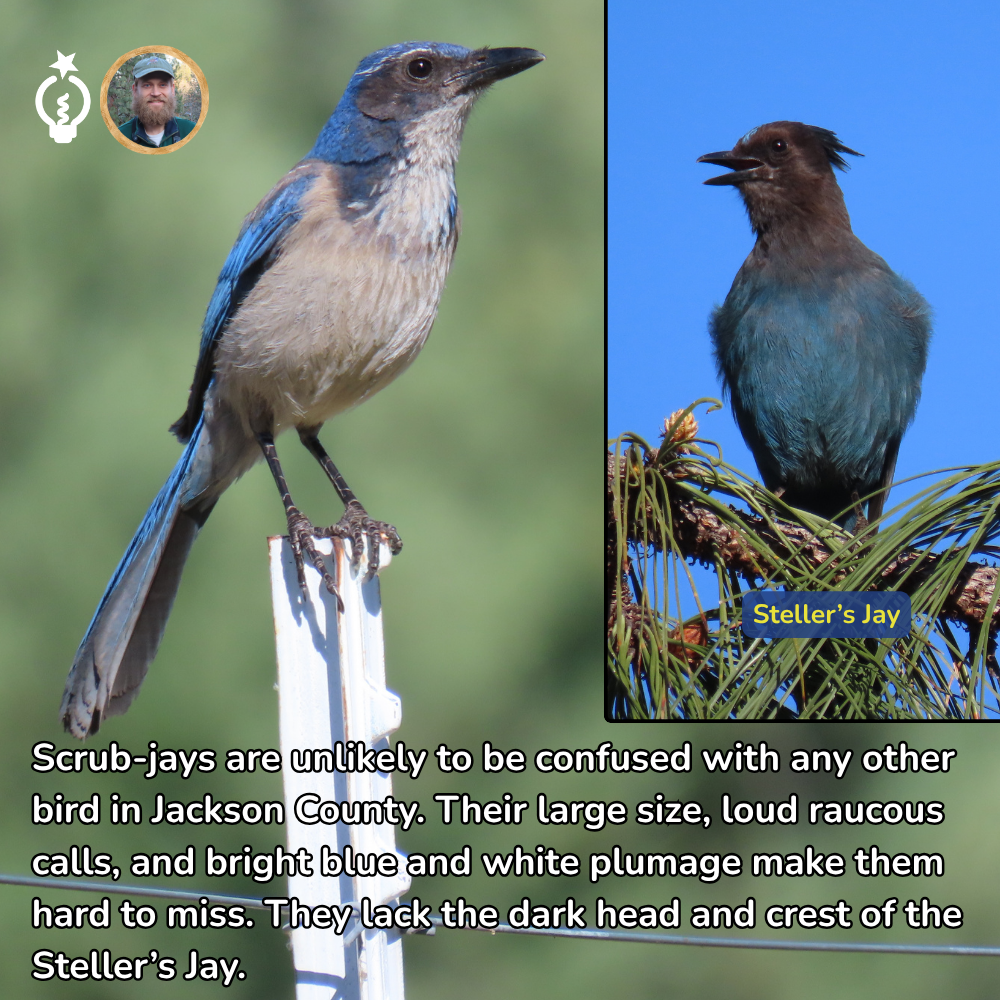
Scrub-jays are unlikely to be confused with any other bird in Jackson County. Their large size, loud raucous calls, and bright blue and white plumage make them hard to miss. They lack the dark head and crest of the Steller’s Jay.
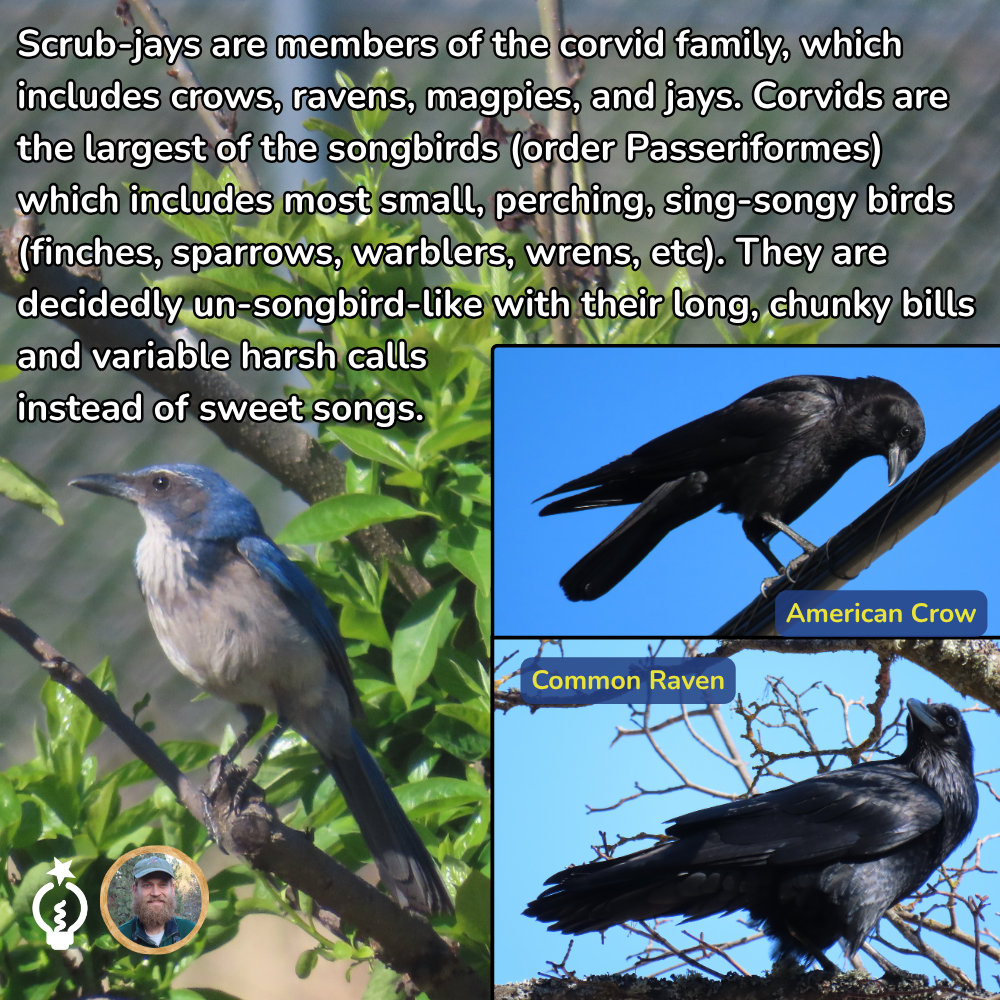
Scrub-jays are members of the corvid family, which includes crows, ravens, magpies, and jays. Corvids are the largest of the songbirds (order Passeriformes) which includes most small, perching, sing-songy birds (finches, sparrows, warblers, wrens, etc). They are decidedly un-songbird-like with their long, chunky bills and variable harsh calls
instead of sweet songs.
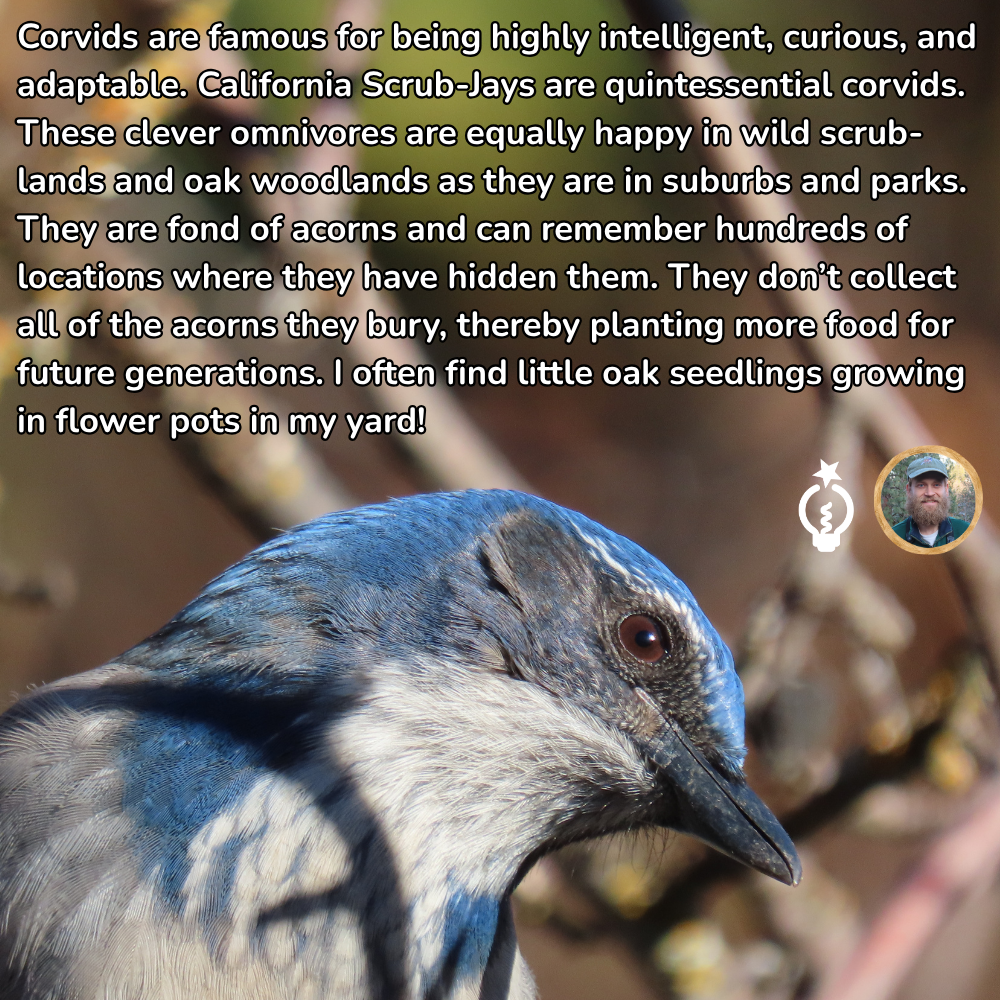
Corvids are famous for being highly intelligent, curious, and adaptable. California Scrub-Jays are quintessential corvids. These clever omnivores are equally happy in wild scrublands and oak woodlands as they are in suburbs and parks. They are fond of acorns and can remember hundreds of locations where they have hidden them. They don’t collect all of the acorns they bury, thereby planting more food for future generations. I often find little oak seedlings growing in flower pots in my yard!
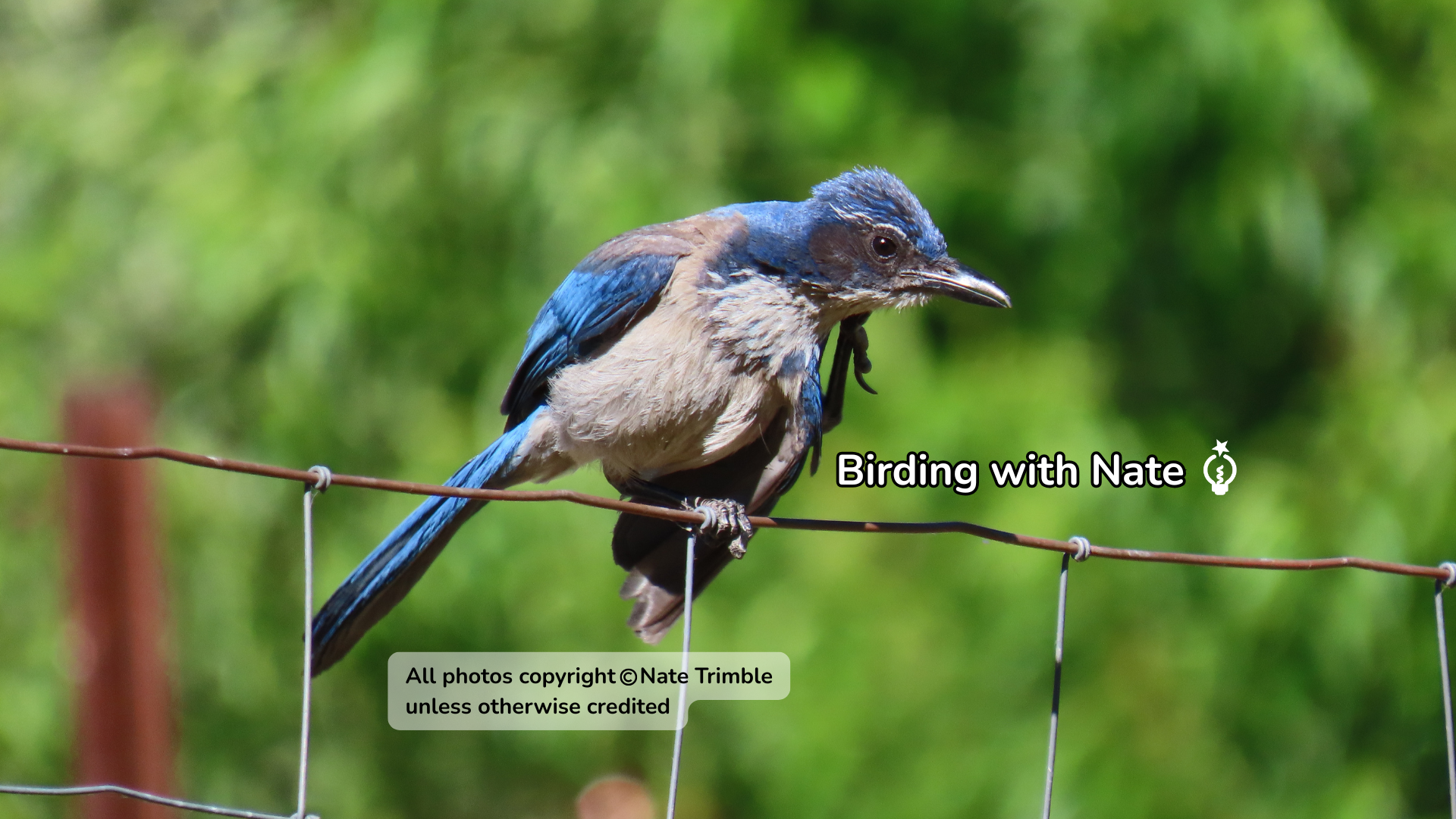
Scrub-jays are unafraid of humans and can often be seen perching on the building and other human-made structures at ScienceWorks. They like to perch on wires and do their best to shape themselves like lollipops when they do. You’ve probably seen and heard this fascinating and entertaining bird before. If you see a big, bright blue and white bird that shrieks like a TV velociraptor, you’ve got a California Scrub-Jay.
Happy Birding!
And don't forget to add your own bird sightings to the ScienceWorks eBird Hotspot!
Related Articles